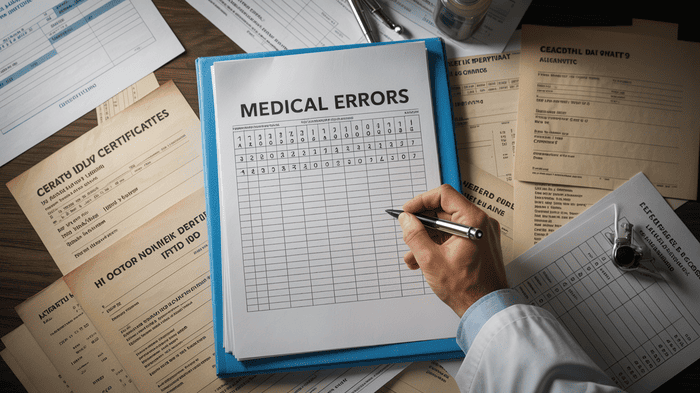
What Doctors Never Discuss: How to Stay Safe from Medical Errors
Most people walk into a hospital, clinic, or doctor's office with a simple belief.
“I'm in safe hands.”
Most of the time, that belief is justified. Modern medicine can save lives, diagnose serious disease, repair injuries, control infections, and treat conditions that would once have been fatal.
But there is another truth most patients are rarely told clearly.
Healthcare is complicated. Hospitals are busy. Doctors are under pressure. Nurses are stretched. Specialists may not always communicate with each other. Test results can be missed. Medications can be confused. Procedures can be rushed. And sometimes, the system makes mistakes.
This does not mean every doctor is careless. It does not mean every hospital is dangerous. But it does mean patients need to be awake, informed, and involved.
The safest patient is not the most frightened patient.
The safest patient is the one who pays attention.
The Scale of the Problem
How big is the risk, really?
This is where the conversation becomes more complex, and where many articles get it wrong.
There is no single, universally agreed number that captures the full impact of medical errors in the United States. Different studies measure different things. Some focus only on deaths. Others include serious harm, permanent disability, or long-term complications. Many categories overlap.
But when you look carefully at the best available research, a clear picture begins to emerge.
A widely cited Johns Hopkins analysis published in BMJ estimated that roughly 250,000 deaths per year in the United States may be linked to medical errors.
More recent work has expanded the lens beyond deaths alone. A study published in BMJ Quality & Safety estimated that approximately 795,000 Americans each year may die or become permanently disabled because dangerous diseases are misdiagnosed.
Hospital-acquired infections add another major layer. CDC data indicate that in U.S. acute care hospitals there were an estimated 687,000 healthcare-associated infections in 2015, and about 72,000 hospital patients with healthcare-associated infections died during their hospitalizations.
Older estimates have placed hospital-acquired infections even higher, at around 1.7 million infections and 99,000 associated deaths per year.
These figures cannot simply be added together. A single patient may suffer more than one failure. For example, one person could have a missed diagnosis, receive the wrong medication, develop a hospital-acquired infection, and then die. Counting each category separately would count the same patient more than once.
Even so, the direction of the evidence is consistent.
At a minimum, medical errors and unsafe care affect hundreds of thousands of patients every year in the United States. At the upper end, the number of people killed or seriously harmed may approach 800,000 annually, especially when diagnostic errors are included.
The exact number is debated.
The scale of the problem is not.
The Main Dangers Patients Need to Understand
The following are not rare theoretical risks. They are real categories of harm that researchers, hospitals, public health agencies, and patient safety experts have studied for decades.
-
Diagnostic Errors
A diagnostic error happens when a disease is missed, misidentified, or diagnosed too late.
This can include a missed cancer, a stroke mistaken for something minor, a serious infection dismissed too early, or a heart problem not recognized in time.
Diagnostic errors are especially dangerous because they delay the right treatment. Sometimes the problem is not that the doctor is completely wrong. Sometimes the problem is that the correct diagnosis comes too late.
For men concerned about prostate cancer, this matters deeply. A rising PSA, concerning symptoms, abnormal scan, or suspicious biopsy result should never be casually ignored. Calm monitoring is one thing. Neglect is another.
How to protect yourself: Ask, “What else could this be?” Ask, “What are we ruling out?” Ask, “What should I watch for if things get worse?”
-
Prescription and Medication Errors
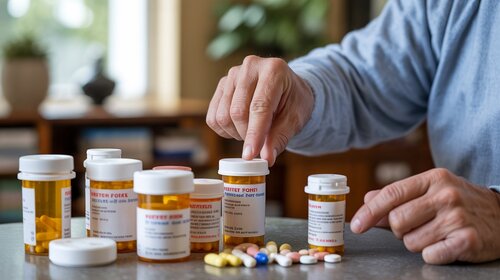
Medication errors can happen at many points: when a drug is prescribed, written down, entered into a computer, dispensed by the pharmacy, or given to the patient.
Errors may involve the wrong drug, wrong dose, wrong timing, wrong patient, or dangerous interactions between several medications.
This becomes especially important for older adults and people taking multiple prescriptions, supplements, or over-the-counter drugs.
One of the hidden dangers is that side effects may be mistaken for a new disease. A patient feels dizzy, tired, confused, or weak, and instead of asking whether a medication caused it, another prescription may be added.
How to protect yourself: Keep a written list of every medication, supplement, and over-the-counter product you take. Ask, “What is this for?” “What are the side effects?” “Does this interact with anything else I take?”
How to Stay Calm and Think Clearly After a Prostate Cancer DiagnosisGet instant access to your free guide now.Join FreeNo spam. Unsubscribe anytime. -
Surgical Errors and Procedure Risks
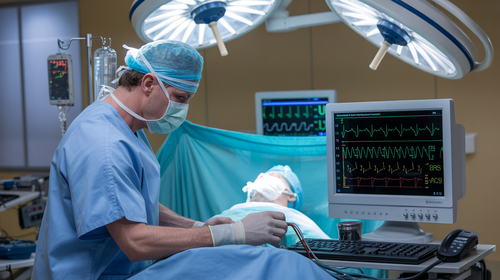
Surgery can save lives. But surgery is also one of the most serious decisions a patient can make.
Errors may include wrong-site surgery, complications during the operation, poor infection control, inadequate follow-up, or failure to fully explain the risks and alternatives.
There is also another category: surgery that may not have been necessary in the first place.
This is especially important in prostate cancer, where some men may benefit from immediate treatment while others may be safer with active surveillance. The danger is not only a bad surgery. The danger may also be a rushed surgery.
How to protect yourself: Before any major procedure, ask, “What happens if I wait?” “What are the alternatives?” “What are the risks of this surgery?” “How many of these procedures have you performed?”
-
Unnecessary Surgeries and Overtreatment
More treatment is not always better treatment.
Sometimes patients receive tests, drugs, or procedures that offer little benefit but create real risk.
Overtreatment can lead to complications, side effects, anxiety, financial cost, and permanent harm. In prostate cancer, overtreatment can affect urinary function, sexual function, and quality of life.
This does not mean treatment should be avoided. It means treatment should be chosen carefully.
How to protect yourself: Ask, “Is this urgent?” “What is the evidence this will help me?” “What are the risks of not doing it now?” “Would active surveillance be reasonable in my case?”

-
Hospital-Acquired Infections
Hospitals are places of healing, but they are also places where infections can spread.
Hospital-acquired infections may include surgical site infections, pneumonia, bloodstream infections, catheter-associated urinary tract infections, and infections caused by antibiotic-resistant bacteria.
Not every infection is preventable. But many are linked to hygiene, staffing, equipment, catheter use, surgical protocols, and infection-control procedures.
This is one of the most important patient safety risks because the numbers are large and the consequences can be severe.
How to protect yourself: Ask healthcare workers to wash or sanitize their hands. Ask whether a catheter is still necessary. Watch for fever, redness, swelling, worsening pain, confusion, or sudden weakness after hospital care.
-
Test Result Failures
One of the most dangerous phrases in healthcare is:
“No news is good news.”
That is not always true.
Blood tests, scans, biopsies, pathology reports, and specialist notes can be delayed, overlooked, misfiled, or poorly communicated.
A patient may assume everything is fine because nobody called. But sometimes nobody called because the result was not reviewed properly.
How to protect yourself: Always ask when results will be ready. Get copies of important results. Follow up if you do not hear back. Never assume silence means safety.
-
Communication Breakdowns
Modern healthcare often involves many people: family doctors, specialists, nurses, pharmacists, surgeons, hospitalists, radiologists, and administrative staff.
Every handoff creates risk.
One doctor may not know what another doctor prescribed. A specialist may not receive a complete history. A hospital may discharge a patient without clearly informing the primary doctor. A pharmacist may not know about a recent medication change.
Patients often assume the system is connected.
Often, it is not.
How to protect yourself: Carry your own summary. Know your diagnosis, medications, allergies, major test results, and treatment plan. Do not assume every doctor has read every record.
-
Discharge and Aftercare Errors
The moment a patient leaves hospital can be dangerous.
Medication lists may change. Follow-up appointments may not be booked. Warning signs may not be explained. Patients may go home tired, confused, and overwhelmed.
Many complications happen after discharge, when the patient is no longer being watched closely.
How to protect yourself: Before leaving hospital, ask, “What medications do I stop?” “What medications do I continue?” “Who do I call if something goes wrong?” “What symptoms mean I should seek urgent help?”
How to Stay Calm and Think Clearly After a Prostate Cancer DiagnosisGet instant access to your free guide now.Join FreeNo spam. Unsubscribe anytime. -
Falls, Pressure Injuries, and Hospital Complications
Some hospital dangers are not dramatic medical mistakes. They are basic care failures.
Patients may fall. Older patients may become confused. Immobile patients may develop pressure injuries. Weak patients may lose muscle quickly during a hospital stay.
These problems can turn a treatable condition into a long recovery.
How to protect yourself: Ask about fall prevention. Ask whether the patient can safely move. Ask how often they should be repositioned. Do not underestimate the danger of becoming weak in bed.
-
Cognitive Bias and Overconfidence
Doctors are trained professionals, but they are still human.
Like all humans, they can be affected by cognitive bias.
Anchoring bias means the first diagnosis sticks too strongly. Confirmation bias means new information is interpreted to support the first theory. Overconfidence means uncertainty is not taken seriously enough.
This does not make doctors bad people. It makes them human beings working under pressure.
How to protect yourself: Respectfully ask, “What would make you change your mind?” “Is there another possible explanation?” “Should we get a second opinion?”
-
Adverse Drug Reactions and Medication Harm
Medication danger is not limited to obvious mistakes such as the wrong drug or wrong dose. Patients can also be harmed by medications that were prescribed correctly and taken exactly as instructed.
This is known as an adverse drug reaction. It is different from a medication error. The prescription may be appropriate, but the patient may still suffer a serious reaction, especially when multiple medications are involved.
This is particularly important for older men, who are more likely to be taking several drugs at the same time. The more medications involved, the greater the risk of interactions, side effects, confusion, falls, bleeding, kidney stress, and other complications.
How to protect yourself: Ask your doctor or pharmacist to review every medication you take at least once a year. Ask, “Do I still need this?” “Could this be causing any of my symptoms?” “Does this interact with anything else I take?”

Why These Errors Happen

It is tempting to blame individual doctors or nurses.
Sometimes individuals do make mistakes. But many errors are system errors.
They happen because healthcare is overloaded, fragmented, rushed, and complex.
Common causes include:
- Staff fatigue
- Poor communication
- Too many patients
- Incomplete records
- Medication complexity
- Rushed appointments
- Unclear responsibility
- Failure to follow up test results
- Overconfidence in a first diagnosis
- Pressure to move patients quickly through the system
This is why the answer is not blind trust or blind rejection.
The answer is informed participation.
How to Protect Yourself Before an Appointment
Prepare before you walk in.
Write down your symptoms. Include when they started, what makes them worse, what makes them better, and what has changed.
Bring a complete list of medications and supplements.
Bring copies of important test results if you have them.
If the issue is serious, bring a trusted person with you. A second pair of ears can catch details you miss.
How to Protect Yourself During an Appointment
Ask direct questions.
Do not be rude. Do not be aggressive. But do not be passive.
Useful questions include:
- What do you think is causing this?
- What else could it be?
- What are we ruling out?
- What test confirms this?
- What should I do if symptoms get worse?
- When should I follow up?
- What are the risks of this treatment?
- What are the risks of waiting?
If you do not understand the answer, ask again.
Your body is not an inconvenience.
How to Protect Yourself in Hospital
Hospitals are busy places. You must stay alert.
Confirm your name and date of birth before medications, tests, or procedures.
Ask what medication you are being given.
Ask why it is being given.
Ask staff to clean their hands if needed.
Ask whether tubes, drains, catheters, or IV lines are still necessary.
If something feels wrong, speak up immediately.
How to Protect Yourself Before Surgery
Before surgery, slow the process down.
Ask the surgeon to explain the purpose of the procedure, the risks, the alternatives, and the expected recovery.
Ask what happens if you do nothing for now.
Ask how urgent the surgery really is.
Ask whether a second opinion would be reasonable.
For prostate cancer especially, this question matters:
“Is active surveillance a safe option in my case?”
How to Protect Yourself After You Go Home
Do not leave a hospital or clinic confused.
Before you go home, make sure you understand:
- Your diagnosis
- Your medication changes
- Your warning signs
- Your follow-up plan
- Who to call if something goes wrong
- When test results are expected
Write it down.
Do not rely on memory when you are tired, stressed, or medicated.
The Prostate Cancer Warrior's Conclusion
Modern medicine can be life-saving.
But it is not perfect.
Doctors can be brilliant and still miss things. Hospitals can be advanced and still make mistakes. Specialists can be highly trained and still fail to communicate clearly.
The lesson is not to fear medicine.
The lesson is to stop being passive.
Ask questions. Keep records. Track your results. Understand your medications. Get second opinions when the stakes are high. Do not rush into irreversible decisions unless you clearly understand the risks, benefits, and alternatives.
The safest patients are not the ones who blindly trust everything.
They are the ones who stay awake.
Trust your doctor.
But verify what matters.
Your life is too important to hand over completely.
About the Author
Scott Oliver, 66, is living well with prostate cancer after dedicating more than 4,000 hours to researching the condition. His first goal is to help men reduce their risk of developing prostate cancer through proven lifestyle strategies.
When diagnosed, his mission is to help men avoid unnecessary prostate surgeries that can lead to devastating complications such as incontinence, bleeding, permanent impotence, and a loss of length.
Scott Oliver is not a doctor and does not offer medical advice; however, he is healthier and fitter than he has been in decades. Through his articles and videos, he shares hard-to-find, uncensored information on proven alternative therapies, effective fitness methods, and repurposed drugs, content that most doctors won’t mention and search engines suppress.
He is an accredited member of the National Writers Union (NWU) and the International Federation of Journalists (IFJ), the world’s largest organization of professional journalists. Scott is also the author of What If Cancer’s Best Defense Is Free? Sleep as a Defense Against Cancer: A Former Royal Marines Commando’s 4,000-Hour Research Roadmap, where he reveals how sleep repairs DNA, restores immunity, and strengthens the body’s natural defenses against cancer.
You can always contact Scott Oliver here with your questions and suggestions.
Expert Resources Used To Support This Article
- Institute of Medicine: To Err Is Human
Landmark report that brought national attention to preventable medical errors in the United States.
Read the report - BMJ: Medical Error — The Third Leading Cause of Death in the US
Widely cited Johns Hopkins analysis estimating that medical errors may be linked to more than 250,000 deaths per year in the United States.
Read the study - BMJ Quality & Safety: Burden of Serious Harms from Diagnostic Error in the USA
Major study estimating that approximately 795,000 Americans die or are permanently disabled each year because dangerous diseases are misdiagnosed.
Read the study - Johns Hopkins Medicine: Report on Diagnostic Error Harms
Plain-English summary of the diagnostic error study and its implications for patient safety.
Read at Johns Hopkins Medicine - CDC: Healthcare-Associated Infections Data
CDC data showing estimated healthcare-associated infections in U.S. hospitals and deaths among hospital patients with HAIs.
Read at the CDC - AHRQ PSNet: Medication Errors and Adverse Drug Events
Clear explanation of medication errors, adverse drug events, and how mistakes can occur across the prescribing and delivery process.
Read at AHRQ PSNet - AHRQ PSNet: Diagnostic Errors
Overview of diagnostic errors, cognitive bias, system failures, and missed or delayed diagnosis.
Read at AHRQ PSNet - World Health Organization: Patient Safety
Global patient safety overview explaining how unsafe care harms patients worldwide and why much of this harm is preventable.
Read at WHO - Choosing Wisely
Patient safety initiative focused on avoiding unnecessary tests, treatments, and procedures when they do not provide clear benefit.
Learn more - AHRQ: Patient Safety Resources
Official U.S. healthcare quality and safety resources for reducing preventable harm.
Explore AHRQ Patient Safety