The Good News About Prostate Cancer
When a man hears the words “You have prostate cancer”, it can feel like the world suddenly stops. Fear, confusion, and a flood of questions come rushing in.
But here's something most doctors don't tell you loudly enough: There's a lot of good news about prostate cancer.
When you understand the nature of this cancer — and how it usually behaves — you'll see that for most men, there's time, hope, and a powerful opportunity to take control.
Let's walk through it together:
1. First, Congratulations — You've Lived Long Enough
A hundred years ago, most men never lived long enough to face prostate cancer. Getting it later in life isn't defeat. It means you've already survived long enough to meet a challenge that's mostly a disease of aging.
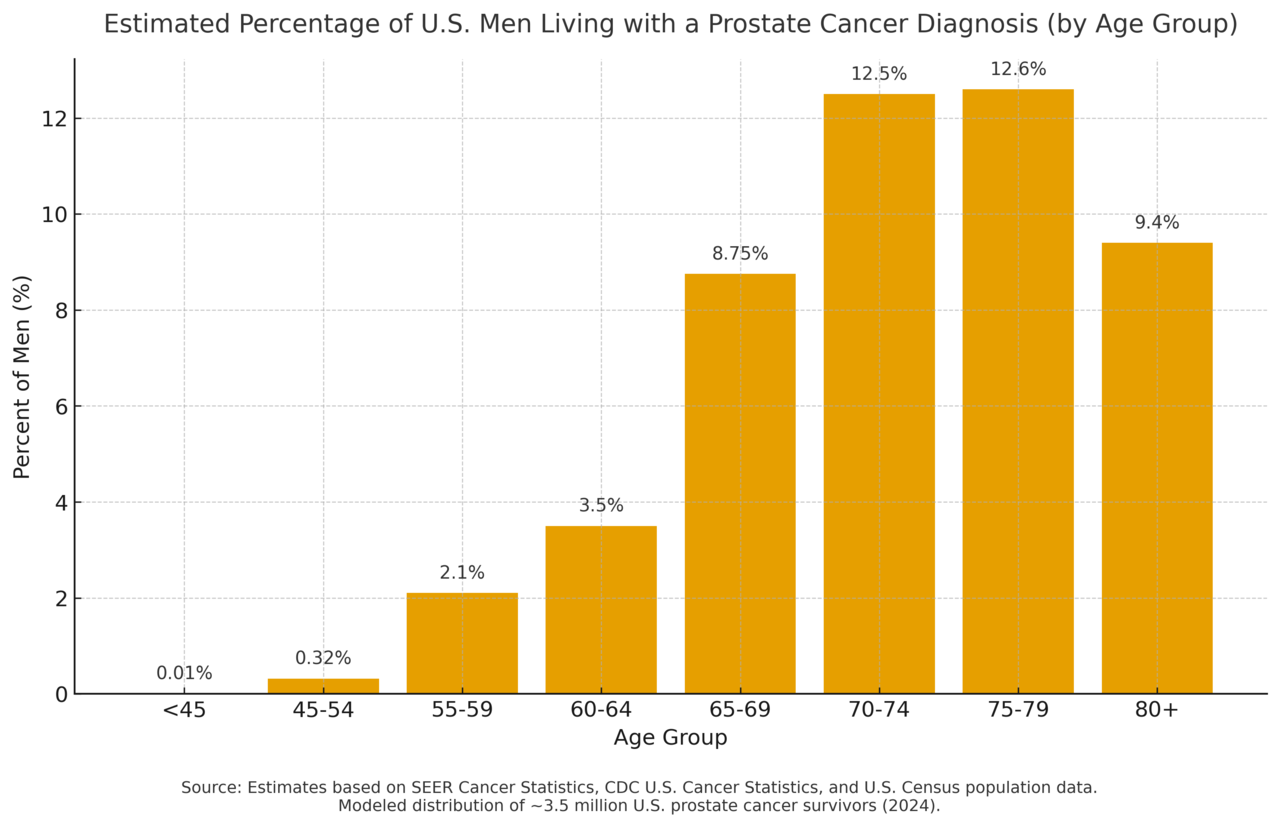
Diagnosed Prostate Cancer (Living With It)
- By 50: fewer than 1 in 300 men has a diagnosis.
- By 60: about 1 in 30.
- By 70: roughly 1 in 8 men.
- By 80: close to 1 in 10 men.
Most men with a diagnosis live many years without ever being harmed by it.
Hidden Prostate Cancer (Autopsy Studies)
- By 50: about 1 in 5 men already have microscopic prostate cancer.
- By 60: closer to 1 in 3.
- By 70: nearly half of all men.
- By 80: as many as 8 in 10 men.
Most of these cancers never cause symptoms or shorten life.
The key truth: diagnosed cases are far fewer, but hidden prostate cancer is common and usually harmless.
2. Prostate Cancer Usually Grows Slowly
Unlike many other cancers, prostate cancer is typically slow.
- Many tumors double in size only every 2–4 years, sometimes slower.
- By contrast, lung and pancreatic cancers can double in just months.
This gives you something precious: time to think, time to act wisely, and no need to rush into decisions.
3. Most Men Will Never Die From It
The odds are on your side:
- Nearly 100% of men with localized prostate cancer live at least 5 years.
- Even with spread to nearby lymph nodes, survival is still above 95% at 5 years.
- Only when prostate cancer spreads to distant organs does survival fall sharply (about 34% at 5 years).
Most men ultimately die with prostate cancer, not from it.
4. Compared to Other Cancers, It's One of the Least Dangerous
When you compare survival rates across major cancers, prostate cancer stands out.
- It has one of the highest survival rates of all cancers.
- Even with regional spread, most men live long, full lives.
If you had to face a cancer diagnosis, statistically, prostate cancer is one of the “better” ones to have.

5. You Have Time to Make the Right Decision
Because it usually grows slowly, you don't have to rush.
- Many men with low-risk cancer can safely choose active surveillance instead of immediate treatment.
- You can seek second opinions, get better imaging (like MRI or PSMA PET scans), and even adjust your lifestyle while watching carefully.
There is power in patience.

6. You Can Influence the Outcome
You are not powerless.
- Better food, regular exercise, weight loss, and stress reduction all help.
- In a UCSF study, men who made these lifestyle changes actually slowed — and sometimes reversed — prostate cancer progression.
Your daily choices can become part of your healing strategy.

The Prostate Warrior's Conclusion
Not all prostate cancers are slow. Some are aggressive and require prompt treatment. That's why every man's case must be evaluated carefully with the right doctors, imaging, and strategy.
But for most men — especially those diagnosed early — there is time, strength, and reason for hope.
You have time.
You have options.
You have the ability to thrive.
About the Author
Scott Oliver, 66, is living well with prostate cancer after dedicating more than 4,000 hours to researching the condition. His first goal is to help men reduce their risk of developing prostate cancer through proven lifestyle strategies.
When diagnosed, his mission is to help men avoid unnecessary prostate surgeries that can lead to devastating complications such as incontinence, bleeding, permanent impotence, and a loss of length.
Scott Oliver is not a doctor and does not offer medical advice; however, he is healthier and fitter than he has been in decades. Through his articles and videos, he shares hard-to-find, uncensored information on proven alternative therapies, effective fitness methods, and repurposed drugs, content that most doctors won’t mention and search engines suppress.
He is an accredited member of the National Writers Union (NWU) and the International Federation of Journalists (IFJ), the world’s largest organization of professional journalists. Scott is also the author of What If Cancer’s Best Defense Is Free? Sleep as a Defense Against Cancer: A Former Royal Marines Commando’s 4,000-Hour Research Roadmap, where he reveals how sleep repairs DNA, restores immunity, and strengthens the body’s natural defenses against cancer.
You can always contact Scott Oliver here with your questions and suggestions.
Expert Resources Used By Scott Oliver To Research and Write This Article:
- American Cancer Society – Prostate Cancer Survival Rates. Detailed survival statistics for prostate cancer based on stage and diagnosis trends. Read more
- National Cancer Institute – SEER Cancer Statistics: Prostate Cancer. Comprehensive data on prostate cancer incidence, mortality, and survival from the SEER program. Read more
- Harvard Medical School – When Low-Risk Prostate Cancer Isn't a Death Sentence. Insights on active surveillance and management for men with low-risk prostate cancer. Read more
- American Cancer Society – Cancer Facts & Figures 2024. Annual report with key cancer statistics, including prostate cancer prevalence and outcomes. Read more
- Centers for Disease Control and Prevention – United States Cancer Statistics. Official U.S. cancer registry data on incidence, mortality, and trends. Read more
- Johns Hopkins Medicine – Active Surveillance for Prostate Cancer. Guidance on monitoring prostate cancer safely without immediate treatment. Read more
- Mayo Clinic – Prostate Cancer Care Decisions. Overview of treatment options and considerations for prostate cancer patients. Read more
- University of California San Francisco – Major Lifestyle Changes Can Slow Prostate Cancer. Study findings showing lifestyle changes can impact prostate cancer progression. Read more
- Harvard Health – Diet and Prostate Cancer. Research-based discussion on diet's role in prostate cancer risk and progression. Read more
- National Cancer Institute – Prostate Cancer Overview. Official NCI resource on risk factors, prevention, treatment, and ongoing research. Read more
- Harvard Health – Prostate Cancer Growth Rate (Doubling Time). Explanation of tumor doubling times and their clinical importance. Read more
- American Urological Association – Early Detection of Prostate Cancer. Clinical guideline outlining screening and early detection recommendations. Read more
- Prostate Cancer Foundation – Prostate Cancer Risk Factors. Information on genetic, lifestyle, and environmental risk factors for prostate cancer. Read more
- Johns Hopkins Medicine – Prostate Cancer Statistics. Key statistics on prostate cancer incidence, outcomes, and survivorship. Read more