Which Country in Central or Latin America Will End Your Freedom First? The Race to Totalitarian Technocracy Is On.
Remember when Latin America was where you went to escape government control? A place to live freely, off the grid, away from the growing surveillance and digital overreach of the West?
Well, you might want to update your map—because some of the same governments once known for corruption and chaos are now leading the charge toward digital control.
We're talking Central Bank Digital Currencies (CBDCs), digital IDs, programmable money, and even climate-linked social credit systems—all wrapped in the sugary language of “inclusion” and “efficiency.”
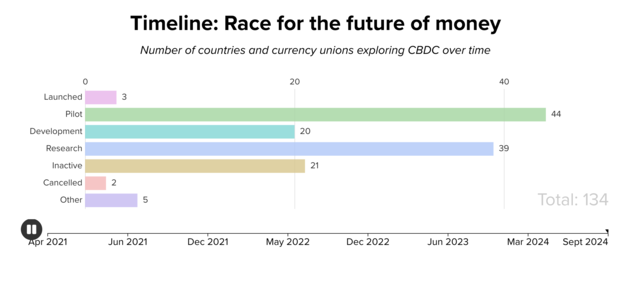
So, which Latin American country is most likely to end your freedom first?
Brazil: The Fastest Horse in the Globalist Race
Let's start with Brazil, the undisputed front-runner. Brazil isn't just talking about CBDCs—it's already piloting one: Drex, a programmable digital currency that could allow the government to freeze, redirect, or limit how you spend your money. And no, that's not a conspiracy theory. It's written in the tech documents.
Brazil also has a cashless society emerging at breakneck speed thanks to PIX, the government-run digital payments system used by over 70% of the population. Pair that with biometric IDs, real-time tax integration, and a political class that worships the altar of Davos—and you have the perfect storm.
Freedom rating: 1 out of 5. The noose is digital—and tightening fast.
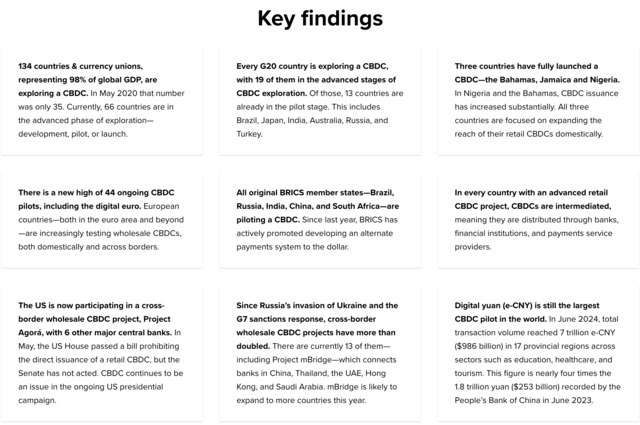
Colombia: The Friendly Face of Control
Colombia is smiling, but the future it's building is serious business. With a new left-leaning government, strong support for global frameworks like the UN's 2030 Agenda, and active interest in CBDCs and digital ID infrastructure, Colombia is quietly assembling the pieces of a modern surveillance grid.
It still has that Latin charm—but don't be fooled. The digital dragnet is coming, and it's being rolled out under the banner of “progress.”
Mexico: One Step Behind, But Eyes on the Prize
Mexico's central bank has already announced its intention to launch a CBDC by 2025. It's one of the few countries with both the technical infrastructure and population size to scale a programmable currency quickly.
What makes it especially concerning? Mexico has vast amounts of remittances and under-the-table cash economies. Once digitized, the state will see—and control—everything. Imagine every taco stand, every remittance, every small business being trackable, taxable, and programmable.
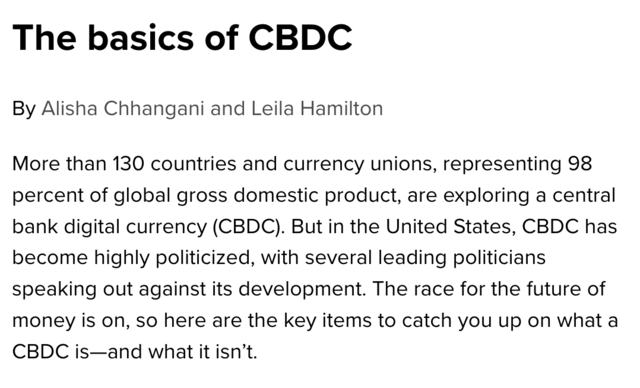
Chile: Quiet, Clean, and Cautiously Dangerous
Chile looks too elegant to be dangerous. But don't let the calm fool you. Its central bank is researching CBDCs. It already leads the region in e-governance, digital services, and climate-driven finance tools. When the switch flips, Chile won't need to build the system—it'll just activate it.
Who's Still Resisting?
• El Salvador went the other way entirely—adopting Bitcoin instead of a state-controlled CBDC. For now, they're not interested in IMF-funded digital leashes.
• Guatemala, Honduras, Nicaragua, and Bolivia are still off the radar. Lack of infrastructure and political will keeps them free—for now.
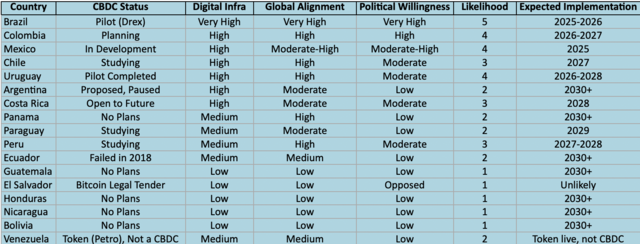
Chart Notes:
• Unbanked Population (%): These figures represent the estimated percentage of the adult population without access to traditional banking services, based on data from the World Bank and other financial inclusion studies.
• Likelihood: This rating (on a scale of 1 to 5 flames) reflects the country's readiness and propensity to implement a CBDC and related digital financial infrastructure.
• Expected Implementation: Projected timelines are based on current governmental and central bank statements, pilot programs, and technological readiness.
The Prostate Cancer Warrior's Conclusion:
Freedom won't vanish overnight in a coup. It'll fade with each new “convenient” app, each digital ID, each programmable transaction. First it's optional. Then it's encouraged. Then it's the only option.
Latin America was once a wild, unpredictable place. Now, some countries are becoming predictable in the worst way—efficient, digital, and increasingly authoritarian.
The bottom line? If you value freedom, don't just ask where the beach is. Ask how far along they are in the globalist playbook.
Because the most dangerous place you can be in Latin America…, is anywhere that makes digital slavery look like progress.
About the Author
Scott Oliver, 66, is living well with prostate cancer after dedicating more than 4,000 hours to researching the condition. His first goal is to help men reduce their risk of developing prostate cancer through proven lifestyle strategies.
When diagnosed, his mission is to help men avoid unnecessary prostate surgeries that can lead to devastating complications such as incontinence, bleeding, permanent impotence, and a loss of length.
Scott Oliver is not a doctor and does not offer medical advice; however, he is healthier and fitter than he has been in decades. Through his articles and videos, he shares hard-to-find, uncensored information on proven alternative therapies, effective fitness methods, and repurposed drugs, content that most doctors won’t mention and search engines suppress.
He is an accredited member of the National Writers Union (NWU) and the International Federation of Journalists (IFJ), the world’s largest organization of professional journalists. Scott is also the author of What If Cancer’s Best Defense Is Free? Sleep as a Defense Against Cancer: A Former Royal Marines Commando’s 4,000-Hour Research Roadmap, where he reveals how sleep repairs DNA, restores immunity, and strengthens the body’s natural defenses against cancer.
You can always contact Scott Oliver here with your questions and suggestions.

Expert Resources Used To Research This Article:
- Brazil's Drex CBDC pilot continues with major bank participation. https://www.ledgerinsights.com/brazil-cbdc-drex-pilot-major-bank-participation/
- Brazil's PIX: The digital payment revolution sweeping Latin America. https://www.weforum.org/agenda/2023/02/brazil-pix-digital-payments-latin-america/
- Bank of Mexico plans to launch digital currency by 2025. https://www.reuters.com/world/americas/mexico-central-bank-plans-launch-digital-currency-by-2025-2021-12-30/
- Colombia to explore central bank digital currency as it clamps down on cash. https://www.coindesk.com/policy/2022/10/10/colombia-to-explore-central-bank-digital-currency-as-it-clamps-down-on-cash/
- Chile finds no current need for a CBDC, but will prepare. https://www.ledgerinsights.com/chile-finds-no-current-need-for-a-cbdc-but-will-prepare/
- Uruguay's Central Bank completes successful CBDC pilot”. https://cointelegraph.com/news/uruguays-central-bank-completes-successful-cbdc-pilot
- Digital money and central bank policy in Latin America. https://www.imf.org/en/Blogs/Articles/2022/08/01/digital-money-and-central-bank-policy-in-latin-america
- Ecuador's failed digital currency shows risks of top-down financial innovation. https://www.brookings.edu/articles/ecuadors-failed-digital-currency-shows-risks-of-top-down-financial-innovation/
- El Salvador's Bitcoin gamble: One year later. https://www.bloomberg.com/news/features/2022-09-06/bitcoin-in-el-salvador-one-year-later-is-it-working
- Central Bank Digital Currencies: Threat to Freedom or Financial Innovation?https://www.cato.org/commentary/central-bank-digital-currencies-threat-freedom-or-financial-innovation
- Social Development for Sustainable Development. https://social.desa.un.org/2030agenda-sdgs
- Central Bank Digital Currencies Tracker. https://www.atlanticcouncil.org/cbdctracker/