No Interest, No Debt Slavery: Why the Muslim World’s Financial Model Terrifies Wall Street.
Imagine a financial system where you can buy a house, start a business, or use a credit card without paying a single cent in conventional interest.
Sound impossible?
It already exists.
It is called Islamic finance, and it has grown from a niche religious banking model into a major global financial system with trillions of dollars in assets.
But it also raises a dangerous question for the modern debt-based world:
What happens when millions of people decide that money should not make money simply by existing?

A Quiet Rebellion Against Interest
At the core of Islamic finance is a radical idea:
Money should not generate money merely because someone lends it.
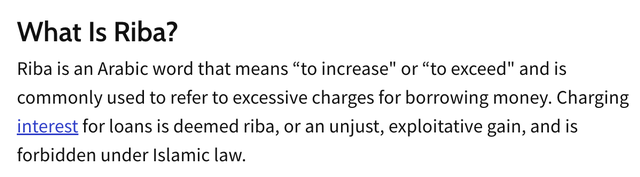
In Islamic law, charging interest, known as riba, is considered unjust and exploitative. Wealth should come from real economic activity, trade, shared ownership, productive investment, tangible assets, and shared risk, not from trapping people, families, businesses, or nations in endless debt.
That idea is deeply uncomfortable for the modern financial system, because much of today's economy is built on the opposite principle.
Debt is profit.
Interest is power.
And the ability to lend money, charge interest, refinance debt, securitize loans, and control credit is one of the central mechanisms through which banks and financial institutions shape the world.
So How Do You Buy a Home Without Interest?
Islamic finance does not simply say “no interest” and leave people without options. It offers alternative structures designed around trade, ownership, leasing, and risk-sharing.
- Murabaha: The bank buys the property or asset, then sells it to the buyer at a clearly agreed markup. The profit is disclosed upfront.
- Ijara: A lease-based structure where the customer pays rent for use of the asset, often with a path toward ownership.
- Musharaka: A co-ownership arrangement where the customer and the bank jointly own the property, and the customer gradually buys out the bank's share.
These structures may look similar to conventional finance from the outside, because people still make regular payments. But the legal and ethical framework is different.
The goal is not interest on a loan.
The goal is a transaction linked to a real asset, real ownership, and a defined commercial relationship.
Even Islamic credit cards exist. They are usually structured to avoid conventional interest, often using fixed fees, service charges, or other Sharia-compliant mechanisms. In many models, late payment penalties are not treated as profit for the bank and may be directed to charity.
Why This Model Makes the Debt-Based System Nervous
Islamic finance is not fringe.
According to the 2025 Islamic Finance Development Report from LSEG and the Islamic Corporation for the Development of the Private Sector, global Islamic finance assets reached approximately US$5.98 trillion in 2024 and are projected to reach approximately US$9.7 trillion by 2029.
That is no longer a small alternative system sitting on the edge of global finance.
It is a serious financial model with global reach, especially across the Gulf, Malaysia, Indonesia, parts of Africa, South Asia, and increasingly in Western financial centers that want access to Islamic capital.
But Islamic finance does more than challenge interest.
It challenges the moral assumption behind the modern debt machine.
It asks whether finance should serve real economic activity, or whether real people should serve finance.
That is why the model is so interesting.
It does not merely offer Muslims a religiously compliant banking option. It offers the rest of the world a mirror.
And what that mirror reveals is not always flattering.
The Pattern of Punishment
Now consider a broader geopolitical point.
Nations that resist Western financial dominance, challenge dollar dependency, avoid certain forms of external debt, or attempt to build alternative monetary systems often face severe pressure.
That pressure may include sanctions, isolation, asset freezes, regime-change pressure, or financial exclusion.
Libya under Muammar Gaddafi promoted pan-African financial independence and was associated with proposals for a gold-backed African currency. Iran has long operated a banking system officially shaped by Islamic finance principles while also facing decades of sanctions. Venezuela attempted to break away from U.S. dollar dependency and paid a heavy economic and political price.
It would be dishonest to claim that Islamic finance alone caused these confrontations. The real causes are complex and include oil, geopolitics, military alliances, currency power, regional influence, domestic politics, and strategic control.
But the larger pattern is still worth examining:
Countries that challenge the dominant debt-money system often become targets of financial and geopolitical pressure.
That does not require a conspiracy theory.
It is simply how power behaves when its control mechanisms are threatened.
The Hidden Danger Few Understand: Derivatives
One of the greatest sources of hidden risk in the modern financial system is the enormous global derivatives market.
Derivatives are financial contracts whose value is linked to something else, such as interest rates, currencies, bonds, commodities, stocks, or credit risk.
Some derivatives are used for legitimate hedging. Airlines hedge fuel costs. Exporters hedge currency exposure. Banks hedge interest-rate risk.
But derivatives can also become highly complex, highly leveraged, and dangerously opaque.
According to the Bank for International Settlements, the notional value of outstanding over-the-counter derivatives reached approximately US$846 trillion at the end of June 2025.
That number must be understood carefully.
Notional value is not the same as the amount that would be lost in a crisis. It is the face value used to calculate payments under derivatives contracts. But the size of the number still reveals the extraordinary scale and interconnectedness of modern financial engineering.
This is one reason derivatives became notorious after the 2008 financial crisis. Credit default swaps and other complex instruments helped spread risk through the financial system in ways that many investors, regulators, and even bankers did not fully understand.
Islamic finance generally takes a much more cautious view of these instruments.
Many conventional derivatives are rejected or heavily restricted because they can involve excessive uncertainty, known as gharar, and speculation or gambling, known as maysir. Interest-based structures can also violate the prohibition on riba.
However, it is more accurate to say that Islamic finance does not simply ban every possible risk-management tool. Some Sharia-compliant hedging structures have been developed for legitimate commercial purposes, especially where the goal is to reduce real business risk rather than speculate.
That distinction matters.
The Islamic finance objection is not to managing risk.
The objection is to turning uncertainty, debt, leverage, and speculation into a casino disguised as a financial system.
Sharia-compliant finance is intended to be linked to real assets, real commerce, real ownership, and real economic activity.
In plain English, it tries to keep finance closer to the ground.
Less smoke.
Less leverage.
Less casino.
More connection to reality.
What If You Did Not Pay Interest?
Now bring this down to the personal level.
For the average American family, interest is not an abstract financial concept. It is a silent tax on everyday life.
It appears in mortgages, credit cards, car loans, student loans, personal loans, business loans, overdrafts, and late fees.
Depending on a household's debt level, income, mortgage size, credit card balance, and loan terms, interest can drain thousands or even tens of thousands of dollars per year.
- Mortgage interest can consume a major share of early home payments.
- Credit card interest rates can exceed 20% for many borrowers.
- Car loans have become larger and longer.
- Student loans can follow people for decades.
- Refinancing and rolling over debt can keep families trapped in permanent repayment mode.
The exact numbers vary from household to household, but the principle is clear.
Interest quietly transfers wealth from working people to financial institutions year after year.
Imagine if more of that money stayed with families.
Imagine if banks could not profit endlessly from distress.
Imagine finance without lifelong debt dependency.
That is why Islamic finance is not only a religious subject.
It is a moral, economic, and political subject.
The Prostate Cancer Warrior's Conclusion
Islamic finance may seem foreign or extreme to people raised inside the Western banking system.
But perhaps the more extreme idea is the one we now treat as normal:
A world where people are born into debt, educated through debt, housed through debt, treated medically through debt, and kept obedient through debt.
Maybe the interest-free model is not strange.
Maybe the strange thing is that modern society has accepted lifelong financial servitude as normal.
Islamic finance is not perfect. It has critics. Some products are accused of copying conventional finance too closely. Some structures are more ethical in theory than in practice.
But the central idea remains powerful:
Money should serve life.
Life should not serve money.
And if money can no longer be used so easily to control people, families, businesses, and nations, then the most important question becomes obvious:
Who is really in charge?
About the Author
Scott Oliver is a British writer and former Royal Marines Commando who has lived abroad since 1985. Over the last 66 years, he’s called twelve countries home, including twenty-five years in Spanish-speaking nations such as Spain, Costa Rica, and Guatemala. He has also lived in Sierra Leone, Ghana, Nigeria, Liberia, Cyprus, the USA, Grand Cayman and now lives in Mauritius.
A warrior by nature, Scott is living with prostate cancer and writing from the front lines. He speaks directly to men about health, masculinity, freedom, and strength, physically, mentally, emotionally, and sexually. His views are proudly independent: he questions conventional medicine, challenges destructive treatments, and tells the truth most men never hear.
Scott Oliver is an officially accredited member of the National Writers Union (NWU) and the International Federation of Journalists (IFJ), the world’s largest organization of professional journalists. He spent ten years on Wall Street and another decade as an offshore wealth manager, specializing in globally diversified, multi-currency hedge fund portfolios. He is the author of What If Cancer’s Best Defense Is Free? — Sleep as a Defense Against Cancer: A Former Royal Marines Commando’s 4,000-Hour Research Roadmap, where he reveals how sleep repairs DNA, restores immunity, and strengthens your fight against cancer. He’s also the author of books on offshore investing and Costa Rica real estate and has written thousands of articles in English and Spanish on living abroad with courage, clarity, and conviction.
You can always contact Scott Oliver here with your questions and suggestions.
Expert Resources Used By Scott Oliver To Research and Update This Article
- LSEG: Islamic Finance Development Report 2025. Confirms that global Islamic finance assets reached approximately US$5.98 trillion in 2024 and are projected to reach approximately US$9.7 trillion by 2029. Read the report overview
- Islamic Corporation for the Development of the Private Sector: LSEG and ICD Announce Findings of the 2025 Islamic Finance Development Indicator Report. Summarizes the latest growth projections for the global Islamic finance industry. Read the announcement
- World Bank: Global Islamic Finance Development Center. Provides a mainstream institutional explanation of Islamic finance, including its emphasis on asset-backed finance, risk-sharing, and ethical investment. Read at the World Bank
- Bank for International Settlements: OTC Derivatives Statistics at End-June 2025. Reports that outstanding over-the-counter derivatives reached approximately US$846 trillion in notional value at the end of June 2025. Read the BIS statistics
- Bank for International Settlements: OTC Derivatives Statistics Overview. Explains what OTC derivatives statistics measure, including notional value, market value, and credit exposure. Read the BIS overview
- ScienceDirect: Financial Derivative Instruments and Their Applications in Islamic Finance. Reviews the debate over derivatives in Islamic finance and explains that certain risk-management applications may be structured within Sharia principles. Read the study
- Bursa Malaysia: Islamic Derivatives Products. Provides an example of how Islamic derivatives and Sharia-compliant risk-management tools are being developed in regulated markets. Read the market explanation
- Africa Check: Did Gaddafi Plan to Introduce an African Currency Backed by Gold Reserves? Reviews claims about Gaddafi, gold reserves, and a proposed African currency. Read the fact check
- Council on Foreign Relations: Venezuela, the Rise and Fall of a Petrostate. Provides background on Venezuela's economic collapse, oil dependency, sanctions, and political crisis. Read the backgrounder
- University of Denver, Korbel School: How Sanctions Contributed to Venezuela's Economic Collapse. Discusses the role sanctions played in worsening Venezuela's economic crisis. Read the analysis
- Self Financial: Life of Interest. Estimates how much interest Americans may pay over a lifetime across mortgages, credit cards, auto loans, student loans, and other debts. Read the analysis
- LendingTree: Average Car Payment and Auto Loan Statistics. Tracks U.S. auto loan balances, monthly payments, and borrowing trends. Read the auto debt statistics
- Experian: Average Monthly Loan Payments. Provides data on average monthly payments for mortgages, auto loans, personal loans, and other consumer debt categories. Read the Experian data