What Every Man Should Know About Aquablation For BPH
Aquablation is one of the most significant breakthroughs in prostate surgery in more than a generation.
For millions of men dealing with the urinary problems caused by an enlarged prostate, it promises the relief of traditional surgery with a much lower risk of the side effects that often follow.
What makes it so revolutionary is that it uses the power of water, not heat or electricity, to sculpt away the extra prostate tissue that blocks the flow of urine.

The Problem It Solves
By the time most men reach their fifties or sixties, the prostate has already started to enlarge. The condition is called benign prostatic hyperplasia, or BPH.
It is not cancer, but it can feel like a constant inconvenience: frequent urination at night, weak stream, hesitancy, or the sense that the bladder never fully empties.
For decades, doctors treated this by shaving away tissue using an electrical loop, a method called TURP, or transurethral resection of the prostate. TURP works, but it often damages the nerves that control ejaculation and sometimes causes bleeding, infection, or scarring.
A New Approach Using Water
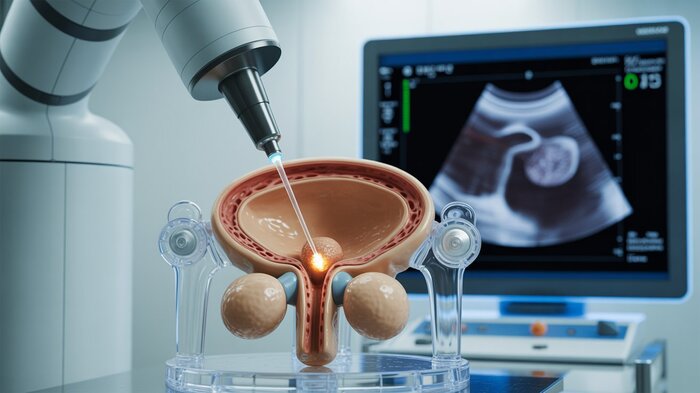
Aquablation replaces the heated wire with a precise, computer-guided water jet. During the procedure, the patient is under general or spinal anesthesia.
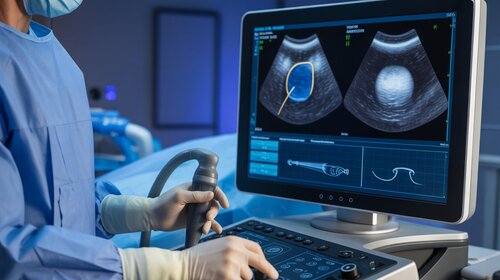
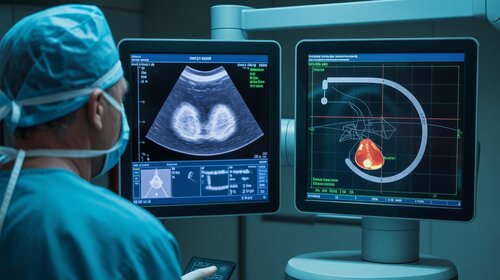
The surgeon inserts a small device through the urethra and uses real-time ultrasound imaging to create a detailed 3D map of the prostate. Then, guided by robotics, the system delivers a high-speed saline stream that removes only the targeted tissue.
Because no heat is used, surrounding nerves are spared and sexual function is more likely to remain intact.

The Pioneers Behind the Breakthrough
The idea was born in Silicon Valley. In 2009, optical engineer Reza Zadno and a small team founded PROCEPT BioRobotics in California with a goal to create a gentler, more precise way to treat BPH.
Around the same time, urologist Dr. Nikhil Shah in Atlanta began refining clinical techniques that could match robotic precision with surgical safety. But it was Professor Peter Gilling, a urologist in Tauranga, New Zealand, who brought the technology to life in humans.
In 2013, he performed the first successful Aquablation surgeries, proving that controlled waterjet resection could safely restore urine flow.
You can see my video with Tony H in Wyoming all about How Aquablation Saved Me After 10 Years of BPH Misery here.
From Trial to Approval
Early studies from New Zealand caught the attention of researchers worldwide. The pivotal WATER trial, led by Gilling and Shah, compared Aquablation to TURP in more than 180 men. The results were striking: both groups improved equally in urinary symptoms, but Aquablation patients were far less likely to lose normal ejaculation.
Only about 10 percent did, compared with 36 percent after TURP. Within months, the findings were published, and in 2017 the U.S. Food and Drug Administration approved the AquaBeam system for clinical use.

Results That Match the Gold Standard
Since then, more than one hundred medical centers across the United States, Europe, and Australasia have adopted the procedure. The data are consistent.
On average, men report a 15 to 17 point drop in their International Prostate Symptom Score and a ten milliliters-per-second improvement in urinary flow rate. In larger studies that followed patients for five years, these results remained stable.
A 2024 report tracking 330 men with prostates averaging 110 milliliters showed that their symptom scores dropped from 23.8 to 6.9, and their flow rates rose from 6.4 to 17.4 milliliters per second.
Less Damage, Faster Recovery
Because the technology uses only water, it avoids the thermal injury that can occur with electrical or laser tools. This difference matters. Retrograde ejaculation, a condition where semen travels backward into the bladder, occurs in roughly one in ten Aquablation patients compared with one in three after TURP.
Erectile function is usually preserved, and incontinence is rare. Most men spend one night in the hospital, use a catheter for about a day, and return to work within a week.

Who It Helps Most
Aquablation is best suited for men with moderate to severe BPH who want to keep their sexual function intact and who may have larger prostates that make other procedures more difficult.
It is also ideal for those who have failed medication or wish to avoid implants like UroLift or thermal therapies such as Rezūm. The procedure can treat prostates up to about 150 milliliters in size, a range that previously required more invasive surgery.
You can see my video with Tony H in Wyoming all about How Aquablation Saved Me After 10 Years of BPH Misery here.
What It Costs and Where It's Available
In the United States, Aquablation is covered by Medicare and most private insurers, though the total cost can range from ten thousand to twenty thousand dollars depending on the hospital.
Outside the U.S., it is increasingly available in the United Kingdom, Europe, Australia, and New Zealand, with training centers now expanding into Asia and the Middle East.
Not Without Limitations
No procedure is perfect. Aquablation still carries a small risk of bleeding, infection, or temporary urinary urgency. A few patients need a second treatment years later, though retreatment rates remain low, around three to five percent at five years.
The main limitation is that long-term results beyond ten years are not yet available, simply because the technology is new. TURP still has the advantage of history, with more than four decades of follow-up data.
What Patients Should Ask
Men considering Aquablation should talk openly with their urologist. The key questions are simple: Am I a good candidate for this procedure? How many Aquablation surgeries have you performed? What are my chances of keeping normal ejaculation? And how does this compare with other options for my prostate size? A well-trained surgeon using modern imaging can answer these precisely.
A Revolution in How We Treat BPH
The beauty of Aquablation is its balance. It brings robotic accuracy to one of the most common men's health problems, using nothing more than saline and software.
The early studies led by Peter Gilling in New Zealand, supported by engineers like Reza Zadno and clinicians like Nikhil Shah, have changed what urologists thought possible. As Gilling put it in one interview, “We wanted a system that could be precise, repeatable, and kind to the man's body.”
Today, with five-year data showing consistent relief and preservation of sexual function, that vision is being realized. For men everywhere who once faced a difficult choice between relief and intimacy, Aquablation is offering something that medicine rarely achieves: real progress that feels almost gentle.
About the Author
Scott Oliver, 66, is living well with prostate cancer after dedicating more than 4,000 hours to researching the condition. His first goal is to help men reduce their risk of developing prostate cancer through proven lifestyle strategies.
When diagnosed, his mission is to help men avoid unnecessary prostate surgeries that can lead to devastating complications such as incontinence, bleeding, permanent impotence, and a loss of length.
Scott Oliver is not a doctor and does not offer medical advice; however, he is healthier and fitter than he has been in decades. Through his articles and videos, he shares hard-to-find, uncensored information on proven alternative therapies, effective fitness methods, and repurposed drugs, content that most doctors won’t mention and search engines suppress.
He is an accredited member of the National Writers Union (NWU) and the International Federation of Journalists (IFJ), the world’s largest organization of professional journalists. Scott is also the author of What If Cancer’s Best Defense Is Free? Sleep as a Defense Against Cancer: A Former Royal Marines Commando’s 4,000-Hour Research Roadmap, where he reveals how sleep repairs DNA, restores immunity, and strengthens the body’s natural defenses against cancer.
You can always contact Scott Oliver here with your questions and suggestions.
Scientific and Medical References Personally Reviewed by Scott Oliver.
- Five-Year Outcomes for Aquablation Therapy Compared to TURP – A pivotal randomized clinical trial (WATER study) showing Aquablation provides equal symptom relief to TURP with superior preservation of ejaculatory function and similar safety outcomes. Read the study
- Four-Year Results of Aquablation for Large Prostates (WATER II Trial) – Long-term multicenter data showing sustained improvements in urinary flow and symptom scores for men with prostates averaging 110 mL. Read the study
- Meta-Analysis of Aquablation Therapy for Benign Prostatic Hyperplasia – Systematic review of 551 men demonstrating consistent improvement in IPSS (−16.5 points) and urinary flow (+10.9 mL/s) comparable to TURP. Read the study
- Randomized Trial Comparing Aquablation and TURP – Early phase clinical trial confirming non-inferior symptom relief and significantly lower rates of ejaculation disorders with Aquablation. Read the study
- Does Size Matter? Not for Aquablation Therapy – Cleveland Clinic clinical review discussing outcomes across different prostate sizes and highlighting reduced sexual side effects. Read at Cleveland Clinic
- Aquablation Overview: A Novel Minimally Invasive BPH Treatment – Review article summarizing surgical technique, perioperative outcomes, and safety profile compared to other BPH procedures. Read the overview
- Comparative Effectiveness of BPH Surgeries: Network Meta-Analysis – Large-scale comparison of multiple BPH procedures showing Aquablation performs near the top for symptom relief and quality of life improvement. Read the analysis
- Large Gland Outcomes and Durability of Aquablation Therapy – Peer-reviewed evaluation showing Aquablation remains effective and safe in prostates up to 150 mL, supporting its use in men previously needing open surgery. Read the study
- Recent Advances and Future Directions in Aquablation – Review from SpringerLink highlighting ongoing innovations, training, and next-generation system improvements in robotic BPH surgery. Read the article