The Warrior’s Guide to Political Manipulation: Ten Hidden Weapons Revealed
Picture this: you're sitting at home, watching the news. One channel says one thing, another says the opposite. Online, headlines clash, friends argue, and your phone buzzes with alerts about the latest “breaking crisis.”
Before long, it feels easier to switch off than to sort it all out. That moment of exhaustion is not accidental. It is exactly where many politicians want you.
Modern politics is not just about policies, votes, or laws. It is also about controlling how people think, feel, and react. And the tools that make this possible are not guns or armies, but what you might call “soft weapons” — methods that shape perception. Here are ten of the most powerful.
- Confusion. The fastest way to weaken accountability is to muddy the waters. When officials give contradictory statements, or when multiple versions of a story circulate at once, people quickly lose the will to untangle it. The message becomes: “nobody really knows the truth.” That protects those in power.
- Chaos. Chaos is confusion on a grand scale. A government may allow a crisis to spin out of control or fail to act until the situation is dire. In the middle of turmoil, citizens stop asking who caused it and instead beg for someone to restore order. Leaders step in as saviors, even if they fueled the mess to begin with.
- Fear. Fear is the most primal motivator. It can be fear of terrorism, disease, economic collapse, or an unnamed enemy. Fear drives people to accept stronger control and harsher laws because survival feels more urgent than freedom.
- Division. Few tools are as effective as splitting a population in two. By framing politics as “us versus them,” leaders keep citizens fighting each other. Every ounce of energy spent on internal battles is energy not spent on questioning those who hold real power.
- Distraction. Sometimes the best way to keep the public calm is to keep them busy. Politicians or their allies flood the headlines with celebrity scandals, petty rivalries, or dramatic but minor stories. While eyes are fixed on the noise, bigger and often more damaging decisions slip by with little resistance.

- Misdirection. This tactic works like a magician's trick. When pressed about a scandal, a leader pivots to an unrelated talking point, often blaming someone else. Critics then chase the decoy, and the original question fades into the background.
- Simplification (Slogans). Complex problems rarely fit into three words, but that doesn't stop politicians from trying. “Take Back Control,” “Build Back Better,” “Yes We Can.” Slogans are easy to remember and hard to question, even if they oversimplify serious issues. Nuance disappears, replaced by emotion and identity.
- Overwhelm (Information Flooding). Sometimes the truth is buried not by silence, but by noise. Release so many reports, statistics, leaks, and half-truths that people give up trying to separate fact from fiction. Overwhelm leads to resignation — and resignation means obedience.
- Victimhood and Blame-Shifting. When things go wrong, some leaders present themselves as the victim. They claim to be unfairly targeted, or they shift the blame to foreigners, minorities, or political rivals. This tactic redirects anger and keeps accountability out of reach.
- Urgency (“Shock Doctrine”). In moments of crisis, the cry goes up: “We must act now!” By framing decisions as emergencies, leaders sidestep debate and push through policies that would never survive slow, careful scrutiny. The urgency is real enough to scare people, but often exaggerated enough to justify extraordinary measures.
How These Weapons Work Together
Each of these tools can be effective on its own, but combined they create a powerful shield against accountability.
- Confusion and chaos weaken clarity and stability.
- Fear, division, and urgency short-circuit rational thought.
- Distraction, misdirection, slogans, and flooding shape the information environment.
- Victimhood reframes failure as injustice.
The result? A public that is anxious, divided, and too weary to demand better.
The Reassuring Truth
Here's the good news: once you learn to spot these weapons, their power fades. If you notice sudden contradictions, a crisis used to silence debate, or a catchy slogan that explains nothing, you've already broken the spell.
Ask yourself:
- What is missing from this story?
- Who benefits if I stay confused, fearful, or divided?
- Am I being nudged to react quickly instead of thinking carefully?
The answers won't always be simple, but the act of questioning is itself a shield. Awareness is the antidote to manipulation. Politicians may keep their arsenal, but you don't have to be an easy target.
Bottom line: The more we understand how confusion, chaos, fear, and the rest are used against us, the less effective they become. Knowledge turns fog into clarity — and clarity is the first step toward freedom.

About the Author
Scott Oliver is a British writer and former Royal Marines Commando who has lived abroad since 1985. Over the last 66 years, he’s called twelve countries home, including twenty-five years in Spanish-speaking nations such as Spain, Costa Rica, and Guatemala. He has also lived in Sierra Leone, Ghana, Nigeria, Liberia, Cyprus, the USA, Grand Cayman and now lives in Mauritius.
A warrior by nature, Scott is living with prostate cancer and writing from the front lines. He speaks directly to men about health, masculinity, freedom, and strength, physically, mentally, emotionally, and sexually. His views are proudly independent: he questions conventional medicine, challenges destructive treatments, and tells the truth most men never hear.
Scott Oliver is an officially accredited member of the National Writers Union (NWU) and the International Federation of Journalists (IFJ), the world’s largest organization of professional journalists. He spent ten years on Wall Street and another decade as an offshore wealth manager, specializing in globally diversified, multi-currency hedge fund portfolios. He is the author of What If Cancer’s Best Defense Is Free? — Sleep as a Defense Against Cancer: A Former Royal Marines Commando’s 4,000-Hour Research Roadmap, where he reveals how sleep repairs DNA, restores immunity, and strengthens your fight against cancer. He’s also the author of books on offshore investing and Costa Rica real estate and has written thousands of articles in English and Spanish on living abroad with courage, clarity, and conviction.
You can always contact Scott Oliver here with your questions and suggestions.
Expert Resources Used By Scott Oliver To Research and Write This Article:
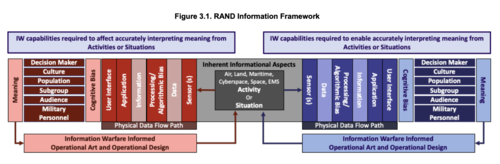
- The Fog of Information Warfare — How overlapping narratives and information warfare create strategic confusion. https://www.rand.org/content/dam/rand/pubs/research_reports/RRA700/RRA771-2/RAND_RRA771-2.pdf
- Misinformation in and about science — Analyzes how false or misleading claims distort public understanding of scientific topics. https://www.pnas.org/doi/10.1073/pnas.1912444117
- Evolving Face Mask Guidance During a Pandemic — A retrospective on how mask guidelines changed and public sentiment shifted. https://pmc.ncbi.nlm.nih.gov/articles/PMC9973548/
- CDC: Masks and Respiratory Viruses Prevention — Current public health position on mask use to reduce viral transmission. https://www.cdc.gov/respiratory-viruses/prevention/masks.html
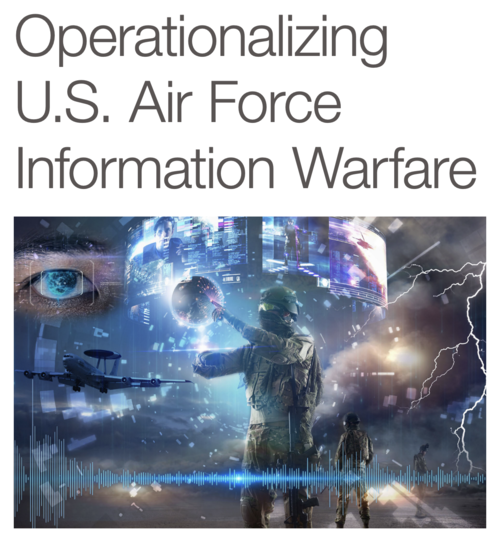
- Operationalizing U.S. Air Force Information Warfare — How information warfare is organized, and how confusion can arise within institutions. https://www.rand.org/content/dam/rand/pubs/research_reports/RRA1700/RRA1740-1/RAND_RRA1740-1.pdf
- DOJ OIG Report on FBI Handling of Confidential Sources — Insights into how official denials and later admissions contribute to confusion about FBI role in January 6. https://oig.justice.gov/news/doj-oig-releases-report-fbis-handling-its-confidential-human-sources-and-intelligence
- Defense Primer: Operations in the Information Environment — How narratives, social media, and cyber operations contribute to strategic manipulation. https://www.congress.gov/crs-product/IF10771
- Science of Misinformation — Podcast and research resources on how misinformation spreads and how to resist it. https://www.pnas.org/post/podcast/science-misinformation