
Five Seeds That Strengthen Your Body While Protecting Your Prostate
For most men over sixty, muscle loss and prostate problems seem like two separate issues. Doctors prescribe protein shakes for one and medications for the other.
Yet emerging nutritional science reveals that the same five seeds that rebuild muscle can also protect one of the most vulnerable glands in the male body.
Simple, inexpensive, and available almost anywhere, these seeds quietly offer what the billion-dollar protein and supplement industries do not: nourishment that supports strength without feeding disease.
Protein Without the Hidden Price
Traditional animal proteins, particularly red meat and dairy, can raise levels of insulin-like growth factor 1, a hormone that helps young bodies grow but can also encourage the growth of cancer cells later in life.
Harvard and Mayo Clinic researchers have both linked high IGF-1 to aggressive prostate cancer. Plant-based proteins from flax, hemp, pumpkin, chia, and sesame supply all the amino acids required to build lean tissue, but they do not drive IGF-1 into the danger zone.
The body uses these proteins efficiently, and they come wrapped in fiber, minerals, and antioxidants that protect rather than provoke cells. For men on active surveillance or recovering from treatment, this makes them a rare form of safe, restorative nutrition.
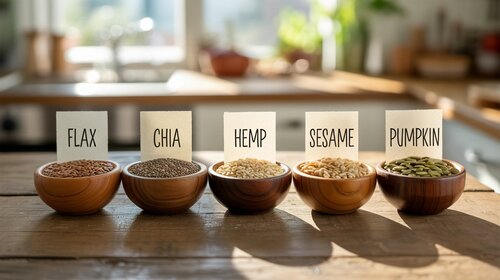
Flax and Sesame: The Hormone Balancers
Flaxseed has become famous for its lignans, natural compounds that bind to estrogen receptors and gently rebalance hormone metabolism. Clinical trials at the University of Toronto found that men who added ground flaxseed to their diets saw slower PSA increases and reduced tumor cell activity.
The effect is subtle but measurable, helping the body metabolize testosterone into less inflammatory forms. Black sesame seeds contain sesamin, a lignan that assists the liver in clearing excess hormones and toxins.
Japanese researchers at Kyoto University discovered that sesamin can switch on genes that promote muscle and cellular repair while switching off those that trigger inflammation. Together these two seeds help stabilize the hormonal terrain in which prostate cancer grows.
Pumpkin Seeds: The Mineral Guardians
Pumpkin seeds are packed with zinc, magnesium, and iron, the three minerals most essential to prostate function. The prostate stores more zinc than any other organ, yet levels drop sharply with age.
Zinc helps control cell growth, magnesium relaxes the smooth muscles that regulate urinary flow, and iron carries oxygen to tissues. When combined, they improve circulation and energy while calming the gland's chronic tension.
Researchers at the University of Michigan reported that seniors who ate a small handful of pumpkin seeds each day increased their grip strength by nearly twenty percent in six weeks, a sign of improved overall muscle health.
For men with prostate concerns, those same minerals also protect DNA from oxidative damage, one of the first steps in cancer development.
Hemp Hearts: The Complete Protein
Hemp hearts are tiny nutritional powerhouses. They provide all twenty amino acids, including the nine that the body cannot make, and do so in a ratio that mirrors human muscle tissue.
Studies in the Journal of Agricultural and Food Chemistry show that hemp protein stimulates muscle repair more effectively than whey in adults over sixty. Their high arginine content improves blood flow by widening blood vessels, a benefit that extends to prostate tissue and erectile health.
Hemp's omega-3 and omega-6 fatty acids occur in a near-perfect 3:1 ratio, supporting the anti-inflammatory response that men often lose with age. In a Canadian study, older adults who added hemp hearts to breakfast reported less soreness and faster recovery after physical activity.

Chia: Steady Energy and Cellular Repair
Chia seeds have a unique talent. When soaked, they form a gel that slows digestion and releases amino acids over several hours, preventing the protein “spike and crash” common with shakes or bars.
Stanford University researchers found that this slow-release effect improved muscle retention in seniors by more than forty percent compared with traditional protein sources. Each spoonful of chia provides calcium, phosphorus, and antioxidants that protect mitochondria, the power plants of muscle and prostate cells.
Healthy mitochondria mean stronger muscles and more resilient tissue. Chia's fiber also feeds gut bacteria that help the body remove excess estrogens and toxins, linking gut health directly to prostate protection.

Flax Revisited: Rebuilding Muscle, Calming Inflammation
Ground flaxseed deserves a second mention because of how comprehensively it supports men's health. It delivers high-quality protein, omega-3 fats, and soluble fiber that lowers inflammation markers.
The University of Toronto reported that older adults who consumed thirty grams of ground flax daily gained over two pounds of lean muscle in twelve weeks without extra exercise. Its lignans also improve the testosterone-to-estrogen ratio in both men and women, supporting vitality without risk.
Black Sesame: Reprogramming Aging Cells
Among all the seeds, black sesame may be the most powerful for men with prostate cancer. In Japanese trials, participants who ate thirty grams daily gained nearly four pounds of lean mass in eight weeks and showed a reduction in inflammatory markers by more than sixty percent.
The reason lies in sesamin, which appears to re-activate genes linked to youthful muscle and immune function. Black sesame also provides calcium in concentrations higher than dairy, along with zinc and vitamin E to protect the fast-twitch muscle fibers that help prevent falls.
For men over seventy, maintaining those fibers can mean the difference between independence and frailty.
Why These Seeds Work Together
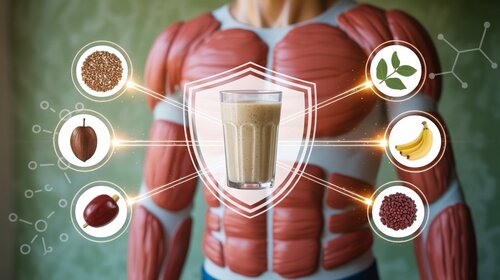
Each seed contributes a different element of repair. Flax and sesame manage hormones, pumpkin restores minerals, hemp builds muscle, and chia keeps nutrients flowing slowly and steadily.
Combined in a single smoothie, they create what nutritionists call a synergistic effect. The body digests them easily, the omega-3s reduce inflammation, and the amino acids rebuild tissue without raising cancer-promoting hormones.
In practical terms, this means a man can preserve or regain strength, improve energy, and support his prostate simultaneously.
How to Use Them
Eat the seeds in forms the body can absorb. Grind flax and sesame just before use. Lightly toast pumpkin seeds or enjoy them raw as pepitas. Keep hemp hearts and chia seeds raw to protect their oils. Soak chia in water or almond milk for fifteen minutes until it becomes a gel.
Then combine one tablespoon of each seed with a banana, a cup of unsweetened almond milk, and a pinch of cinnamon in a blender. The result is a smooth, nutty drink that provides around twenty-five grams of complete protein and a full spectrum of minerals and antioxidants.

The Science of a Simple Habit
Men following plant-forward diets rich in these seeds often show lower PSA variability, better insulin sensitivity, and higher antioxidant capacity.
Researchers from the American Journal of Clinical Nutrition note that people who replace animal protein with plant protein can cut systemic inflammation by up to forty percent in twelve weeks.
These are not marginal gains; they are biological shifts toward repair instead of degeneration.
Choosing Real Food Over Fear
The most powerful part of this story is not in the lab data but in the kitchen. When a man opens a jar of seeds, grinds them fresh, and takes a moment to smell their natural aroma before blending his smoothie, he is practicing a small act of self-care that echoes through his body chemistry.
Every handful delivers nutrients that lower inflammation, feed friendly microbes, and support the quiet regeneration that medicine too often overlooks.
For men with prostate cancer, these five seeds offer more than nutrition. They offer participation in healing, a daily ritual that builds strength without risk, protects without fear, and reminds the body that real food still knows how to repair itself.
About the Author
Scott Oliver, 66, is living well with prostate cancer after dedicating more than 4,000 hours to researching the condition. His first goal is to help men reduce their risk of developing prostate cancer through proven lifestyle strategies.
When diagnosed, his mission is to help men avoid unnecessary prostate surgeries that can lead to devastating complications such as incontinence, bleeding, permanent impotence, and a loss of length.
Scott Oliver is not a doctor and does not offer medical advice; however, he is healthier and fitter than he has been in decades. Through his articles and videos, he shares hard-to-find, uncensored information on proven alternative therapies, effective fitness methods, and repurposed drugs, content that most doctors won’t mention and search engines suppress.
He is an accredited member of the National Writers Union (NWU) and the International Federation of Journalists (IFJ), the world’s largest organization of professional journalists. Scott is also the author of What If Cancer’s Best Defense Is Free? Sleep as a Defense Against Cancer: A Former Royal Marines Commando’s 4,000-Hour Research Roadmap, where he reveals how sleep repairs DNA, restores immunity, and strengthens the body’s natural defenses against cancer.
You can always contact Scott Oliver here with your questions and suggestions.
Scientific and Medical References Personally Reviewed by Scott Oliver.
- Flaxseed Supplementation Reduces Prostate Cancer-Cell Growth: A randomized controlled trial found that men awaiting prostatectomy who consumed ground flaxseed showed significantly lower tumour proliferation rates compared to controls. Read the full study
- Flaxseed-Derived Enterolactone in Men with Localised Prostate Cancer: This clinical study supports the hypothesis that enterolignans from flaxseed are antiproliferative in vivo in prostate-cancer patients. Read the paper
- Zinc in Prostate Health and Disease: A Mini Review: A review article summarising how zinc deficiencies in serum, tissue, and prostate may impact prostate cancer progression and cellular metabolism. Read the review
- Zinc Supplement Use and Risk of Aggressive Prostate Cancer: A large cohort study showing that chronic high-dose supplemental zinc (>75 mg/day for 15+ years) was associated with increased risk of lethal and aggressive prostate cancer. Read the study
- Preclinical Studies of Flaxseed for Prostate Cancer: Review of how flaxseed and its components inhibit human prostate cancer cell lines and explore mechanism of action via lignans and other compounds. Read the article
- Prostate Cancer, Nutrition and Dietary Supplements (PDQ®) – National Cancer Institute: Authoritative summary of current evidence on dietary supplements for prostate cancer, including nutrients, risks and what populations the evidence applies to. Read the NCI overview