
2030: The Last Free Year Before the Great Cull
The disasters unfolding around the world are not accidents, incompetence or unfortunate consequences of well-intentioned policies. They are deliberate.
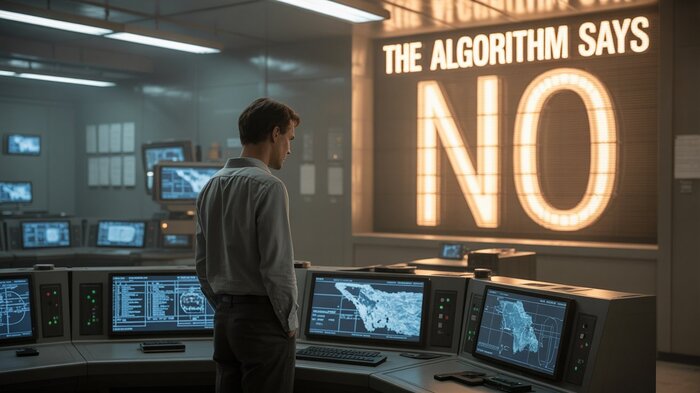
The objective is to destabilise the existing social and economic order so completely that frightened, impoverished and desperate populations will eventually accept a system of control they would never accept under normal circumstances.
The mechanism is simple: PROBLEM → REACTION → SOLUTION.
Create or deliberately intensify the problem. Allow the population to experience the consequences. Wait for fear, anger and desperation to produce the required reaction. Then introduce the solution that was intended from the beginning.
PHASE ONE. DESTABILISE THE WEST
The first stage takes place gradually over many years. Western governments permit migration on a scale their populations increasingly oppose, including very large numbers of young men from profoundly different cultural, religious and economic backgrounds. In the fictional premise, the resulting pressure on housing, healthcare, policing, welfare systems and social cohesion isn't an unforeseen consequence. It is part of the destabilisation process.
Crime, sexual violence, racial tension and civil disorder become increasingly politically explosive. Governments appear incapable of restoring control, while anyone demanding stronger borders or tougher policing risks being characterised as extremist. Trust between communities deteriorates and trust in government collapses with it.
At the same time, the economic foundations of the old society are deliberately weakened. Governments accumulate extraordinary debts, maintain enormous unfunded obligations, increase taxation and regulation, undermine affordable energy and allow living standards to deteriorate. The middle class becomes progressively poorer and more dependent upon the state.
This matters because economically independent people are difficult to control. People who depend upon government for housing, healthcare, food, energy or income are considerably easier to control.
PHASE TWO. ESCALATE THE WARS
By 2026 and 2027, geopolitical confrontation becomes the accelerator. The confrontation between NATO and Russia intensifies until European governments increasingly describe themselves as being effectively at war with Russia. The population is conditioned to accept enormous defence expenditure, emergency powers and further restrictions in the name of national security.
Then the Middle East explodes. War involving Iran causes severe disruption to energy supplies and international shipping. Oil and natural-gas prices soar. Because natural gas is essential to fertiliser production and petroleum powers industrial agriculture, transportation and global logistics, the energy crisis rapidly becomes a fertiliser crisis, then a food crisis.
Poor countries are hit first and hardest. Food shortages spread. Governments collapse. Migration accelerates. Eventually famine kills millions.
If the conflict escalates into a nuclear exchange, the calculation changes completely. Millions could die immediately, while disruption of agriculture, infrastructure, trade and potentially climate could push the eventual death toll vastly higher.
In the dystopian premise, this isn't an unacceptable risk being taken by reckless leaders. Mass death is part of the objective.
PHASE THREE. BREAK THE ECONOMIC SYSTEM
The wars accelerate an economic crisis that was already developing. Energy becomes unaffordable. Food prices surge. Government debt explodes. Pension systems become increasingly impossible to finance. Businesses fail and unemployment rises.
Then AI and robotics deliver the second blow. Within only a few years, artificial intelligence eliminates enormous numbers of administrative, professional, transportation, retail, manufacturing and service jobs. Millions of people who previously supported themselves become economically redundant.
Governments now face precisely the social conditions required for the next stage: enormous numbers of frightened citizens who cannot support themselves and desperately need the state to provide an income.
The proposed solution is Universal Basic Income.
But UBI isn't paid in cash.
PHASE FOUR. DIGITAL ID + CBDC
Every citizen is given a universal Digital ID. Governments explain that it is necessary to control illegal immigration, prevent benefit fraud, fight crime, secure borders, access healthcare and identify who is legally entitled to receive government assistance.
The Digital ID is then connected to a Central Bank Digital Currency.
Cash gradually disappears. Your identity and your money are now part of the same system.
The government no longer needs to send you a tax bill and hope you pay it. Taxes can potentially be deducted automatically. Fines can be deducted automatically. Licence fees can be deducted automatically. Benefits can be deposited automatically.
Most importantly, money itself can potentially become conditional. The state doesn't merely know who you are and how much money you possess. It can potentially know where you are spending it, what you are purchasing and whether the transaction is permitted.
Universal Basic Income therefore becomes both the carrot and the leash. Obey the system and you receive the money required to live within it. Defy the system and your economic existence can become progressively more difficult.
PHASE FIVE. PANDEMIC II
Then another pandemic arrives. Whether the pathogen itself was deliberately created, deliberately released or simply exploited becomes one of the central mysteries of the story.
Governments announce that the mistakes of the previous pandemic cannot be repeated. Fortunately, the technological infrastructure now exists to manage the new emergency far more efficiently.
Digital ID becomes a health passport. Medical records, vaccination status and travel permissions become interconnected. Facial recognition and ubiquitous surveillance make quarantine enforcement possible. AI identifies individuals classified as infection risks.
Citizens who comply retain access to work, travel, public services and their digital money. Those classified as non-compliant face restrictions.
The crucial development is that health status has now become permission status. And because the system itself determines health status, the citizen has little practical ability to challenge it.
PHASE SIX. CLIMATE BECOMES THE PERMANENT EMERGENCY
Pandemics eventually end. Wars eventually end. Climate change doesn't. That makes climate policy the perfect permanent justification for maintaining the infrastructure.
Digital currency already records consumption. Digital identity identifies the consumer. Smart meters record household energy use. Connected vehicles record transportation. Airlines record travel. Retail systems record purchases. AI connects the databases.
Every citizen can therefore be assigned a personal carbon footprint. Initially the system merely provides information and incentives. Later come allowances. Eventually come restrictions.
You've already consumed your monthly meat allowance. You've exceeded your household electricity allocation. You've travelled too frequently this year. You've exceeded your petrol allowance. Your next flight requires additional carbon credits.
In the fictional world, environmental protection has become the mechanism through which consumption itself can be rationed.
PHASE SEVEN. THE SOCIAL CREDIT SYSTEM
Nobody announces the creation of a Chinese-style social-credit system. The existing systems are simply connected.
Digital identity establishes who you are. CBDCs record what you buy. Facial recognition records where you go. Health databases record your medical compliance. Carbon accounting records what you consume. Internet monitoring records what you say. AI combines everything into a continuously updated assessment of your behaviour.
Every person becomes a collection of permissions. The obedient citizen receives easier travel, financial benefits, unrestricted digital payments, priority access to services and full participation in society. The troublesome citizen encounters friction everywhere: additional verification, restricted transactions, suspended benefits, travel limitations, increased insurance costs, mandatory health interventions or automated investigation.
There is no need to imprison millions of dissidents. The system makes disobedience economically and socially unbearable.
PHASE EIGHT. THE GREAT CULL
This is where the story crosses from authoritarian dystopia into something much darker.
The wars have already killed millions. Famine has killed millions more. Pandemics have removed another portion of the population. Collapsing healthcare systems, energy shortages, economic destruction and social disorder continue increasing mortality.
The surviving population is poorer, frightened, exhausted and increasingly dependent upon government.
But AI and robotics have also created a disturbing economic reality: the ruling system no longer requires billions of human workers to operate factories, process information, drive vehicles, administer businesses or even fight wars.
For the first time in history, the people controlling the productive system can begin asking a horrifying question:
If machines can perform most economically necessary work, why does the system need billions of economically dependent human beings at all?
The purpose of UBI changes. It was originally presented as protection from technological unemployment. It becomes a mechanism for managing a population the system regards as economically unnecessary.
Healthcare becomes increasingly rationed. Food and energy allowances tighten. Reproductive behaviour can be incentivised or discouraged. Access to resources becomes dependent upon compliance.
Population reduction no longer requires death camps. It can be accomplished bureaucratically, algorithmically and almost invisibly.
PHASE NINE. 2030
By 2030, the separate crises finally reveal themselves as components of the same architecture.
War created fear. Migration created division. Crime created demand for surveillance. Economic collapse created dependency. AI destroyed employment. UBI made survival dependent upon the state. Digital ID made every individual identifiable. CBDCs made every transaction visible and controllable. Pandemics connected health to permission. Climate policy connected consumption to permission. The Internet of Things connected the physical world to the digital system. Artificial intelligence connected everything together.
And the cumulative death toll from war, famine, disease, economic collapse and deliberate resource restriction has reached into the millions—and threatens eventually to reach hundreds of millions or even billions.
The people were told repeatedly that every new restriction existed for their health, safety, security and the sustainability of the planet.
Only when the infrastructure was complete did they understand what had actually been constructed: a society in which the same system could potentially determine whether you could work, receive money, spend money, travel, obtain healthcare, buy food, use energy, communicate or participate in society at all.
There was no military coup. There were no tanks surrounding Parliament. There was never a single morning on which people woke up and discovered that they were no longer free.
Instead, freedom disappeared one emergency at a time.
And every time another piece disappeared, the population was frightened enough to demand the very system that would ultimately control them.
PROBLEM → REACTION → SOLUTION.
By 2030, the problem is humanity itself.
And the final solution is already waiting.
About the Author
Scott Oliver is a British writer, former Royal Marines Commando, and accredited member of the National Writers Union (NWU) and the International Federation of Journalists (IFJ). Having lived in twelve countries since 1985, he now writes from Mauritius, where he shares independent research on prostate cancer, men's health, freedom, and living abroad. Living well with prostate cancer, Scott has devoted more than 4,000 hours to researching the disease, challenging conventional thinking, and evaluating both mainstream and emerging therapies. He combines that firsthand experience with ten years on Wall Street, a decade as an offshore wealth manager, and a lifetime of international living to help readers make better-informed decisions. You can always contact Scott Oliver here with your questions and suggestions.