Prostate Cancer Cases Globally Expected to Double by 2040
Here are the top 20 most important points taken from this 40 page report: The Lancet Commission on Prostate Cancer: Planning for the surge in cases.
-
Surge in Cases: Prostate cancer cases are expected to rise from 1.4 million in 2020 to 2.9 million by 2040. This increase is driven by demographic changes and longer life expectancies. The surge cannot be prevented by lifestyle changes alone, highlighting the need for strategic planning by governments worldwide.
-
High-Income vs. Low-Income Countries: High-income countries (HICs) generally have better early detection and treatment outcomes compared to low- and middle-income countries (LMICs), where late diagnosis is common. This disparity underscores the need for improved healthcare infrastructure and access in LMICs.
-
Early Diagnosis is Crucial: Early diagnosis of prostate cancer significantly improves prognosis and outcomes, reducing both societal and individual costs. Implementing changes to diagnostic pathways can lead to immediate improvements in patient outcomes.
-
Impact of Late Diagnosis: Late diagnosis of prostate cancer is widespread globally, particularly in LMICs. Addressing this issue through early detection systems is essential to mitigate the harm caused by rising case numbers.
-
Educational Outreach: Increasing awareness and education about prostate cancer is vital, especially in LMICs. Outreach programs leveraging smartphones and social media can help educate the public and improve early detection rates.

Prostate Cancer Cases Expected to Double Globally by 2040 -
Ethnic Disparities in Prostate Cancer: Men of African descent have higher rates of prostate cancer compared to men of European descent. However, most research has disproportionately focused on European populations, highlighting a need for more inclusive studies.
-
Technological Advancements: Utilizing artificial intelligence (AI) and cloud-based medical records can enhance diagnosis and personalized treatment plans. These technologies can fill gaps in healthcare resources and improve care quality, particularly in LMICs.
-
Access to Treatments: Ensuring consistent access to affordable therapies, such as surgery and radiotherapy, is crucial. Expanding these services in LMICs can lead to better outcomes and reduced harm from prostate cancer.
-
Global Research Priorities: More research is needed to understand ethnic differences in prostate cancer prevalence and outcomes. This includes studying genetic, social, and environmental factors that contribute to these disparities.
-
Preventive Strategies: Screening and early detection programs should be tailored to not only prostate cancer but also broader men's health issues like diabetes and heart disease. This holistic approach can improve overall health outcomes.
-
Artificial Intelligence in Diagnosis: AI systems can aid in the interpretation of scans and biopsy samples, supplementing healthcare providers, especially in resource-limited settings. These systems can enhance accuracy and improve patient care.
-
Importance of Personalized Care: Empowering patients with control over their medical records through cloud-based systems can lead to more informed and personalized treatment plans. This approach can drive evidence-based changes in healthcare practices.
-
Challenges in LMICs: The shortage of specialist surgeons and radiotherapy equipment in LMICs is a significant barrier to improving prostate cancer care. Addressing these shortages is key to enhancing global health equity.
-
Screening Trials Needed in LMICs: There is an urgent need for prostate cancer screening trials in LMICs to better inform early detection strategies and improve outcomes for men in these regions.
Prostate Cancer -
Impact of Demographic Changes: As life expectancy increases and populations age, the incidence of prostate cancer will rise, particularly in LMICs. Planning for this demographic shift is essential for future healthcare strategies.
-
Role of Biomarkers: New biomarkers and genetic tests can improve risk stratification and early detection of clinically significant prostate cancer. Integrating these tools into clinical practice can reduce unnecessary biopsies and overtreatment.
-
MRI in Early Detection: Multi-parametric MRI (mpMRI) is effective in early detection and diagnosis of prostate cancer. It helps in identifying clinically significant cancers and reducing the diagnosis of indolent tumors that do not require treatment.
-
Prostate Cancer Mortality: Prostate cancer accounted for around 375,000 deaths globally in 2020. Mortality rates are highest in the Caribbean and sub-Saharan Africa, reflecting disparities in healthcare access and quality.
-
Variability in Incidence and Mortality: There are substantial global variations in prostate cancer incidence and mortality, influenced by factors like PSA testing availability, healthcare access, and genetic predispositions.
-
Global Call to Action: The Lancet Commission's findings provide a comprehensive roadmap for healthcare providers, researchers, and policymakers to address the rising burden of prostate cancer. Implementing these recommendations can improve global men's health both now and in the future.


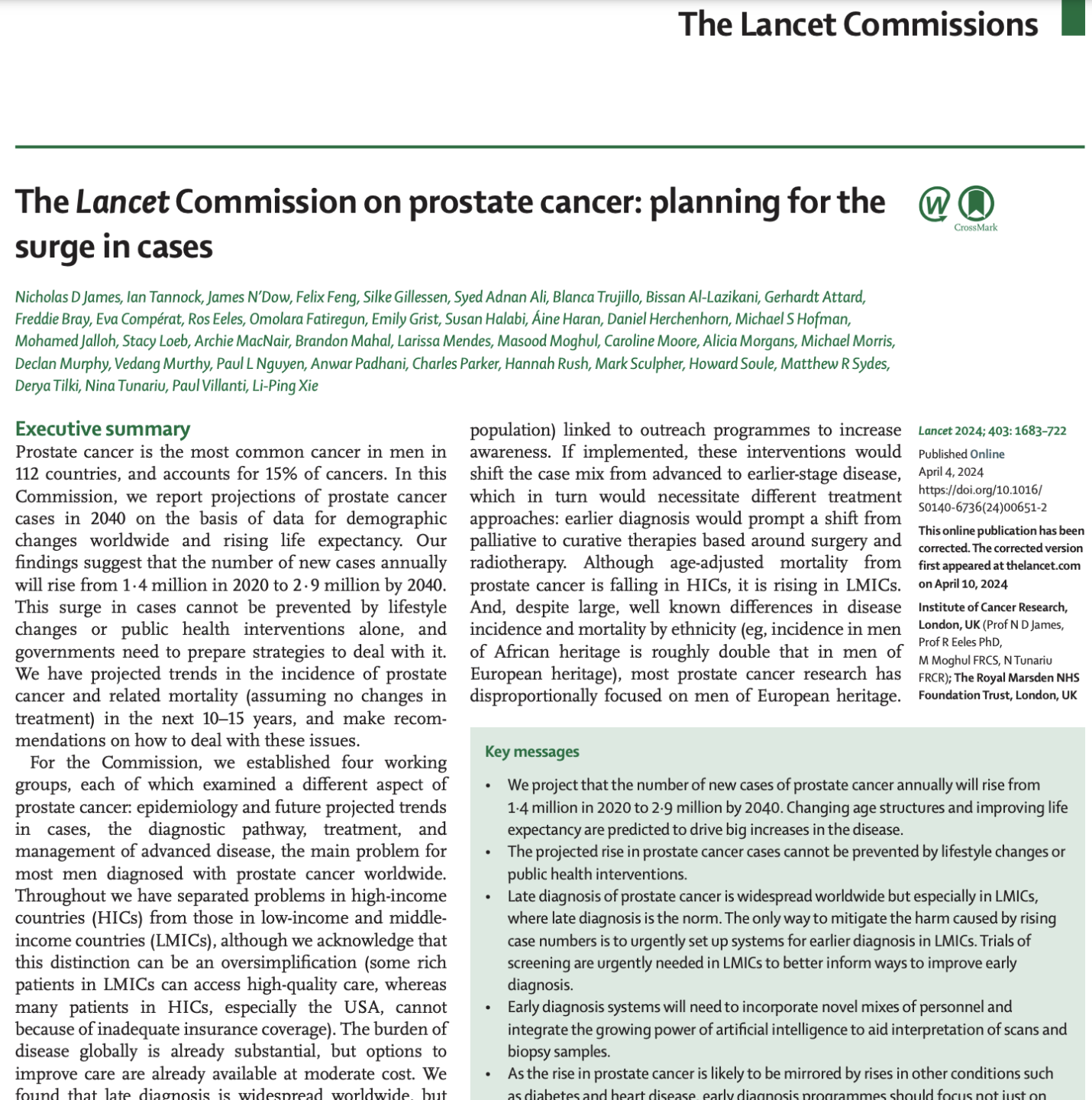
Quality of Research:
The Lancet Commission's research is highly regarded for its thoroughness and reliability. The report is based on extensive data analysis and projections, involving contributions from global experts in various fields including oncology, epidemiology, and health economics.
The use of high-quality data from reputable sources such as the International Agency for Research on Cancer (IARC) and comprehensive literature reviews ensures the credibility and accuracy of the findings.
This rigorous approach makes the Commission's recommendations a valuable resource for addressing the future challenges of prostate cancer globally.
Scott Oliver, 66, is living well with prostate cancer after dedicating more than 4,000 hours to researching the condition. His first goal is to help men reduce their risk of developing prostate cancer through proven lifestyle strategies.
When diagnosed, his mission is to help men avoid unnecessary prostate surgeries that can lead to devastating complications such as incontinence, bleeding, permanent impotence, and a loss of length.
Scott Oliver is not a doctor and does not offer medical advice; however, he is healthier and fitter than he has been in decades. Through his articles and videos, he shares hard-to-find, uncensored information on proven alternative therapies, effective fitness methods, and repurposed drugs, content that most doctors won’t mention and search engines suppress.
He is an accredited member of the National Writers Union (NWU) and the International Federation of Journalists (IFJ), the world’s largest organization of professional journalists. Scott is also the author of What If Cancer’s Best Defense Is Free? Sleep as a Defense Against Cancer: A Former Royal Marines Commando’s 4,000-Hour Research Roadmap, where he reveals how sleep repairs DNA, restores immunity, and strengthens the body’s natural defenses against cancer.
You can always contact Scott Oliver here with your questions and suggestions.
About the Author