Collagen and Penis Health: Why It Matters for Every Man and the Women Who Love Them.
Most people know that collagen is important for skin, joints, and hair. But few realize that it's also a key part of a man's penis. In fact, collagen plays a major role in how strong, flexible, and firm the penis can be.
This matters even more for men with prostate cancer and the women who love them. Whether you're navigating active surveillance, healing from surgery, or supporting recovery from radiation or hormone therapy, understanding how collagen works can help you protect sexual vitality and confidence.
This article explains how collagen supports the penis, what happens as collagen declines, and how to protect and restore it naturally.
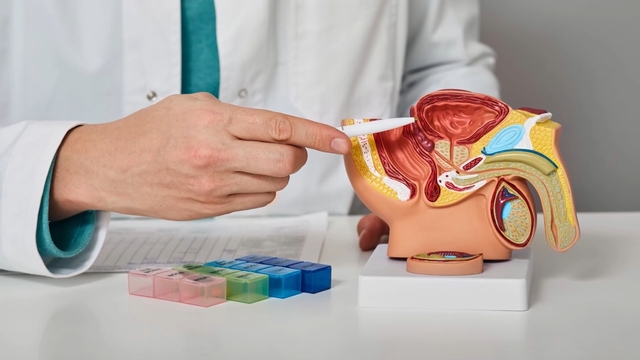
Understanding the Structure of the Penis
The penis is made of several important parts:
- Corpora Cavernosa: Two sponge-like chambers that fill with blood to create an erection.
- Tunica Albuginea: A strong, stretchy layer that surrounds the corpora cavernosa.
- Corpus Spongiosum: A smaller chamber that protects the urethra (urine and semen tube).
- Connective Tissues: These tissues hold everything together and provide structure.
The tunica albuginea and surrounding connective tissues are rich in collagen. Collagen gives these parts strength and elasticity. It helps the penis expand during an erection and return to normal afterward.
Without enough collagen, the penis can become weaker, less flexible, and more prone to injury or problems like curvature (Peyronie's disease).
What Happens to Collagen as You Age or Undergo Prostate Cancer Treatment?
As men age, the body naturally produces less collagen. But men with prostate cancer may experience collagen loss even faster due to treatment:
- Surgery and radiation can damage blood vessels and connective tissue, increasing the risk of scarring and fibrosis.
- Hormone therapy (ADT) lowers testosterone, which also reduces collagen production and can lead to tissue shrinkage and loss of firmness.
Here's what this means for the penis:
- Less Rigidity: Erections may not feel as firm.
- Reduced Elasticity: The penis may not stretch as easily, and might feel smaller.
- Increased Risk of Injury: Weaker tissue is more likely to tear or scar.
- Curvature or Pain: Loss of collagen may lead to scar tissue and Peyronie's disease.
- Slower Healing: Injuries to the tissue take longer to repair.
For men on active surveillance, this is a window of opportunity to protect and rebuild collagen naturally, before any treatment is done.
How to Measure Collagen Levels in the Body or Penis
There is no easy blood test to measure collagen in the penis. However, doctors and researchers can use some indirect methods:
- Ultrasound or MRI Elastography: Measures tissue stiffness (related to collagen).
- Hydroxyproline Test: Measures collagen breakdown products in urine or blood.
- Penile Doppler Ultrasound: Checks tissue quality and blood flow.
- Signs and Symptoms: Less firmness, shrinkage, longer recovery time may all point to collagen decline.
3-Part Plan to Protect and Restore Collagen for Sexual Health
Part 1: Protect Your Existing Collagen
- Avoid smoking (destroys collagen and blood flow)
- Limit sugar and refined carbs (they stiffen collagen)
- Reduce alcohol and chronic stress
- Stay active to improve blood flow
- Maintain regular erections (use it or lose it)
Part 2: Rebuild Collagen Naturally
- Eat high-protein foods (amino acids for collagen)
- Take vitamin C (helps build collagen)
- Add zinc, copper, and silica-rich foods (like oysters, seeds, cucumbers)
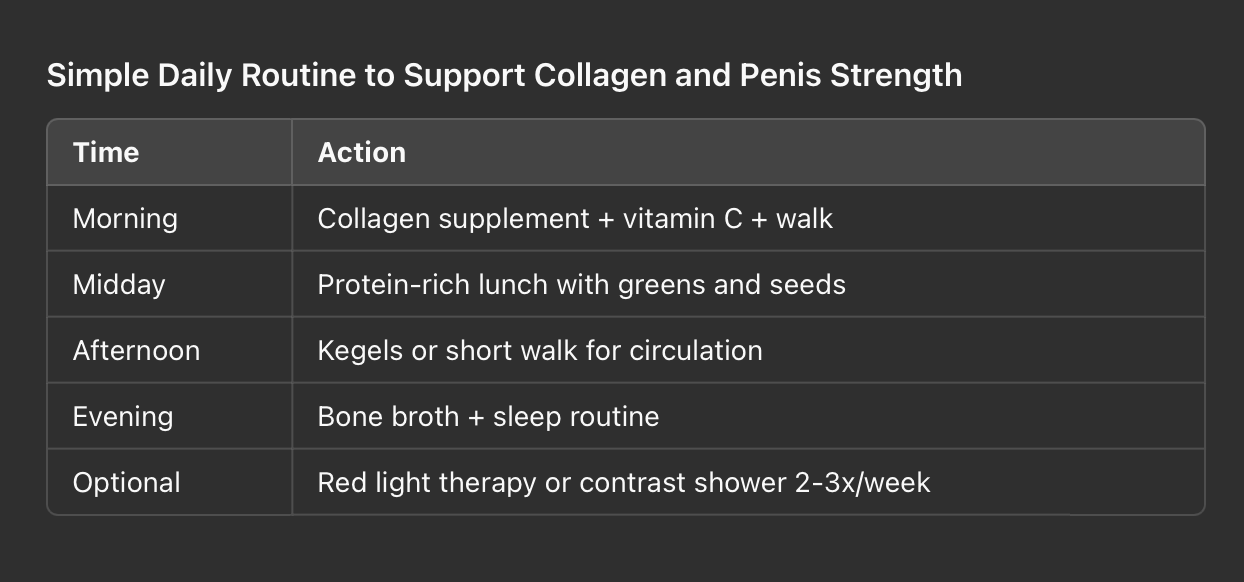
- Drink bone broth or use collagen peptides (10-20g/day)
Part 3: Stimulate Collagen in the Penis Area
- Do Kegel exercises for pelvic strength
- Try warm-cold contrast showers to boost circulation
- Use red light therapy (850nm) on lower abdomen or perineum
- Sleep well (deep sleep is when collagen is made)
- Consider vacuum erection devices or gentle penile massage after treatment
A Special Note for Women Who Love a Man with Prostate Cancer
Your love, patience, and encouragement can make all the difference. Collagen isn't just about science – it's about helping the man you love feel strong, masculine, and capable.
Working together to rebuild health and vitality after a prostate cancer diagnosis can deepen emotional and physical intimacy. Let healing be a shared journey.

The Prostate Cancer Warrior's Conclusion
Collagen is not just about looking young—it's also key to keeping the penis strong, elastic, and responsive. For men with prostate cancer, it can mean the difference between loss and recovery, between discouragement and hope.
While some treatments can damage collagen, there are many things you can do to slow that loss and rebuild what was lost. By eating right, avoiding harmful habits, staying active, and using smart tools like collagen supplements and red light therapy, you can support long-term sexual vitality.
This is not just about erections. It's about identity, intimacy, and quality of life.
About the Author
Scott Oliver, 66, is living well with prostate cancer after dedicating more than 4,000 hours to researching the condition. His first goal is to help men reduce their risk of developing prostate cancer through proven lifestyle strategies.
When diagnosed, his mission is to help men avoid unnecessary prostate surgeries that can lead to devastating complications such as incontinence, bleeding, permanent impotence, and a loss of length.
Scott Oliver is not a doctor and does not offer medical advice; however, he is healthier and fitter than he has been in decades. Through his articles and videos, he shares hard-to-find, uncensored information on proven alternative therapies, effective fitness methods, and repurposed drugs, content that most doctors won’t mention and search engines suppress.
He is an accredited member of the National Writers Union (NWU) and the International Federation of Journalists (IFJ), the world’s largest organization of professional journalists. Scott is also the author of What If Cancer’s Best Defense Is Free? Sleep as a Defense Against Cancer: A Former Royal Marines Commando’s 4,000-Hour Research Roadmap, where he reveals how sleep repairs DNA, restores immunity, and strengthens the body’s natural defenses against cancer.
You can always contact Scott Oliver here with your questions and suggestions.
Resources Used To Research and Write This Article:
1. Collagen structure and function
“Collagen: The Fibrous Proteins of the Matrix” – NCBI, Molecular Biology of the Cell
https://www.ncbi.nlm.nih.gov/books/NBK21582/
2. Tunica albuginea and erectile function
“Structure and Function of the Human Penis: Tunica Albuginea” – Urology Journal
https://www.goldjournal.net/article/S0090-4295(01)01290-6/fulltext
3. Age-related collagen decline
“Skin Aging and Collagen” – Dermato-Endocrinology (NCBI)
https://www.ncbi.nlm.nih.gov/pmc/articles/PMC3583892/
4. Hydroxyproline as a collagen marker
“Urinary Hydroxyproline Excretion and Collagen Turnover” – PubMed
https://pubmed.ncbi.nlm.nih.gov/11732855/
5. Collagen peptides and supplementation
“Oral Supplementation with Specific Bioactive Collagen Peptides Improves Skin Elasticity” – Skin Pharmacology and Physiology
https://www.karger.com/Article/FullText/355425
6. Red light therapy and collagen production
“Low-Level Laser (Light) Therapy (LLLT) on Collagen Production” – Lasers in Surgery and Medicine (NIH)
https://www.ncbi.nlm.nih.gov/pmc/articles/PMC3926176/
7. Collagen and Peyronie's disease
“Pathophysiology of Peyronie's Disease” – Translational Andrology and Urology
https://tau.amegroups.org/article/view/1081/html
8. Effects of ADT on muscle and connective tissue
“Adverse Effects of Androgen Deprivation Therapy” – Reviews in Urology
https://www.ncbi.nlm.nih.gov/pmc/articles/PMC1470652/
9. Vacuum erection devices and penile rehab
“Penile Rehabilitation after Radical Prostatectomy” – Therapeutic Advances in Urology