CBDCs and the End of Financial Freedom for Americans Abroad
For decades, Americans who moved overseas found a unique kind of freedom. You could build a new life in the mountains of Ecuador or on the beaches of Thailand, earn your income online, reduce your cost of living — and even minimize your taxes if you followed the rules.
For many, it was the ultimate exit strategy. A way to reclaim control over your life, your money, and your future.
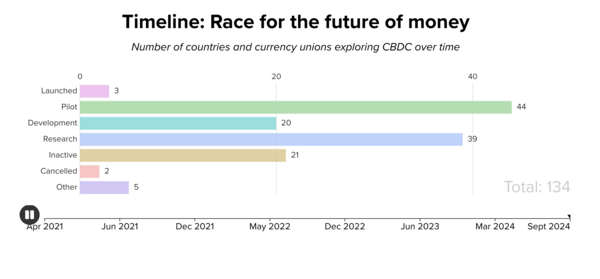
But a new financial system is being built; quietly, quickly, and globally. It's called a Central Bank Digital Currency (CBDC). And for Americans abroad, it could close the last true escape hatch.
What Is a CBDC, Really?
CBDCs are government-issued digital money. Don't confuse them with crypto. They aren't private, decentralized, or anonymous. They're programmable, traceable, and centrally controlled.
Yes, they promise convenience with instant payments, direct stimulus, no more lost checks. But they also mean total visibility and control over how money is earned, saved, and spent.
For Americans abroad, that's a game-changer.

Why Americans Living Overseas Are in the Crosshairs
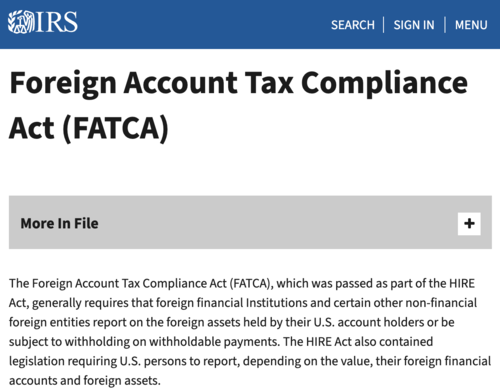
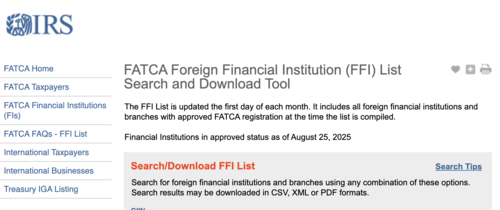
The U.S. is one of the only countries that taxes its citizens no matter where they live. Under FATCA (the Foreign Account Tax Compliance Act), foreign banks must already report American accounts to the IRS or face crushing penalties.
Now imagine that level of oversight applied to every transaction you make: your groceries in Mexico, your rent in Spain, your medical bills in Thailand.
A U.S. CBDC will almost certainly be linked to your identity, tax file, and compliance history. Living outside the U.S. won't shield you. In fact, it may put you under a microscope.
And remember: if you're a U.S. citizen, failing to report your global income isn't just a technicality. It carries heavy risks: back taxes, huge fines, frozen accounts, and even the potential loss of your passport. With CBDCs, the chance of slipping under the radar disappears.
The System Is Already Being Built
The U.S. Federal Reserve has already launched FedNow the instant payments network widely seen as the foundation for a future digital dollar. At the same time, the IMF, World Bank, and Bank for International Settlements (BIS) are coordinating global CBDC standards.
In plain English? Your overseas spending will no longer be invisible. It will be interoperable, reportable, and connected to IRS systems by design.
And countries that rely on U.S. markets, investment, or aid will have little choice but to plug into this system.
Palantir and the Coming Infrastructure of Total Financial Surveillance
Palantir the same company that built data-integration platforms for the CIA, NSA, and ICE is already under contract with the U.S. Treasury to develop a “common API” for financial data and has been questioned by Congress about plans to build a mega-database linking IRS records with other government data.
Palantir denies creating a single master file on every American, but its software is designed to fuse vast datasets, run compliance algorithms, and flag anomalies across multiple agencies.
If a U.S. CBDC is launched on top of this kind of infrastructure, it would amount to total visibility into the financial lives of Americans worldwide: every payment, every transfer, every account.
Once transactions are digital, programmable, and tied to a government-issued ID, there is no need to subpoena banks or ask for records the system sees and records everything automatically.
For Americans abroad, the combination of CBDCs, FATCA reporting, and Palantir-style analytics would make it nearly impossible to operate “off the grid” financially.
Escape Becomes Impossible
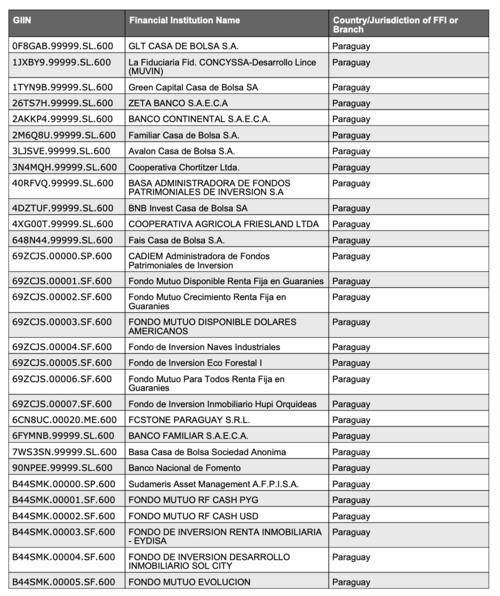
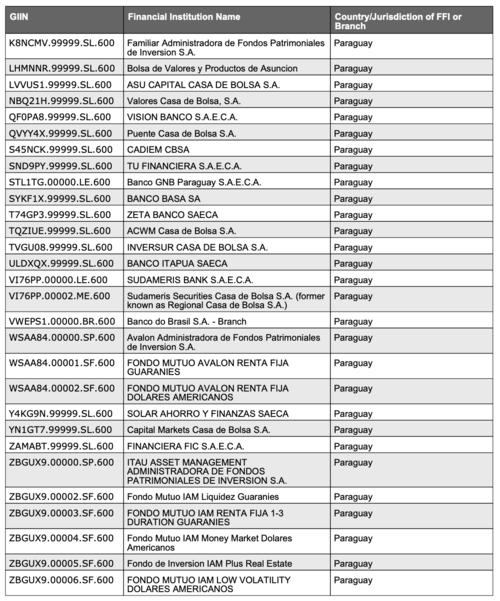
Picture this: you're a U.S. citizen living in Paraguay, working remotely, banking locally, and filing your taxes under the Foreign Earned Income Exclusion.
In the CBDC world, you could be:
- Required to receive income through a U.S.-linked digital wallet
- Flagged for “compliance review” every time your spending patterns don't match your reported income
- Blocked from services if you don't meet new digital ID requirements
- Automatically penalized for transactions that look suspicious or “non-compliant”
And if you try to avoid the system altogether? You risk losing access to Social Security, U.S. bank transfers, or even passport renewals.
What Happens to the Nomad Dream?
The digital nomad lifestyle was about more than beaches and broadband. It was about autonomy, living life on your terms. That only worked when the system couldn't follow you.
CBDCs change that forever. They allow governments to:
- Track you anywhere in the world
- Tax you automatically
- Freeze your funds if you don't comply
This isn't science fiction. The infrastructure is already in place. Once the switch flips, there will be no opting out.
Is There Any Way Out?
There are still options but, none are easy.
Some Americans may choose to renounce citizenship, though that comes with a steep exit tax. Others may try moving to countries that delay CBDC adoption. But the walls are closing in.
For most, the best defense is awareness and preparation:
- Stay informed about your host country's CBDC timeline.
- Diversify assets legally before restrictions tighten.
- Explore decentralized alternatives while they remain accessible.
- Above all, play by the book. The IRS already hunts for non-compliance, and CBDCs will only sharpen its teeth.
“By 2030, the escape doors close. Act now, or lose your financial freedom forever.” Scott Oliver
Final Thoughts
If you are a U.S. citizen and thought living abroad meant escaping the grip of the U.S. system, think again.
CBDCs aren't just about money. They're about control and compliance, closing every escape hatch that once made the expat or nomad lifestyle truly free.
The timeline is short. The plumbing is already in place. By 2027, CBDCs and digital IDs will begin creeping into everyday life. By 2030, the system will be so integrated and automated that every U.S. citizen's financial life — at home or abroad — will be visible, monitored, and taxed in real time.
For digital nomads, that means only 3–5 years remain to earn, establish yourself abroad, and structure your finances before the surveillance gates swing shut.
The clock is ticking. Prepare now because in my humble opinion by 2030, there will be no escape.

About the Author
Scott Oliver is a British writer and former Royal Marines Commando who has lived abroad since 1985. Over the last 66 years, he’s called twelve countries home, including twenty-five years in Spanish-speaking nations such as Spain, Costa Rica, and Guatemala. He has also lived in Sierra Leone, Ghana, Nigeria, Liberia, Cyprus, the USA, Grand Cayman and now lives in Mauritius.
A warrior by nature, Scott is living with prostate cancer and writing from the front lines. He speaks directly to men about health, masculinity, freedom, and strength, physically, mentally, emotionally, and sexually. His views are proudly independent: he questions conventional medicine, challenges destructive treatments, and tells the truth most men never hear.
Scott Oliver is an officially accredited member of the National Writers Union (NWU) and the International Federation of Journalists (IFJ), the world’s largest organization of professional journalists. He spent ten years on Wall Street and another decade as an offshore wealth manager, specializing in globally diversified, multi-currency hedge fund portfolios. He is the author of What If Cancer’s Best Defense Is Free? — Sleep as a Defense Against Cancer: A Former Royal Marines Commando’s 4,000-Hour Research Roadmap, where he reveals how sleep repairs DNA, restores immunity, and strengthens your fight against cancer. He’s also the author of books on offshore investing and Costa Rica real estate and has written thousands of articles in English and Spanish on living abroad with courage, clarity, and conviction.
You can always contact Scott Oliver here with your questions and suggestions.
Expert Resources Used By Scott Oliver To Research and Write This Article:
- Federal Reserve: FedNow Service Launch
Official announcement of the FedNow instant payments system, widely viewed as the foundation for a future digital dollar. Read more - BIS: Project mBridge
Bank for International Settlements' cross-border CBDC project with China, Hong Kong, Thailand, and the UAE, showing how CBDCs will interconnect globally. Read more - IRS: Foreign Account Tax Compliance Act (FATCA)
Overview of FATCA rules requiring foreign banks to report U.S. citizens' accounts and assets, setting the stage for global financial surveillance. Read more - U.S. Senate Finance Committee: Palantir and IRS Mega-Database Concerns
Lawmakers demand answers from Palantir about its potential role in building a unified taxpayer database linking IRS and other government data. Read more - American Immigration Council: Palantir's Role in ICE Surveillance
Detailed look at how Palantir integrates data across agencies like IRS, Social Security, and immigration systems for enforcement purposes. Read more