BritCard: The End of Privacy and the Birth of a Totalitarian Technocracy in the UK?
Imagine waking up in a country you barely recognise—still called the United Kingdom, but now you can't rent a flat, get a job, or even visit a GP without showing your government-approved digital ID. That's the future being built right now under the name of BritCard.
They say it's to stop illegal immigration. But if that's really the goal, why are they building a system that tracks you—a legal, tax-paying citizen—at every turn?
“Papers, Please” Comes to Britain
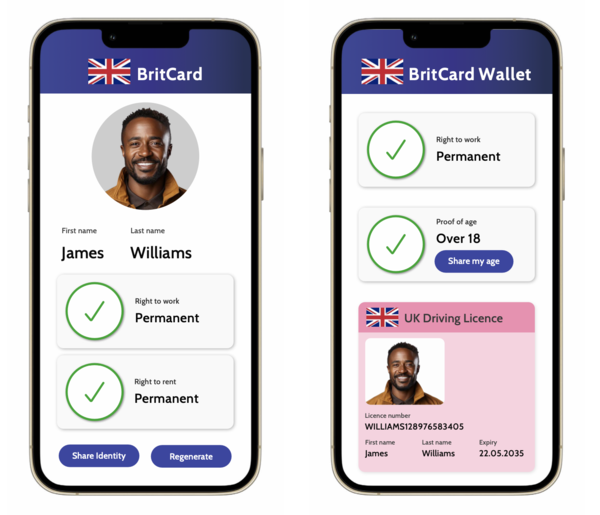
With BritCard, you'll carry a government-issued digital ID on your smartphone. It will be scanned whenever you:
- Apply for a job
- Try to rent a place to live
- Access certain NHS services
- Possibly even buy age-restricted products
No BritCard? No job. No home. No help.
This isn't speculation—it's already planned. By 2028, the BritCard will be mandatory for all new employment and rental contracts.
So ask yourself: What kind of free country requires its own people to prove they “belong” before they can work or live anywhere?
A System That Watches You
Every time your BritCard is scanned, that action is logged by the Home Office.
They'll know when and where your identity was checked. They'll compare it to tax records and employment data. If something doesn't match, your employer or landlord could be fined—or worse, raided.
Now imagine the power this gives to the state:
- Want to work cash-in-hand to make ends meet? Tracked.
- Want to rent a spare room from a friend? Tracked.
- Want to keep a low profile? Impossible.
- You're no longer trusted. You're monitored.
They Let the Problem In, So They Could Sell You the Solution
Some people are asking a hard question: Was this boat crisis allowed to spiral out of control on purpose?
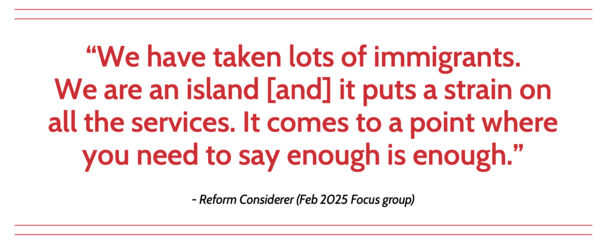
After all, the UK is an island with radar, drones, and coast guards. If they really wanted to stop small boat arrivals, they could. But instead, they let it build—then used the public anger to justify this new digital control system.
It follows an old formula: Problem – Reaction – Solution
- Allow a crisis (illegal immigration)
- Stoke public outrage (media panic, political failure)
- Offer a “solution” (BritCard) that takes away your freedom
Who's Behind This?
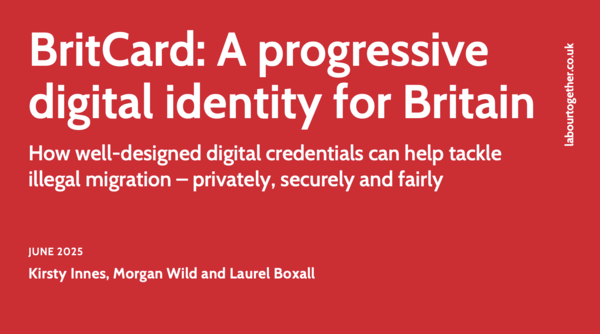
The policy paper driving this initiative—“BritCard: A Progressive Digital Identity for Britain”—was written by Kirsty Innes, Director of Technology at Labour Together, a think tank shaping Labour Party policy. But Innes didn't just appear from nowhere. She previously worked at The Tony Blair Institute for Global Change—an organization with a globalist vision and deep ties to Big Tech and authoritarian governments.
Funded by Oracle billionaire Larry Ellison (over $200 million pledged), the Saudi government, the U.S. State Department, USAID, the Bill & Melinda Gates Foundation, and the World Bank, the Blair Institute aggressively champions biometric IDs and centralized data systems. Innes' fingerprints are all over this model of governance.
So when she now pushes BritCard as a solution for Britain, you have to ask: Whose interests is she really serving? Yours—or the global elite's vision of a monitored, permission-based society?
Brick by Brick, a Digital Prison
Once BritCard is in place, the possibilities for control are endless:
- Link it to benefits? Done.
- Link it to healthcare access? Already discussed.
- Link it to your criminal record or spending habits? Only a small legal tweak away.
They'll tell you it's for your own safety. That it makes things “easier.” But convenience is not freedom. And once you're locked into this system, you'll never get out.
You're Not the Target. You're the Test Case.
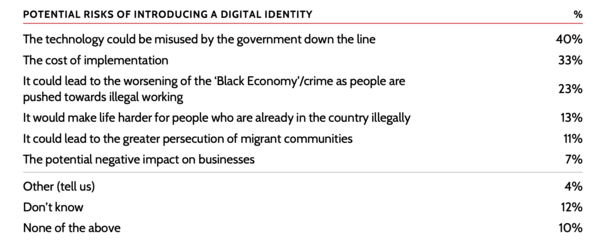
They say it's to catch illegal migrants. But BritCard doesn't target criminals—it targets everyone. The law-abiding. The working poor. Young people. The digitally excluded. If you don't have a smartphone, or fail to jump through the right digital hoops, you're out.
Today, you need a BritCard to rent a flat.
Tomorrow, you'll need it to leave your neighbourhood.
Don't believe it? Just wait.
The End of Privacy
BritCard isn't about protecting you. It's about controlling you.
It turns your right to live, work, and exist into a permission—granted or denied by the state.
And once you accept it, you're no longer a free citizen. You're just a user in the system.
What Can You Do?
Speak out now. Ask questions. Refuse to be part of the silence that always comes before control.
Because once BritCard is in your pocket, freedom is out of your hands.

About the Author
Scott Oliver, 66, is living well with prostate cancer after dedicating more than 4,000 hours to researching the condition. His first goal is to help men reduce their risk of developing prostate cancer through proven lifestyle strategies.
When diagnosed, his mission is to help men avoid unnecessary prostate surgeries that can lead to devastating complications such as incontinence, bleeding, permanent impotence, and a loss of length.
Scott Oliver is not a doctor and does not offer medical advice; however, he is healthier and fitter than he has been in decades. Through his articles and videos, he shares hard-to-find, uncensored information on proven alternative therapies, effective fitness methods, and repurposed drugs, content that most doctors won’t mention and search engines suppress.
He is an accredited member of the National Writers Union (NWU) and the International Federation of Journalists (IFJ), the world’s largest organization of professional journalists. Scott is also the author of What If Cancer’s Best Defense Is Free? Sleep as a Defense Against Cancer: A Former Royal Marines Commando’s 4,000-Hour Research Roadmap, where he reveals how sleep repairs DNA, restores immunity, and strengthens the body’s natural defenses against cancer.
You can always contact Scott Oliver here with your questions and suggestions.
Expert Resources Used To Research and Write This Article:
- BritCard: A Progressive Digital Identity for Britain — Labour Together's June 2025 report on the proposed national digital ID system. Read more
- Tony Blair Institute Receives $52 Million Donation — Politico coverage of Oracle billionaire Larry Ellison's funding to Blair's institute. Read more
- Tony Blair on Covid Passports — Blair argues that vaccine passports and digital ID systems are “inevitable.” Read more
- TBI Calls for Global Digital ID and Health Passports — Tony Blair Institute policy paper on international Covid passport systems. Read more
- Labour Together Think Tank: About and Funding — Overview of the organisation's mission, leadership, and financial sources. Read more
- Windrush Scandal: Lessons Learned Review — UK government report on systemic failures in immigration policy. Read more
- Migration Observatory: Unauthorised Migration in the UK — Oxford-based research on undocumented migration and policy impacts. Read more
- UK Digital Identity & Attributes Trust Framework — Government framework for digital ID verification and use. Read more
- JCWI Report: Right to Rent Checks — Analysis of discriminatory effects of UK rental immigration checks. Read more
- Gov.UK One Login — UK government's identity verification and login platform. Read more
- Tony Blair Institute: 2022 Annual Report — Financial and program overview of the organisation's global activities. Read more
- Amnesty UK: The Windrush Scandal Then and Now — Human rights perspective on the legacy of the scandal. Read more