Your Freedom Has an Expiration Date and It’s Sooner Than You Think
Agenda 2030 is not just an ambitious vision. It's a binding global framework adopted by 193 countries in the United Nations. While it claims to promote sustainability, equality, and global cooperation, the truth is far more dangerous.
Agenda 2030 is the greatest threat to personal freedom that we have ever seen.
If implemented as planned by the 2030 deadline, Agenda 2030 will usher in the most intrusive system of surveillance, control, and obedience ever seen in human history—without the need for a single soldier or shot fired.
What Agenda 2030 Really Means for You
Agenda 2030 includes 17 "Sustainable Development Goals" (SDGs), but beneath the feel-good language lies a total transformation of life as we know it:
- Digital ID for every human on Earth (SDG 16.9)
- Central Bank Digital Currencies (CBDCs) that track and control spending (SDG 8.10)
- Carbon footprints monitored by AI and smart devices (SDG 13)
- 15-minute cities that restrict mobility under climate pretexts (SDG 11)
- Vaccine passports tied to travel, work, and healthcare (SDG 3)
- Censorship of “misinformation” under the banner of “safe and inclusive digital spaces” (SDG 16.10)
- Mandatory gender and climate indoctrination in education (SDG 4.7)
- No private ownership of land, vehicles, or property under circular economy mandates (SDG 12)
The End of Freedom: 5 Key Areas Being Targeted
- Medical Autonomy — WHO-led health emergencies will override national laws.
- Financial Privacy — Programmable CBDCs can be shut off instantly.
- Freedom of Movement — Carbon caps and geo-fencing in smart cities.
- Freedom of Speech — Big Tech and governments flag dissent as “harmful.”
- Parental Rights — Global curriculum undermines family values.
This is not science fiction. It's already underway.
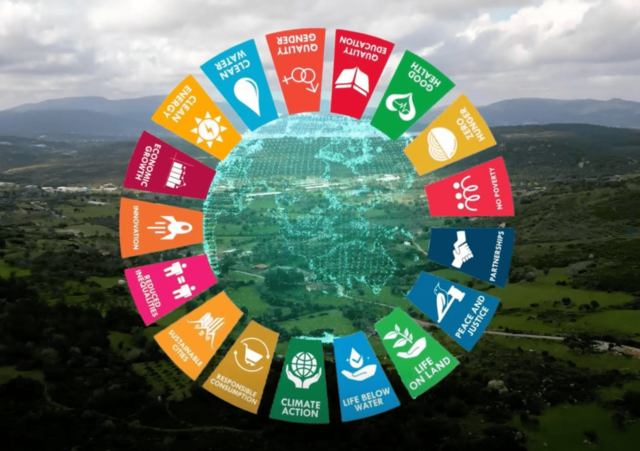
What They Plan to Implement by 2030
Let's break it down. By the time 2030 arrives, the plan is to have the following fully operational:
- Universal Digital Identity: Everyone on Earth will have a government-issued digital ID that connects their health records, financial accounts, social media profiles, and travel permissions. Already piloted in the EU, India, and several African nations.
- Central Bank Digital Currencies (CBDCs). These aren't just digital versions of your money. They're programmable. That means governments—or even private companies—can limit where, when, and on what you're allowed to spend. Cash will be phased out.
- Global Health Governance. The WHO's new Pandemic Treaty gives it the power to declare health emergencies and enforce policies across borders—including lockdowns, digital health passes, and mandatory vaccines.
- Carbon Credit & Tracking Systems. You'll be assigned a personal “carbon budget.” Travel too much? Eat too much meat? Drive a gasoline car? Your privileges may be suspended. Some banks and credit card companies are already testing this model.How to Stay Calm and Think Clearly After a Prostate Cancer DiagnosisGet instant access to your free guide now.Join FreeNo spam. Unsubscribe anytime.
- Smart Cities & 15-Minute Zones. These cities are designed to reduce emissions by keeping you within your assigned zone. Movement will be tracked by cameras and digital checkpoints. It's framed as convenient—until you're penalized for stepping outside your neighborhood.
- Annual mRNA Vaccination Infrastructure. “Updated” shots will become the new seasonal norm. Whether for COVID, RSV, flu, or new diseases, you'll be expected to stay current—or lose access to travel, work, or public services.
- Centralized Education Indoctrination. Children worldwide are being taught globalist values—gender fluidity, racial equity, climate alarmism—often against the wishes of their parents. By 2030, these narratives will be embedded in all school systems.
- AI-Driven Censorship of Dissent. Social media platforms will use AI to monitor, suppress, and penalize “harmful content.” Dissenters won't just be deplatformed—they may be debanked, denied services, or investigated.

Who Is Pushing Agenda 2030—and Why?
Let's be blunt: the people pushing this agenda are not doing it out of compassion. They're doing it to consolidate power.
- United Nations (UN). They created Agenda 2030. While they claim it's voluntary, it's being baked into the laws, education, and budgets of 193 member states. The UN's long-term aim is global governance without national resistance.
- World Economic Forum (WEF). They coined “The Great Reset.” They push public-private partnerships where governments enforce corporate goals—like ESG, digital ID, and Net Zero. Their famous slogan? “You will own nothing and be happy.”
- World Health Organization (WHO). They're pushing for global medical control. Their new treaty would let them override your country's constitution in the event of a declared “health emergency.”
- International Monetary Fund (IMF) & World Bank. They offer loans—but only if countries implement digital IDs, carbon controls, and other “sustainable development” measures. It's control through debt.
- Central Banks (esp. BIS). The Bank for International Settlements (BIS) coordinates CBDC implementation worldwide. They want all financial activity on a programmable, traceable ledger. No escape.
- Big Tech & Big Pharma. Microsoft, Google, Mastercard, Pfizer, Moderna—all deeply involved in digital ID, vaccine passports, AI censorship, and education platforms. They partner with the UN and WEF to turn their tools into permanent systems of control.


These Countries Have Already Committed to Agenda 2030
Most of the world is on board:
- European Union – Digital ID, Green Pass, digital euro, 15-minute cities.
- United States (under Biden) – Executive Orders aligned with SDGs; supports WHO Treaty.
- Canada, UK, Australia, New Zealand – Aggressive implementation of censorship laws, climate controls, and digital health systems.
- India – National biometric ID (Aadhaar); digital currency pilot.
- Brazil, Argentina, Chile, Colombia – UN-compliant national SDG plans.
- South Korea, Japan – Carbon tracking, digital IDs, education reform.
- Kenya, Nigeria, Ghana – UN- and World Bank-backed digital ID and CBDC pilots.
Almost every country on Earth has signed on to implement Agenda 2030. Some are moving faster than others—but nearly all are in motion.
Which Countries in Central and Latin America Support Agenda 2030?
For those of you wondering why on earth I am specifically interested in Central and Latin America, it's because I have lived in Central America (Costa Rica and Guatemala) since 1999.
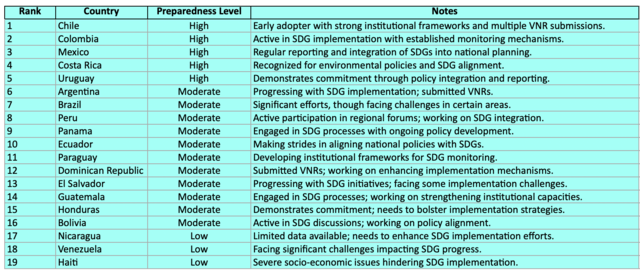
This chart below ranks countries in Central and Latin America by how prepared they are to implement Agenda 2030.
It highlights which nations are furthest along in adopting the UN's Sustainable Development Goals (SDGs)—including digital ID, climate regulations, and surveillance infrastructure—and which ones are lagging behind.
The closer to the top, the more aligned they are with the Agenda 2030 framework.
The Prostate Cancer Warrior's Conclusion:
You're not imagining it. You're not overreacting. This plan is real. It's public. It's progressing fast. And it has nothing to do with saving the planet.
It's about controlling people, not empowering them. It's about creating a world where you no longer make the decisions—you just comply with them.
We have less than five years to speak, prepare, and push back.
If we don't—by 2030, freedom won't be taken from us. We will have given it away.

About the Author
Scott Oliver is a British writer and former Royal Marines Commando who has lived abroad since 1985. Over the last 66 years, he’s called twelve countries home, including twenty-five years in Spanish-speaking nations such as Spain, Costa Rica, and Guatemala. He has also lived in Sierra Leone, Ghana, Nigeria, Liberia, Cyprus, the USA, Grand Cayman and now lives in Mauritius.
A warrior by nature, Scott is living with prostate cancer and writing from the front lines. He speaks directly to men about health, masculinity, freedom, and strength, physically, mentally, emotionally, and sexually. His views are proudly independent: he questions conventional medicine, challenges destructive treatments, and tells the truth most men never hear.
Scott Oliver is an officially accredited member of the National Writers Union (NWU) and the International Federation of Journalists (IFJ), the world’s largest organization of professional journalists. He spent ten years on Wall Street and another decade as an offshore wealth manager, specializing in globally diversified, multi-currency hedge fund portfolios. He is the author of What If Cancer’s Best Defense Is Free? — Sleep as a Defense Against Cancer: A Former Royal Marines Commando’s 4,000-Hour Research Roadmap, where he reveals how sleep repairs DNA, restores immunity, and strengthens your fight against cancer. He’s also the author of books on offshore investing and Costa Rica real estate and has written thousands of articles in English and Spanish on living abroad with courage, clarity, and conviction.
You can always contact Scott Oliver here with your questions and suggestions.
Expert Resources Used By Scott Oliver To Research and Write This Article:
- Halfway to 2030 in Latin America and the Caribbean: Progress and Recommendations for Acceleration. Midterm assessment of SDG progress in the region with data dashboards and priority actions to speed up delivery. Read more
- The Challenge of Accelerating the 2030 Agenda in Latin America and the Caribbean: Transitions towards Sustainability. Policy roadmap detailing key transitions (energy, food, digital, social protection) and investment needs to get SDGs back on track. Read more
- Voluntary National Reviews – Sustainable Development Goals. UN portal aggregating countries' VNR submissions, guidance, and schedules for SDG reporting. Read more
- At the Current Pace, Only 23% of the Sustainable Development Goal Targets Will Be Achieved by 2030 in Latin America and the Caribbean. Regional forum news brief summarizing progress gaps and priority areas for acceleration. Read more
- Annual Report on Regional Progress and Challenges in Relation to the 2030 Agenda for Sustainable Development in Latin America and the Caribbean. Foundational report benchmarking early SDG implementation, data availability, and policy challenges. Read more
- Ten Years After the Adoption of the 2030 Agenda, LAC Countries Gather at the Eighth Regional Forum to Drive Progress. Overview of the 2025 forum's objectives, agenda, and expected outcomes. Read more
- The Forum of the Countries of Latin America and the Caribbean on Sustainable Development. Information hub on the forum's mandate, meetings, and regional follow-up mechanisms for the 2030 Agenda. Read more
- Voluntary National Reviews: Synthesis of Main Messages. Concise synthesis capturing cross-cutting themes and lessons from recent VNRs presented at the HLPF. Read more
- Virtual Knowledge Exchange on Approaches and Tools for the 2025 Voluntary National Reviews. Practical booklet with methodologies, tools, and case studies to strengthen upcoming VNRs. Read more
- 2030 Agenda in Latin America and the Caribbean – Regional Portal. Central landing page for regional SDG news, events, reports, and country resources. Read more