Clarke’s 400-Year-Old Wisdom: Could Early Sleep Protect You From Prostate Cancer?
In 1639, when the world was lit by firelight and men rose with the crow of a rooster, English poet John Clarke published a slim book of sayings. Tucked inside was a simple rhyme:
“Early to bed and early to rise, makes a man healthy, wealthy, and wise.”
It was catchy enough to survive the centuries. But four hundred years later, modern science has uncovered a deeper truth: Clarke's proverb may hold real power for men facing one of today's most common challenges — prostate cancer.
The Body's Secret Schedule
We live as if sleep is flexible — pushed aside for late-night news, scrolling, or one more email. But the body runs on an ancient clock: the circadian rhythm.
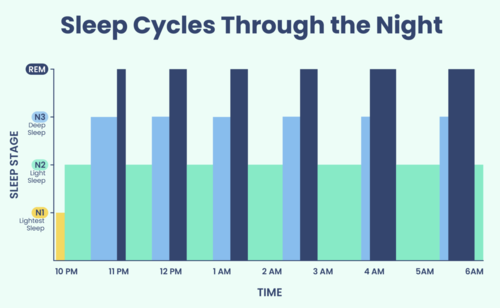
As darkness falls, melatonin rises, body temperature drops, and your system prepares for its deepest, most restorative sleep. Here's the part Clarke understood instinctively: the first hours of the night are the most important.
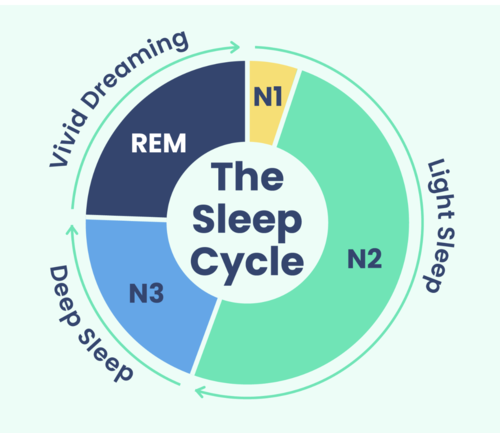
That early window is when you enter slow-wave sleep — the stage where muscles repair, hormones reset, and the immune system hunts down and eliminates damaged or abnormal cells. For men concerned about prostate cancer, those hours may be when the body mounts some of its strongest natural defenses.
Stay up past midnight, and you cut into this vital repair cycle.
Healthy: More Than Just Rest
Sleep early, and you're not just “resting.” You're actively building health. Research shows men who consistently go to bed late face:
- Higher risks of obesity, diabetes, and heart disease.
- Greater inflammation, which fuels cancer growth.
- Lower testosterone — draining energy, sexual vitality, and immune strength.
By contrast, men who sleep in sync with their circadian rhythm see stronger immunity, steadier energy, and more balanced hormones. For men with prostate cancer, this is not a lifestyle tweak. It's a frontline defense.
Wealthy: The Morning Edge
Clarke's “wealth” wasn't only about money. It was about clarity, focus, and productivity. And the morning hours, long before the world starts distracting you, offer an edge that's priceless.
Overnight, the brain is scrubbed clean by the glymphatic system, which washes away toxins. In the second half of the night, REM sleep boosts creativity and problem-solving. Wake up early, and you ride that wave of clarity.
For men facing difficult choices about treatments, diet, or lifestyle, mornings become the best time to think clearly and make decisions without fear clouding the judgment.
Wise: Sharper Judgment, Less Stress
Exhaustion doesn't just make you tired. It makes you unwise. Research shows that sleep-deprived brains struggle with impulse control, emotional stability, and risk assessment.
In contrast, early, consistent sleep keeps cortisol — the stress hormone — balanced, calms the nervous system, and restores focus. That means better decisions: not just in business, but in choosing when to slow down, when to say no, and how to face cancer without panic.
Clarke may have meant “wise” in a general sense. For today's warriors, it can mean the wisdom to avoid rushing into unnecessary procedures or treatments without exploring all options first.
Sleep as a Warrior's Weapon
The modern world fights against Clarke's wisdom. Blue-light screens, endless streaming, and late-night habits all push us past the natural bedtime. But discipline is part of the warrior's code.
Think of sleep not as weakness, but as strategy.
A warrior's night might look like this:
- A light dinner no later than 7 pm. No alcohol, no heavy carbs.
- By 8 pm, screens off, lights dimmed, stress set aside through stretching, deep breathing, or journaling.
- By 9 pm, lights out. The body enters its most restorative cycles — rebuilding testosterone, recharging immunity, and scanning for abnormal cells.
For men living with prostate cancer, this isn't a luxury. It's a weapon you can control when so much else feels uncertain.
Partners in the Battle
There's another benefit Clarke didn't mention. Men who go to bed earlier — especially with their partners — often report stronger intimacy, closer connection, and a steadier emotional bond.
That matters. A cancer diagnosis can strain relationships. An early shared bedtime can become a point of calm and closeness, building resilience not just for the man, but for the couple facing the journey together.

Clarke's Enduring Truth
John Clarke couldn't have known about melatonin, circadian rhythms, or prostate cancer. But his line endures because it reflects a biological truth: the early night is when the body heals, the morning is when the mind is sharpest, and the combination builds resilience.
Four centuries later, his proverb carries new weight: “Early to bed and early to rise makes a man healthy, wealthy, and wise.”
For men worried about prostate cancer, it's more than an old rhyme. It's a daily act of discipline, a quiet form of resistance, and perhaps one of the simplest yet strongest defenses you already have.
Sleep is not escape. Sleep is training. A 9 pm bedtime isn't old-fashioned — it's a warrior's choice.

About the Author
Scott Oliver, 66, is living well with prostate cancer after dedicating more than 4,000 hours to researching the condition. His first goal is to help men reduce their risk of developing prostate cancer through proven lifestyle strategies.
When diagnosed, his mission is to help men avoid unnecessary prostate surgeries that can lead to devastating complications such as incontinence, bleeding, permanent impotence, and a loss of length.
Scott Oliver is not a doctor and does not offer medical advice; however, he is healthier and fitter than he has been in decades. Through his articles and videos, he shares hard-to-find, uncensored information on proven alternative therapies, effective fitness methods, and repurposed drugs, content that most doctors won’t mention and search engines suppress.
He is an accredited member of the National Writers Union (NWU) and the International Federation of Journalists (IFJ), the world’s largest organization of professional journalists. Scott is also the author of What If Cancer’s Best Defense Is Free? Sleep as a Defense Against Cancer: A Former Royal Marines Commando’s 4,000-Hour Research Roadmap, where he reveals how sleep repairs DNA, restores immunity, and strengthens the body’s natural defenses against cancer.
You can always contact Scott Oliver here with your questions and suggestions.
Expert Resources Used By Scott Oliver To Research and Write This Article:
- Paroemiologia Anglo-Latina (1639) — John Clarke — Original source of the proverb “Early to bed and early to rise…” in Clarke's collection of English–Latin proverbs. https://quod.lib.umich.edu/e/eebo/A18943.0001.001?view=toc
- Regulation and Functional Correlates of Slow-Wave Sleep — Classic review on how deep (slow-wave) sleep is generated and why it's crucial for restoration. https://pmc.ncbi.nlm.nih.gov/articles/PMC2824213/
- Sleep Drives Metabolite Clearance from the Adult Brain — Landmark Science paper showing sleep accelerates brain “glymphatic” waste clearance. https://www.science.org/doi/10.1126/science.1241224
- Circadian Misalignment and Health — Comprehensive review linking off-schedule sleep to cardiometabolic and psychiatric risks. https://pmc.ncbi.nlm.nih.gov/articles/PMC4677771/
- Night-Owl Behavior and Mental Health — Stanford summary of research finding that being up late (regardless of chronotype) relates to worse mental health. https://med.stanford.edu/news/all-news/2024/05/night-owl-behavior-could-hurt-mental-health--sleep-study-finds.html
- Sleep and Emotional Memory Processing — Review outlining REM sleep's role in emotion and memory integration. https://pmc.ncbi.nlm.nih.gov/articles/PMC4182440/
- Effects of Thermal Environment on Sleep and Circadian Rhythm — Explains how evening core-temperature decline and light cues promote sleep onset. https://jphysiolanthropol.biomedcentral.com/articles/10.1186/1880-6805-31-14
- Phase Relationships: Core Temperature, Melatonin, and Sleep — Evidence that misalignment among these rhythms correlates with mood disturbance. https://pmc.ncbi.nlm.nih.gov/articles/PMC2914120/
- Stages of Sleep: What Happens in a Normal Sleep Cycle? — Plain-English explainer on NREM/REM architecture and why early-night deep sleep matters. https://www.sleepfoundation.org/stages-of-sleep
- Chronotype and Mental Health: Are Late Sleepers More Vulnerable? — Recent review emphasizing actual late sleep timing as a stronger predictor than preference. https://pmc.ncbi.nlm.nih.gov/articles/PMC12433348/