Convenience or Control? The Hidden Risks Behind the Global Digital ID Agenda
The most profound transformation of modern governance isn't unfolding in parliaments or press conferences, but in code. Across the world, governments and corporations are digitizing identity itself.
What was once a passport or driver's license is becoming a single, encrypted token, your digital self, granting or denying access to everything from healthcare to work.
The shift is not confined to one region. The European Union has ordered all member states to issue a digital ID wallet by 2026. At least twenty-five U.S. states already offer mobile driver's licenses.
Singapore's Singpass now serves four and a half million people; South Korea has fully digitized its banking IDs. Nigeria, the United Arab Emirates, and dozens of others are following suit. The United Nations calls it “legal identity for all by 2030,” a goal funded and promoted by global institutions such as the World Bank and the World Economic Forum.
On paper, this looks like progress: fewer forms, less fraud, and faster travel. But beneath the promise of efficiency lies a question few citizens have asked, what happens when every essential aspect of life depends on a single system of control?

The Power of the Gatekeepers
A digital ID is not a photo stored on your phone. It is a biometric key, encrypted and verified by a government or corporate authority, capable of unlocking, or restricting almost every digital interaction.
Supporters claim this integration is safer and more convenient. Yet centralization also concentrates unprecedented power. Whoever manages the infrastructure of identity can decide who gets to function within society.
In some countries, that power is already visible. China's digital ID, tied to its social credit system, tracks financial activity, travel rights, and even online behavior.
Those who displease authorities can find themselves unable to book tickets, receive payments, or access benefits. Convenience quickly becomes compliance.
A One-Way Door
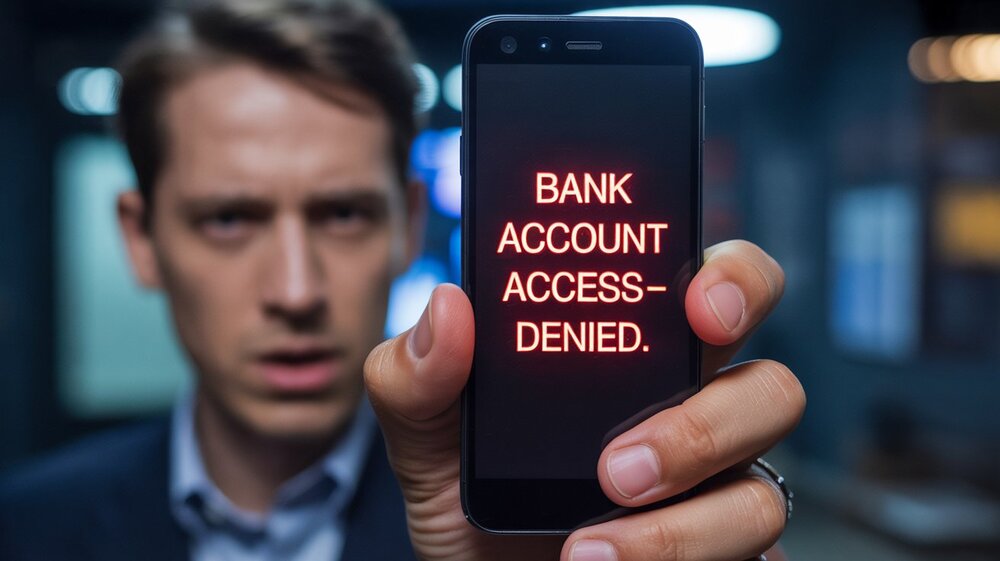
Once identity becomes digital, control becomes centralized. The switch from paper to pixels might seem harmless, but it creates a gate that can be opened—or closed—remotely. Governments present digital ID as modernization; critics see it as a mechanism that can silently decide who works, who travels, who eats.
This isn't a hypothetical. In 2022, the Canadian government froze bank accounts linked to citizens who donated to a protest movement. There was no trial, no court ruling, just an administrative command. Digital ID would make such measures faster, easier, and harder to contest.
The Corporate Dimension
Tech companies are embracing digital ID with equal enthusiasm. Amazon, Uber, and financial platforms see opportunity in a universal verification tool. Once identity data and spending patterns merge, pricing becomes personal.
Algorithms can charge more to a traveler who looks stressed after a long flight, or to a fan who has searched for concert tickets all week. The same information that promises “tailored experiences” also enables silent manipulation.
Surveillance by Design
Some mobile ID apps already contain “phone home” features that log each time they're used. Every scan, every purchase, every checkpoint feeds into a database, creating a continuous record of movement and behavior.
Combined with programmable digital currencies, such systems could let authorities or corporations dictate where and how money is spent. Dollars might expire after a date or fail to process certain purchases. None of this requires malice, only the quiet merging of identity and finance.
What Happens When You Can't Reset Yourself?
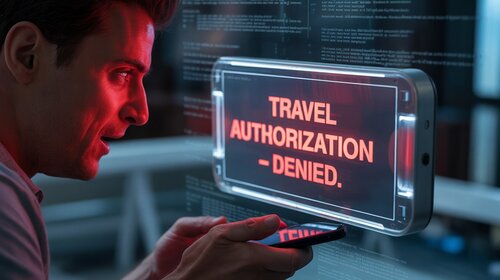
Cybersecurity experts warn that the biggest danger of biometric systems isn't surveillance, it's permanence. Passwords can be reset. Credit cards can be replaced. But what happens when your identity itself is cloned? You can't reset your face!
If a hacker breaches a digital ID database, the stolen assets aren't numbers or tokens; they are fingerprints, faces, and irises. Once leaked, they cannot be changed. You can't order a new thumbprint or upload a new face. The moment your biometric identity is compromised, every door it opens is vulnerable forever.
India's Aadhaar program, the largest digital ID system on Earth has already experienced multiple data leaks. Sensitive information from over a billion citizens was exposed, including biometric templates. The consequences of such breaches may last a lifetime.
A digital ID promises security, yet creates the most dangerous single point of failure imaginable: a permanent key that cannot be revoked.

The Irreversible Shift
Proponents argue that digital ID will empower citizens and streamline governance. Yet the trade-off is profound. Once these systems are in place, they are nearly impossible to dismantle. Bureaucratic efficiency becomes political inertia. Opting out ceases to be a choice because participation becomes the condition for living a normal life.
As one cybersecurity analyst put it, “The danger isn't that governments will abuse digital identity tomorrow. The danger is that they'll make it indispensable today.”
The Illusion of Choice
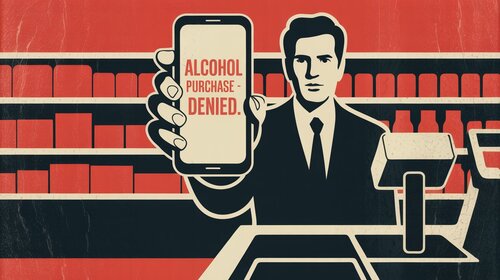
Governments describe the agenda as voluntary, but once tied to employment, healthcare, or travel, consent collapses. In the United Kingdom, proposals already link digital ID to the legal right to work.
Across Europe, similar frameworks are being drafted for financial access. Once these digital credentials become the prerequisite for participation, refusing them will mean exclusion from society itself.
The Point of No Return
Identity is the foundation of freedom. Whoever defines it can redefine what freedom means. The infrastructure of digital control is not being imposed through force but through convenience.
The danger lies not in a single law or app, but in a gradual, global convergence toward a system that can see everything—and forget nothing.
Once it's complete, there will be no logging off.
About the Author
Scott Oliver is a British writer and former Royal Marines Commando who has lived abroad since 1985. Over the last 66 years, he’s called twelve countries home, including twenty-five years in Spanish-speaking nations such as Spain, Costa Rica, and Guatemala. He has also lived in Sierra Leone, Ghana, Nigeria, Liberia, Cyprus, the USA, Grand Cayman and now lives in Mauritius.
A warrior by nature, Scott is living with prostate cancer and writing from the front lines. He speaks directly to men about health, masculinity, freedom, and strength, physically, mentally, emotionally, and sexually. His views are proudly independent: he questions conventional medicine, challenges destructive treatments, and tells the truth most men never hear.
Scott Oliver is an officially accredited member of the National Writers Union (NWU) and the International Federation of Journalists (IFJ), the world’s largest organization of professional journalists. He spent ten years on Wall Street and another decade as an offshore wealth manager, specializing in globally diversified, multi-currency hedge fund portfolios. He is the author of What If Cancer’s Best Defense Is Free? — Sleep as a Defense Against Cancer: A Former Royal Marines Commando’s 4,000-Hour Research Roadmap, where he reveals how sleep repairs DNA, restores immunity, and strengthens your fight against cancer. He’s also the author of books on offshore investing and Costa Rica real estate and has written thousands of articles in English and Spanish on living abroad with courage, clarity, and conviction.
You can always contact Scott Oliver here with your questions and suggestions.
Expert Resources Used By Scott Oliver To Research and Write This Article:
- Trustworthy Digital Identities Can Set the Standards for Secure Benefits Provision in the U.S., a detailed policy brief by the Atlantic Council examining U.S., EU, and Japan digital-ID deployments and proposing governance models for secure identity systems Read more
- Digital Identity Infrastructures: a Critical Approach of Self-Sovereign Identity, a peer-reviewed article exploring the ideological and design dimensions of identity systems and raising caution about power and control in centralized models Read more
- Digital identity: an approach to its nature, concept, and functionalities, a legal-political analysis of how digital identity definitions and technical standards carry embedded power relations Read more
- Unpacking Digital ID systems' early policy process: The case of Jamaica's NIDS, a case study showing trade-offs, exclusions, and politics in early national identity design Read more
- Realizing digital identity in government: Prioritizing design theory and critical success factors, which uses India's Aadhaar as a lens to show risks and requirements in large digital-ID systems Read more
- How are digital IDs reshaping industries for a secure and seamless future?, an industry analysis that balances promises and risks across commerce, privacy, and security Read more
- Time for Digital ID: A New Consensus for a State That Works, a think-tank piece arguing that digital ID must be treated as infrastructure—and designed with safeguards rather than blind rollout Read more
- Digital IDs for Development: Access to Identity, and Beyond, a World Bank overview of how identity systems are deployed globally, their benefits and risks Read more
- National digital IDs in the age of artificial intelligence, an analytical blog exploring how AI and biometric systems magnify both efficiency and state power in identity systems Read more
- Digital identity, privacy security, and their legal safeguards, a research article probing trust, identity crisis, authentication risks, and how legal frameworks must catch up Read more