
“If You’ve Done Nothing Illegal, You’ve Got Nothing to Worry About!”
When a police officer came to Chrisanna Elser's front door in Denver, he already had her convicted in his mind.
He held a summons in his hand, spoke with complete confidence, and said, “You can't get a breath of fresh air in or out of that town without us knowing.”
He was wrong.
Chrisanna hadn't stolen anything. She hadn't even stopped near the home where a small package had been taken. But artificial intelligence, through Flock cameras mounted on telephone poles, decided her green Rivian was “suspicious.” And the officer decided that was enough.
He refused to show her the video. He refused to look at her evidence. He told her, “You are not allowed to prove your innocence.”

So she did what many people wouldn't have the energy or presence of mind to do. She spent days gathering data from her Google Timeline, her Rivian's dashcam, GPS records, CCTV from her tailor's shop, and even photos of her outfit that day. She proved she wasn't where the AI said she was.
The police chief eventually emailed her back: “After reviewing the evidence you have provided (nicely done btw), we have voided the summons.”
No apology. No accountability. Just quiet dismissal.
The Myth of “Nothing to Hide”
Some people hear stories like this and shrug.
They say, “Well, if you've done nothing wrong, you've got nothing to worry about.”
They couldn't be more mistaken.
When machines are trained to suspect everyone, and when officers start believing the machine more than the person standing in front of them, innocence becomes irrelevant. The only thing that matters is data, even when the data is wrong.
And when that happens, you become responsible for proving you're not guilty.
That's not justice. That's digital authoritarianism.

From “Innocent Until Proven Guilty” to “Guilty Unless You Have Data”
Chrisanna Elser's story exposes something bigger than one bad investigation. It reveals how quietly we've crossed a line.
Every time another camera goes up on a pole or another algorithm begins scanning your face or license plate, your life becomes one long record, not of guilt, but of potential guilt.
If the record says you were there, you were there, even if you weren't.
And if the police believe their system is “100% accurate,” then the burden of proof is no longer on them. It's on you.
You must now keep your own digital alibi: dashcam, GPS, health tracker, timestamped photos, just in case the system points its finger your way.
That's not freedom. That's control disguised as safety.
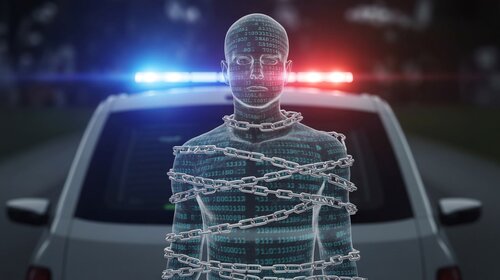
Why You Should Worry, Even If You're Innocent
It's easy to believe surveillance makes us safer. But who does it really protect when it gets things wrong?
Technology doesn't understand context. It can't see the difference between a Rivian driving by and a thief on foot.
Officers under pressure to “solve” cases start trusting pixels over people.
And every new camera, database, or AI tool becomes one more eye watching, without ever blinking.
If you think you have nothing to hide, then you've already given up your right to privacy.
Because privacy isn't about hiding. It's about being free to live without being tracked, profiled, or accused.
A Lesson for Every Warrior
Freedom isn't a luxury. It's the foundation of health, peace, and life itself.
When a government or police force watches every movement, records every license plate, and decides that “you can't breathe without us knowing,” that's not public safety, that's submission.
Chrisanna Elser had to prove her innocence because technology and authority worked hand-in-hand to forget the most basic principle of justice.
And if that can happen to her, it can happen to any of us.
So the next time someone says, “If you've done nothing illegal, you've got nothing to worry about,” send them this story.
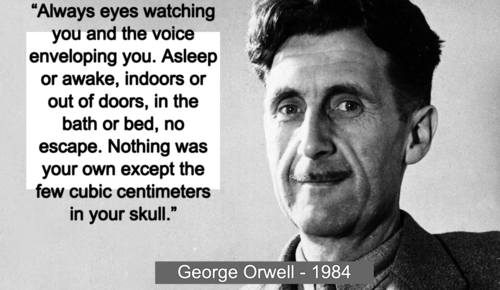
Because the truth is: If you don't worry when innocence no longer protects you, then you're already living in the world Orwell warned us about.
Your freedom and health are worth fighting for.
About the Author
Scott Oliver is a British writer and former Royal Marines Commando who has lived abroad since 1985. Over the last 66 years, he’s called twelve countries home, including twenty-five years in Spanish-speaking nations such as Spain, Costa Rica, and Guatemala. He has also lived in Sierra Leone, Ghana, Nigeria, Liberia, Cyprus, the USA, Grand Cayman and now lives in Mauritius.
A warrior by nature, Scott is living with prostate cancer and writing from the front lines. He speaks directly to men about health, masculinity, freedom, and strength, physically, mentally, emotionally, and sexually. His views are proudly independent: he questions conventional medicine, challenges destructive treatments, and tells the truth most men never hear.
Scott Oliver is an officially accredited member of the National Writers Union (NWU) and the International Federation of Journalists (IFJ), the world’s largest organization of professional journalists. He spent ten years on Wall Street and another decade as an offshore wealth manager, specializing in globally diversified, multi-currency hedge fund portfolios. He is the author of What If Cancer’s Best Defense Is Free? — Sleep as a Defense Against Cancer: A Former Royal Marines Commando’s 4,000-Hour Research Roadmap, where he reveals how sleep repairs DNA, restores immunity, and strengthens your fight against cancer. He’s also the author of books on offshore investing and Costa Rica real estate and has written thousands of articles in English and Spanish on living abroad with courage, clarity, and conviction.
You can always contact Scott Oliver here with your questions and suggestions.
Resources Personally Reviewed by Scott Oliver.
- After police used Flock cameras to accuse a Denver woman of theft, she had to prove her own innocence – Investigative report by The Colorado Sun describing how an innocent Denver woman was falsely accused of theft through AI-powered license plate surveillance and had to prove her own innocence. Read at The Colorado Sun
- Rivian's onboard cameras save owner from a false accusation by police Read at United Nations Human Rights Office
- Flock Safety and the Expansion of License-Plate Reader Surveillance in America – Electronic Frontier Foundation report highlighting privacy risks, wrongful accusations, and data-sharing concerns in the expanding Flock Safety network. Read at Electronic Frontier Foundation
- Mass Surveillance and the Erosion of the Presumption of Innocence – Brennan Center for Justice paper examining how predictive policing and mass surveillance undermine constitutional protections and personal freedom. Read at Brennan Center for Justice
- Artificial Intelligence and Human Rights – United Nations Human Rights Office report warning that unchecked AI surveillance threatens privacy, freedom of expression, and due process. Read at United Nations Human Rights Office
- AI Bias and Misidentification in Law Enforcement – Peer-reviewed study exploring how algorithmic bias contributes to false accusations and wrongful arrests in automated policing systems. Read the study in Nature Machine Intelligence