
The Quiet Mineral That Tells Your Brain It’s Safe to Sleep Again
I wrote this article with a new friend, Clifford, in mind. Like many men, he carries a lot through the day and sleeps too little at night. This is offered in the spirit of rest, not prescription.
Magnesium glycinate has quietly become one of the most recommended supplements for sleep and anxiety, yet its effects are often misunderstood.
Many men take it for several nights, feel nothing dramatic, and conclude it does not work. Others notice subtle changes that only make sense weeks later. The truth sits somewhere between expectation and biology. Magnesium glycinate is not a sedative. It is a corrective nutrient that restores balance to a nervous system that has been running too hot for too long.
This distinction matters. Drugs impose an effect. Magnesium removes a constraint. When that constraint lifts, the body does what it was designed to do. It calms down.

Why magnesium works differently from sleep drugs
Magnesium plays a central role in how excitable the brain becomes. At rest, magnesium sits inside NMDA receptors, acting as a physical brake on glutamate, the brain's main excitatory neurotransmitter. When magnesium levels are low, those receptors fire too easily. Thoughts race. Muscles tense. Sleep becomes shallow or fragmented.
Restoring magnesium does not sedate the brain. It prevents overactivation. This is why people often describe the effect as subtle but real. One man summed it up neatly: “I did not feel knocked out. I just stopped waking up at 3 a.m.”
The overlooked role of glycine
Glycine is not just a carrier molecule. It is itself an inhibitory neurotransmitter, especially active in the spinal cord and brainstem. Glycine lowers core body temperature, which is a prerequisite for sleep onset, and improves perceived sleep quality without dulling cognition.
In controlled studies, subjects given glycine before bed reported better sleep and less next day fatigue, even when objective sleep time changed only modestly.
In magnesium glycinate, these two effects combine. Magnesium quiets neural overdrive. Glycine gently signals that it is safe to power down.

Why many people feel nothing at first
The most common reason is timing. Magnesium repletion happens slowly. Blood levels normalize first, then muscle and nerve tissue, and finally the brain. This process takes days or weeks. A man who has lived under chronic stress, high caffeine intake, poor sleep, or long term inflammation may be significantly depleted at the cellular level even if routine blood tests look normal.
Another reason is expectation. Magnesium does not create an artificial calm. It removes noise. If anxiety is driven by trauma, panic disorder, or unresolved psychological stress, magnesium alone will not switch it off. Where it works best is in men who feel tired but wired, mentally alert yet physically tense, exhausted but unable to rest.
There is also the issue of competition. Magnesium works alongside vitamin B6, potassium, adequate sodium, and sufficient protein intake. Alcohol, caffeine, and high stress can outpace replenishment, making early effects hard to detect.

When improvement usually appears
For most men, the first week brings little noticeable change. By days seven to ten, muscle tension eases, night time awakenings shorten, and the nervous system feels less reactive. Between weeks two and four, sleep depth improves and baseline anxiety often drops. The men who feel benefits fastest are usually the most deficient to begin with.
How much magnesium adult men actually need
The effective dose is based on elemental magnesium, not capsule weight. Most adult men do best between 300 and 400 milligrams per day. More is rarely better.
Magnesium glycinate is gentle, but excessive dosing can still cause loose stools or lethargy.
For sleep, 200 to 300 milligrams taken 60 to 90 minutes before bed aligns well with the natural evening drop in cortisol and supports parasympathetic dominance.
For anxiety during the day, smaller doses work better. One hundred milligrams mid morning and another in the late afternoon can smooth nervous system tone without causing sedation. Some men combine both approaches, using a split dose during the day and a larger dose in the evening.
What To Do Now?
- Before You're Rushed Into Surgery, Radiation, or Hormone Therapy—Let’s Talk. See how to schedule a private prostate cancer clarity call with Scott Oliver here.
- Subscribe to Our Free Warriors Email Newsletter: Get the men's health insights your doctors and big pharmaceutical companies are hiding from you. Join our growing community of informed Warriors and take charge of your health—subscribe here today.
- Discover Quality Supplements For The Men in Your Life: Looking to boost your health, reignite your vitality, and feel your best? Explore our carefully selected, scientifically-backed supplements designed to support men's health, sexual vitality, and total wellness here.
Why timing matters more than people think
Magnesium taken alongside stimulants often feels ineffective. Coffee increases cortisol and adrenaline, temporarily overriding magnesium's calming influence. This leads some men to conclude the supplement does nothing, when in reality timing is canceling the signal.
Magnesium glycinate and prostate cancer
For men living with prostate cancer, magnesium glycinate plays a supportive role rather than a therapeutic one. Chronic stress and poor sleep elevate cortisol, suppress immune surveillance, and worsen metabolic health. Magnesium helps normalize stress physiology and sleep architecture, which indirectly supports hormonal balance, inflammation control, and psychological resilience.
Men on active surveillance often report a constant low level anxiety tied to PSA testing and uncertainty. Magnesium glycinate is one of the lowest risk interventions available to improve sleep and calm without masking symptoms or interfering with medical monitoring.
There may also be benefits at the muscular level. Pelvic floor tension, urinary urgency, and nocturnal waking are common complaints. Magnesium's role in regulating calcium entry into muscle cells can reduce sustained contraction and nighttime discomfort.

What magnesium does not do
It does not treat cancer. It does not lower PSA. It does not replace medical care. Its value lies in restoring regulatory balance to a system under chronic strain.
Caution is appropriate for men with significant kidney impairment, as magnesium excretion depends on renal function. For men with normal kidney health, magnesium glycinate is widely considered safe.
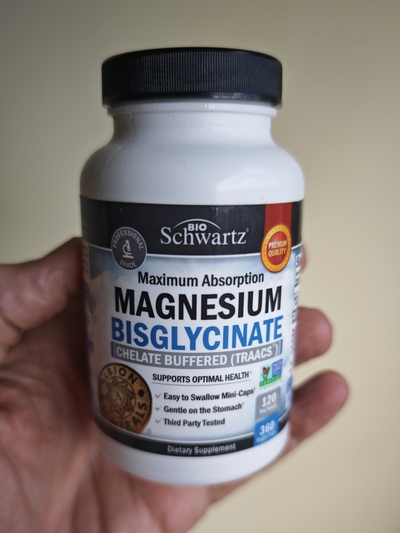
The real reason magnesium feels different
Magnesium glycinate does not force sleep or suppress anxiety. It allows the nervous system to behave normally again. In a world of quick fixes and pharmaceuticals, that can feel underwhelming at first. Over time, it feels quietly powerful.
As one clinician put it, “When magnesium works, you stop noticing the problem.”

Bottom line
Magnesium glycinate supports sleep and anxiety by restoring the nervous system's natural braking mechanisms. It works slowly, requires consistency, and delivers its benefits subtly rather than dramatically.
I recommend it for a simple reason. As a man living with prostate cancer, I take magnesium glycinate every day. I have tested it, stopped it, and returned to it more than once. Each time, the difference in my sleep quality, baseline calm, and ability to cope with uncertainty has been clear.
For adult men, including those living with prostate cancer, it is a low risk, physiology aligned tool that improves sleep quality, reduces stress reactivity, and supports resilience. It does not sedate. It does not numb. It helps the nervous system function as it should. Given enough time, that distinction makes all the difference.
About the Author
Scott Oliver, 66, is living well with prostate cancer after dedicating more than 4,000 hours to researching the condition. His first goal is to help men reduce their risk of developing prostate cancer through proven lifestyle strategies.
When diagnosed, his mission is to help men avoid unnecessary prostate surgeries that can lead to devastating complications such as incontinence, bleeding, permanent impotence, and a loss of length.
Scott Oliver is not a doctor and does not offer medical advice; however, he is healthier and fitter than he has been in decades. Through his articles and videos, he shares hard-to-find, uncensored information on proven alternative therapies, effective fitness methods, and repurposed drugs, content that most doctors won’t mention and search engines suppress.
He is an accredited member of the National Writers Union (NWU) and the International Federation of Journalists (IFJ), the world’s largest organization of professional journalists. Scott is also the author of What If Cancer’s Best Defense Is Free? Sleep as a Defense Against Cancer: A Former Royal Marines Commando’s 4,000-Hour Research Roadmap, where he reveals how sleep repairs DNA, restores immunity, and strengthens the body’s natural defenses against cancer.
You can always contact Scott Oliver here with your questions and suggestions.
Trusted Expert Resources
- Magnesium and the Nervous System
An overview of how magnesium regulates NMDA receptors and neural excitability, with clinical implications for anxiety and sleep.
Read the review at the National Institutes of Health - Glycine and Sleep Quality
Human studies examining glycine's role in sleep onset, body temperature regulation, and next day alertness.
Read the study on PubMed - Dietary Magnesium Intake and Stress
A review of magnesium deficiency, stress physiology, and HPA axis regulation in adults.
Read the clinical review - Magnesium in Clinical Practice
Practical guidance on magnesium forms, dosing, absorption, and safety considerations.
Read at the NIH Office of Dietary Supplements