
What If the 5,000 New AI Data Centers Aren't Being Built for Today's AI but for the AI Glasses You'll Be Wearing Tomorrow? The Question Beneath the Question
Editor's note: This article presents a reasoned hypothesis. It does not claim that any company has publicly announced that new AI data centers are being built specifically for smart glasses, facial recognition, or surveillance.
The purpose is to ask a better question: if the world's most powerful technology companies expect AI to move from phones into wearable devices, does that help explain why they are building so much computing infrastructure?
There are moments when the public conversation feels strangely incomplete. Everyone is talking about the same visible fact, but almost nobody is asking what that fact might be pointing toward. The current race to build enormous AI data centers may be one of those moments.
We are told, quite correctly, that artificial intelligence requires huge amounts of computing power. We are told that data centers are being expanded because people are using AI chatbots, image generators, coding assistants, search tools, translation systems, and enterprise software. All of that is true. But truth can still be incomplete.
Because if today's AI explains everything, the scale of tomorrow's infrastructure can feel difficult to understand. The public already has ChatGPT. Google already has AI search. Millions of people already use AI tools. Yet the largest technology companies in the world appear to be preparing for a level of computing demand that goes far beyond a few typed prompts and occasional image requests.
That should make a thoughtful person pause.
Perhaps the better question is not, "Why does today's AI need so many data centers?" Perhaps the better question is, "What kind of future are these companies preparing for?"
The Future They Keep Describing
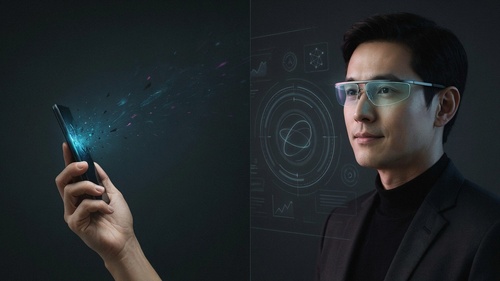
Over the last few years, a remarkable pattern has become visible. The leaders of several of the world's most powerful technology companies have been describing, in different ways, a future in which computing moves beyond the smartphone and becomes more wearable, more ambient, more visual, and more continuously present.
- Mark Zuckerberg has spoken with unusual confidence about AI glasses and augmented reality as the next major computing platform. Meta's Ray-Ban smart glasses are already being sold as camera-equipped, audio-enabled, AI-connected devices, and Meta has made clear that it sees glasses as far more than a novelty product.
- Tim Cook has spent years speaking about augmented reality and spatial computing as an important part of Apple's future. The Apple Vision Pro may not yet be a mass-market device, but its larger significance is obvious: Apple believes digital information will not always remain trapped inside a small glass rectangle held in the hand.
- Google has demonstrated Project Astra, a system designed to see and understand the world around the user. Google's own description says the system can work with prototype glasses, allowing the assistant to "see the world as you see it." That phrase deserves to be read slowly. It points to a very different relationship between human beings and machines.
- NVIDIA's Jensen Huang speaks frequently about AI becoming embedded throughout life and industry, not merely as a chatbot but as a pervasive intelligence layer running through factories, robots, software, health systems, vehicles, research labs, and personal devices.
- Sam Altman and Jony Ive have publicly joined forces around new AI hardware. OpenAI has described a moment in which computers are now seeing, thinking, and understanding. That is not the language of better desktop software. It is the language of a new interface between human beings and machines.
These people are not all saying exactly the same thing. Their companies have different incentives, different devices, different ecosystems, and different commercial ambitions. But they appear to be pointing in a similar direction: AI is not expected to remain an occasional tool you open when you need help. It is expected to become a companion layer around daily life.
Why the Smartphone Analogy Matters
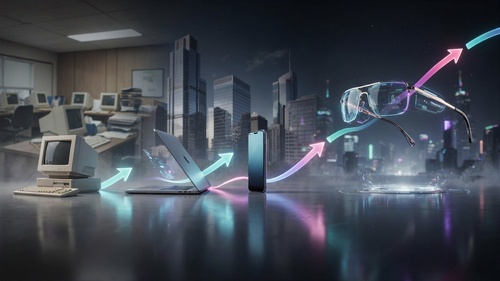
It is easy to underestimate new technologies because we describe them using the language of the technology they are replacing. Early automobiles were described as horseless carriages. Early television was described as radio with pictures. Early smartphones were described as better mobile phones.
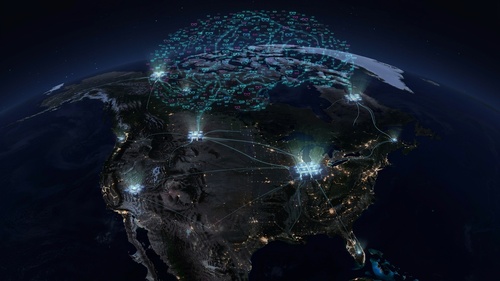
That last example matters most because we lived through it. The smartphone did not merely improve the phone. It swallowed the camera, the map, the alarm clock, the newspaper, the music player, the bank card, the shopping mall, the travel agent, the television, and part of the human social life. It changed how people walk, date, work, argue, navigate, shop, read, and remember.
When a platform shift occurs, the device is only the visible object. The deeper change happens in behavior.
If smart glasses, spatial computers, or other wearable AI devices become the next platform, they will not replace the smartphone by doing only what the smartphone already does. They will replace or supplement it by changing the relationship between the user and the world. The smartphone asks you to look down. Wearable AI asks you to keep looking at reality while the machine interprets it with you.
That is a profound difference.

From Asking a Question to Living Inside the Interface
Today, using AI usually requires a deliberate action. You pick up a phone or sit at a computer. You open an app. You type or speak. You wait for a response. The interaction is still separate from the flow of life.
Wearable AI changes the rhythm. You do not stop living to ask the machine a question. The machine travels with you through the day, observing, listening, interpreting, remembering, suggesting, and responding. The interface becomes less like an application and more like an invisible companion.
That may sound dramatic until we imagine ordinary situations.
You are walking through a city and look at a building. You ask, "What is that?" The glasses identify it and give you a short history. You look at a restaurant menu in another language, and the translation appears in your field of view. You are introduced to someone at a meeting, and the system reminds you later where you met him and what you discussed.
You ask where you parked the car. You ask what your doctor said during last week's appointment. You ask your AI companion to summarize a conversation, find the name of a book someone mentioned, compare prices on a product you are looking at, or guide you through a practical task while your hands remain free.
None of this is science fiction in the old-fashioned sense. Much of it already exists in pieces. The significant question is what happens when those pieces are joined together, refined, commercialized, and distributed to hundreds of millions of people.

That Future Does Not Run on Magic
This is where the data-center question becomes much more interesting.
The public experiences technology through smooth consumer interfaces. We tap a screen and a car arrives. We speak a question and an answer appears. We upload a photo and software edits it. The industrial machinery remains hidden because hiding machinery is one of the great skills of modern technology companies.
But AI does not happen in the air. It requires chips, servers, electricity, cooling systems, fiber connections, data storage, security systems, engineers, and physical buildings. The more seamless the user experience feels, the more invisible the infrastructure becomes.
A pair of lightweight smart glasses has severe constraints. It cannot be too heavy. It cannot become hot against the face. It cannot drain its battery in twenty minutes. It cannot carry the same processing capacity as a full data center. Even as chips improve, the physics of a wearable device impose limits.
Some processing can happen on the device. Some can happen on the phone. Some may happen through specialized chips close to the user. But many complex AI tasks, especially those involving large models, deep context, image interpretation, speech recognition, translation, memory, retrieval, and reasoning, are likely to depend heavily on remote infrastructure.
That means data centers.

Now Multiply One Person by Hundreds of Millions
A single AI interaction may not sound like much. One question. One image. One translation. One summary. But platforms do not become powerful because one person uses them once. Platforms become powerful when millions or billions of people use them repeatedly, habitually, and eventually unconsciously.
Imagine one person wearing AI glasses for six hours a day. The device may not record or process everything continuously, but even intermittent use could create a rich stream of audio, visual, location, and contextual interactions. Now imagine ten million people doing that. Then one hundred million. Then several hundred million Americans. Then, eventually, a global market.
The numbers begin to change emotionally before they change mathematically. A chatbot is a tool. A wearable AI companion is a relationship with a machine that may accompany the user through much of the day.
That distinction matters.
Today's AI demand is already large enough to make governments, utilities, investors, and technology firms worry about electricity supply. The International Energy Agency has projected that global data-center electricity consumption could roughly double by 2030. Goldman Sachs and McKinsey have also published analyses suggesting dramatic growth in data-center power demand by the end of the decade.
Those forecasts are not based on one single use case. They include enterprise AI, cloud computing, industrial systems, model training, inference, robotics, software development, and many other applications. But wearable AI fits naturally inside that larger picture because it turns AI from an occasional tool into a persistent consumer habit.
The Difference Between Training and Living With AI
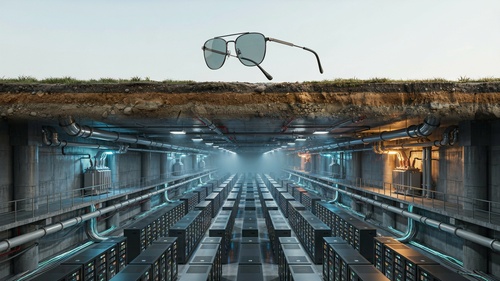
Many people have heard that training large AI models consumes enormous computing resources. That is true. But training is only part of the story. Once a model exists, people use it. That use is called inference. Every time a system answers a question, analyzes an image, translates speech, summarizes a meeting, or recognizes a pattern, it is performing inference.
If AI remains something people use occasionally, inference demand grows steadily. If AI becomes something people wear, inference demand could grow very differently.
Consider the difference between asking AI three questions at a desk and wearing a device that allows you to ask questions about the physical world all day long. The first is digital assistance. The second is environmental interpretation.
Environmental interpretation is much richer. It may involve what you are seeing, what you are hearing, where you are, what you were doing earlier, what you are likely trying to accomplish, and what information would be most useful next. That is not a search box. That is a living stream of context.
And context is expensive.
The Storage Question Nobody Likes to Discuss
Computation is only half the story. Storage may become just as important.
A truly useful personal AI assistant does not begin each conversation as if it has never met you. It becomes useful because it knows your preferences, your habits, your calendar, your contacts, your documents, your prior questions, your health goals, your travel patterns, your purchases, and perhaps even the emotional texture of your life.
That is exactly why people will want it. It will feel useful because it remembers.
But memory has consequences. Where is that memory stored? Who controls it? How long is it kept? Can it be deleted? Is it used for advertising? Can it be subpoenaed? Can it be hacked? Can it be sold, shared, inferred from, or merged with other data?
These are not paranoid questions. They are adult questions.
A man who has lived long enough knows that convenience often arrives first, and consequences arrive later. He also knows that the modern world has a habit of converting yesterday's optional convenience into tomorrow's social expectation.
Facial Recognition Is the Most Sensitive Example
No discussion of camera-equipped AI glasses can avoid facial recognition. It is too obvious, too powerful, and too emotionally charged.
The basic technical sequence is not mysterious. A system detects a face, isolates it, converts it into a mathematical representation, compares it with stored examples, and returns a possible match. This can be used for benign purposes, such as unlocking a phone or helping a visually impaired person recognize someone they know. It can also be used in ways that raise serious privacy and civil-liberty concerns.
Recent reporting on Meta's smart-glasses ecosystem has intensified that debate. WIRED reported that Meta had embedded code for an unreleased facial-recognition feature, called NameTag, in its AI companion app, while Meta said the feature had not been activated for consumers. That distinction matters. Dormant capability is not the same thing as active deployment.
But dormant capability is also not nothing.
If technology companies are building consumer devices that can see, hear, interpret, and remember the world around the user, facial recognition becomes one possible layer in a much larger architecture of machine perception. Whether that layer is activated, restricted, regulated, or rejected will depend on law, public pressure, commercial incentives, and cultural tolerance.
The point is not to claim that every future pair of glasses will identify every person in real time. That would be overstatement. The point is to recognize that once wearable cameras, AI interpretation, identity systems, cloud computing, and social databases exist in the same ecosystem, the public should pay attention before the norms are quietly set.

The Security Argument Will Be Powerful
It is not difficult to imagine how such technology could be marketed. It will not arrive wearing a dark uniform and announcing itself as surveillance. It will arrive as convenience, safety, accessibility, productivity, memory, and care.
A parent might want glasses that help protect a child. An elderly person might want assistance remembering names, medicines, or directions. A business executive might want instant meeting summaries. A traveller might want real-time translation. A visually impaired person might benefit from object and face recognition. A police officer might want faster identification during an emergency. A government might argue that such systems improve public security.
The emotional complexity lies in the fact that many of these benefits are real.
That is why the issue deserves calm intelligence rather than reflexive outrage. The most transformative technologies often contain genuine benefits and genuine dangers at the same time. A mature society does not pretend one side does not exist. It asks who controls the system, what incentives govern it, what limits exist, and what happens when the technology spreads beyond its original promise.
Why This Belongs in our Freedom Section
This is not only a technology story. It is a freedom story.
Freedom is not only the right to vote or speak. Freedom also includes the ability to move through life without every gesture, conversation, purchase, location, and association being converted into data that someone else can analyze, monetize, or weaponize.
For men over fifty, this question often lands differently. Younger people may see every new device through the lens of possibility. Older men tend to remember previous promises. They remember when the internet was going to liberate knowledge. They remember when smartphones were going to connect people. They remember when social media was going to bring the world together.
Some of that happened. But so did addiction, manipulation, censorship pressure, attention capture, financial profiling, political targeting, and a strange new loneliness inside constant connection.
A man who has lived through several technological revolutions is not anti-technology simply because he asks harder questions. He may be wiser precisely because he has watched human nature remain unchanged beneath changing tools.

The Human Body Was Not Designed for Continuous Digital Mediation
There is also a biological and psychological layer to this discussion.
The human nervous system evolved to orient toward real threats, real faces, real landscapes, real sounds, and real social cues. It did not evolve to live inside continuous machine interpretation. The brain already struggles with smartphones, endless alerts, algorithmic feeds, and social comparison. Wearable AI may intensify this by placing the interface directly into the field of daily perception.
What happens when the machine constantly helps you interpret reality? What happens when memory becomes outsourced? What happens when attention is guided by prompts, nudges, overlays, alerts, and suggestions? What happens when men stop trusting their own recall because the device remembers better?
These are not merely technical questions. They are questions about masculinity, autonomy, confidence, and psychological resilience.
A strong man is not strong because he rejects every tool. He is strong because he knows when he is using a tool and when a tool is quietly using him.
Data Centers Are the Physical Body of the Digital World
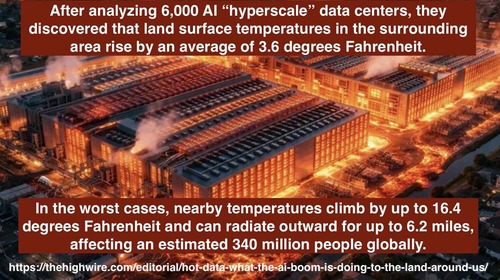
It is easy to speak about AI as if it were weightless. The language encourages that illusion. We talk about "the cloud," as if our data lives somewhere clean, abstract, and vapor-like. But the cloud is not a cloud. It is land, steel, concrete, copper, fiber, water, electricity, transformers, generators, cooling systems, and security fences.
Every beautiful interface has a physical body somewhere.
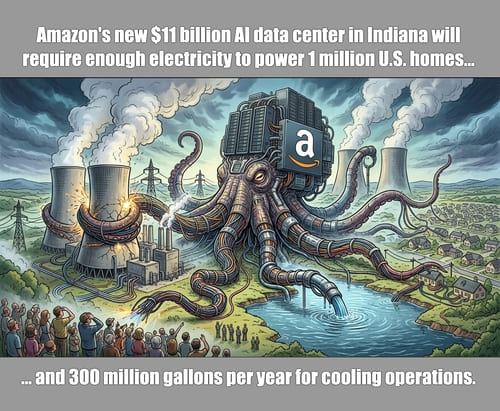
That physical body consumes resources. It needs power. It may need water. It requires supply chains. It competes with other users of electricity. It affects communities where facilities are built. It shapes energy policy, land use, and infrastructure investment.
When we ask whether new data centers are being built for today's AI or tomorrow's wearable AI, we are also asking who pays for the physical expansion of the digital world. Will households face higher electricity prices? Will communities face water pressure? Will governments subsidize energy build-outs? Will companies build private power sources? Will environmental costs be acknowledged honestly?
These are not anti-progress questions. They are accounting questions. Mature societies do not merely ask what technology can do. They ask what it costs and who benefits.
What We Can Say and What We Cannot Say
Credibility requires discipline. We cannot honestly say that 5,000 new AI data centers are being built specifically for smart glasses. We cannot say that every technology leader has the same plan. We cannot say that facial recognition will definitely be activated everywhere. We cannot say that wearable AI will replace smartphones on a fixed timetable.
But we can say several things with reasonable confidence.
- Major technology leaders have repeatedly described a future in which AI becomes more ambient, more wearable, and more integrated into daily life.
- AI infrastructure demand is rising rapidly, with serious projections showing major growth in data-center power consumption by 2030.
- Wearable AI, if adopted widely, would likely create far more frequent and context-rich AI interactions than today's chatbot usage.
- Camera-equipped and microphone-equipped AI devices raise serious questions about privacy, autonomy, memory, and social norms.
Those four points are enough to justify the hypothesis.
The Hypothesis
- What if the data-center boom is not merely about today's AI tools?
- What if it is also about a future in which AI becomes a continuous companion, worn on the face, in the ear, on the wrist, or carried in some new form designed by the same people who understand that the smartphone era cannot last forever?
- What if today's chatbot is not the destination but the training wheel?
- What if the real business model is not occasional answers but continuous presence?
- What if the companies building massive AI infrastructure are not only serving current demand but preparing for the moment when hundreds of millions of people expect AI to interpret the physical world in real time?
These questions do not require us to invent a conspiracy. They require only that we take the technology industry's own ambitions seriously.
The Adult Response Is Not Panic. It Is Attention.
Panic makes people easy to dismiss. Calm attention is harder to ignore.
The mature response to wearable AI is not to scream that everything is evil. Nor is it to surrender like a child because the device is convenient. The mature response is to ask who controls the system, what data is collected, where it is processed, what is stored, what is shared, what can be deleted, what is optional, what becomes socially expected, and what legal protections exist before the technology becomes normal.
That is not paranoia. That is citizenship.
It is also personal responsibility. Every man who has faced a serious diagnosis, a life-changing decision, or a moment of deep uncertainty understands this principle: do not blindly accept the first confident explanation offered by powerful institutions. Listen carefully. Study the incentives. Ask better questions. Then decide.
The same mindset applies here.
Why Men Over Fifty Should Care
Men over fifty have a particular responsibility in this conversation because they stand between two worlds. They remember life before smartphones, before social media, before constant digital tracking, before every private moment became potentially searchable, shareable, and monetizable.
They also know their children and grandchildren may live in a world where those conditions are assumed to be normal.
That gives older men a duty that is not loud but serious. They must speak from memory. They must remind younger people that privacy was not a primitive inconvenience. It was part of human dignity. They must explain that convenience is not the same as freedom, and that intelligence without restraint can become domination.
This does not mean rejecting technology. It means refusing to worship it.

The Real Question
So perhaps the real question is not whether AI glasses will replace smartphones next year. They probably will not. Perhaps smartphones will remain useful for banking, reading, editing documents, watching video, and managing complex tasks. Perhaps glasses will become an additional interface rather than a total replacement.
The deeper question is whether the direction of travel is clear.
If AI moves from the desk to the pocket, and from the pocket to the face, and from the face into continuous interpretation of daily life, then the scale of the infrastructure suddenly makes more sense. Data centers are not just buildings full of servers. They are the nervous system of the next technological order.
That order may bring extraordinary benefits. It may help the elderly, the disabled, the lonely, the overworked, the traveller, the student, the doctor, the engineer, and the man trying to remember what matters in a noisy world.
It may also create new forms of dependence, surveillance, manipulation, and loss of inner authority.
Both possibilities can be true at the same time.
A Final Thought Before the Glasses Become Normal
The most important conversations are often easiest to have before the technology becomes invisible through familiarity.
Once every restaurant, airport, school, hospital, office, police department, and social gathering assumes the presence of wearable AI, the debate will change. At that point the question may no longer be whether society should accept such devices, but how to live in a world that already has.
That is why this conversation belongs now.
Not because we know exactly what will happen. We do not.
Not because every technology company has admitted some secret plan. They have not.
But because the visible pieces are already on the table: massive AI infrastructure investment, rapid data-center expansion, wearable AI ambitions, camera-equipped smart glasses, multimodal assistants, contextual memory, and the commercial dream of making AI present throughout daily life.
A thoughtful man does not need certainty before he begins paying attention.
He only needs enough evidence to know that the question matters.
Many men reach a point where the information about prostate cancer becomes seriously overwhelming. Different opinions. Different options. No clear path forward.
If you would like to step back and think clearly before making any decisions, you are welcome to contact me. I will read your situation personally and respond thoughtfully.
No pressure. No sales pitch. Just a calm, focused exchange to help you see things clearly.
About the Author
Scott Oliver is a British writer and former Royal Marines Commando who has lived abroad since 1985. Over the last 66 years, he’s called twelve countries home, including twenty-five years in Spanish-speaking nations such as Spain, Costa Rica, and Guatemala. He has also lived in Sierra Leone, Ghana, Nigeria, Liberia, Cyprus, the USA, Grand Cayman and now lives in Mauritius.
A warrior by nature, Scott is living with prostate cancer and writing from the front lines. He speaks directly to men about health, masculinity, freedom, and strength, physically, mentally, emotionally, and sexually. His views are proudly independent: he questions conventional medicine, challenges destructive treatments, and tells the truth most men never hear.
Scott Oliver is an officially accredited member of the National Writers Union (NWU) and the International Federation of Journalists (IFJ), the world’s largest organization of professional journalists. He spent ten years on Wall Street and another decade as an offshore wealth manager, specializing in globally diversified, multi-currency hedge fund portfolios. He is the author of What If Cancer’s Best Defense Is Free? — Sleep as a Defense Against Cancer: A Former Royal Marines Commando’s 4,000-Hour Research Roadmap, where he reveals how sleep repairs DNA, restores immunity, and strengthens your fight against cancer. He’s also the author of books on offshore investing and Costa Rica real estate and has written thousands of articles in English and Spanish on living abroad with courage, clarity, and conviction.
You can always contact Scott Oliver here with your questions and suggestions.
Expert Resources
The following resources provide useful background for readers who want to explore AI infrastructure, wearable AI, facial recognition concerns, and the broader social implications of artificial intelligence. Each source offers one high-quality link for further reading.
- International Energy Agency: Energy and AI
A major resource for understanding how artificial intelligence and data centers are changing electricity demand, infrastructure planning, and energy policy.
https://www.iea.org/reports/energy-and-ai - Stanford Institute for Human-Centered Artificial Intelligence
A respected research center offering balanced analysis on artificial intelligence, governance, human impact, safety, and public policy.
https://hai.stanford.edu/ - Google DeepMind: Project Astra
Google's official explanation of its multimodal AI assistant concept, including prototype glasses designed to help AI see the world from the user's perspective.
https://deepmind.google/models/project-astra/ - OpenAI: A Letter from Sam and Jony
OpenAI's official page describing its collaboration with Jony Ive and the broader idea that computers are now seeing, thinking, and understanding in new ways.
https://openai.com/sam-and-jony/ - WIRED: Meta Smart Glasses and Facial Recognition Reporting
A detailed investigation into unreleased facial-recognition code reportedly embedded in Meta's AI companion app for smart glasses, with important privacy implications.
https://www.wired.com/story/meta-smart-glasses-face-recognition-nametag-connections/ - Electronic Frontier Foundation: Face Recognition
A civil-liberties resource explaining privacy concerns, policy risks, and public debates around face recognition technology.
https://www.eff.org/issues/face-recognition