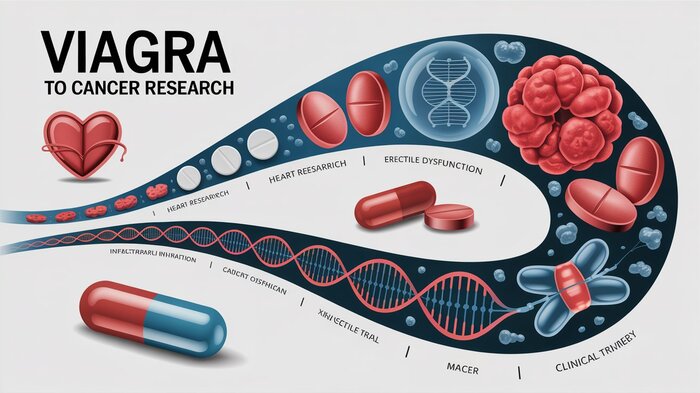
From Viagra to Cancer Research: The Surprising Science of Repurposed Drugs
Most men have heard of Viagra.
Even men who have never used it know the story, or at least the cultural shadow of the story. A small blue pill that became one of the most commercially successful drugs in modern history. A drug associated with masculinity, aging, sexuality, embarrassment, humor, and hope all at the same time.
What far fewer people realize is that Viagra was never originally created to treat erectile dysfunction at all.
The drug we now know as sildenafil was initially being studied as a treatment for angina and cardiovascular circulation problems. Researchers were looking at blood flow, vascular relaxation, and heart-related symptoms. But during clinical trials, participants began reporting something unexpected. Something that, at first, probably seemed almost incidental.
They were getting erections.
That unexpected observation ultimately transformed the direction of the entire drug. A medication originally aimed at one physiological problem became globally famous for solving a completely different one. In medical language, sildenafil became what is known as a repurposed drug.
And once you understand that story properly, something important begins to shift in the mind.
You realize that medicine is often far less linear than most people imagine.
Drugs are not always born for the purpose they eventually become known for.
Human biology is too interconnected for that. A compound designed to affect blood vessels may influence inflammation. A diabetes medication may alter cancer metabolism. A parasite drug may interfere with cellular structures involved in tumor growth. Sometimes discoveries happen through decades of systematic science. Sometimes they emerge through observation, accident, pattern recognition, and intellectual curiosity.
For men living with prostate cancer, this matters more than many people realize.

What Exactly Is a Repurposed Drug?
A repurposed drug is simply a medication that was originally developed for one disease or condition but is later explored, studied, or used for another.
Sometimes this happens because researchers notice unexpected side effects during clinical trials. Sometimes laboratory studies uncover previously unknown biological mechanisms. Sometimes physicians observe unusual patterns in patients over many years. Increasingly, artificial intelligence and massive biological databases are also being used to search for surprising connections between old drugs and new diseases.
The public often imagines medicine as a highly organized machine moving in perfectly straight lines. In reality, it often behaves more like a vast and evolving ecosystem of probabilities, observations, corrections, failures, and occasional breakthroughs.
Many well-known medications have repurposing stories behind them.
Minoxidil was originally developed for blood pressure before becoming widely used for hair growth. Thalidomide, once infamous for causing birth defects, later found important uses in certain cancers and immune disorders. Aspirin evolved from a simple pain reliever into a cornerstone of cardiovascular prevention for many patients.
The deeper one studies medicine, the more one realizes that biology rarely confines itself to neat categories.
The human body is not a machine with isolated compartments. Hormones influence immunity. Stress influences inflammation. Metabolism influences cellular signaling. Blood vessels influence tumor environments. Sleep affects immune regulation. One pathway touches another, which touches another, which touches another still.
That complexity is one reason researchers continue exploring whether some older drugs might possess overlooked biological effects relevant to cancer.
Why Cancer Researchers Became Interested in Repurposed Drugs
Cancer is not a single disease.
That may sound obvious, yet many people still unconsciously think of cancer as one unified enemy rather than thousands of biological variations sharing a common label. Even prostate cancer itself can behave radically differently from one man to another. Some tumors remain slow-growing for years. Others become aggressive, adaptive, and resistant to treatment over time.
Researchers are therefore constantly searching for vulnerabilities.
Some look at hormones. Some study immune signaling. Others focus on metabolism, angiogenesis, inflammation, mitochondrial function, genetic mutations, or the tumor microenvironment itself. Modern oncology increasingly resembles systems biology more than simple “seek and destroy” medicine.
In that environment, repurposed drugs naturally attract attention.
Why?
Because many of these drugs already possess something extremely valuable: decades of human safety data.
Scientists already know a great deal about how these compounds behave in the body. They understand dosing ranges, common side effects, interactions, metabolism, and toxicology far better than they do for brand-new experimental compounds.
That creates an intellectually interesting possibility.
If an older drug appears to influence pathways involved in cancer biology, researchers may be able to investigate it far more rapidly than an entirely new molecule developed from scratch.
At least in theory.
The Economic Reality Few Patients Ever Hear Explained Properly
This is where the conversation becomes more psychologically uncomfortable for many people.
Not because it requires conspiracy theories, but because it requires adulthood.
Developing a new pharmaceutical drug is extraordinarily expensive. Estimates vary, but bringing a new medication from early development through large-scale clinical trials and regulatory approval can cost hundreds of millions, and sometimes billions, of dollars.
That economic reality shapes research priorities whether people feel emotionally comfortable admitting it or not.
A pharmaceutical company investing enormous sums into development understandably hopes to protect and monetize that investment through patents and exclusivity.
But many repurposed drugs are old generic medications.
And generic drugs create a difficult economic problem.
If a drug costs very little, and multiple manufacturers can produce it, the financial incentive to fund massive oncology trials may become far weaker. A drug can be scientifically interesting while simultaneously being commercially unattractive.
That does not automatically mean anyone is “hiding cures.”
Reality is usually more complicated than emotionally satisfying narratives on either side.
But it does mean modern medicine exists inside an economic system, and intelligent patients should understand that systems influence behavior. Research funding, institutional priorities, intellectual property, investor expectations, regulatory costs, insurance frameworks, and market incentives all shape which questions get pursued aggressively and which remain on the margins.
None of this means repurposed drugs work.
But it does help explain why some scientists continue investigating them despite relatively limited commercial excitement.
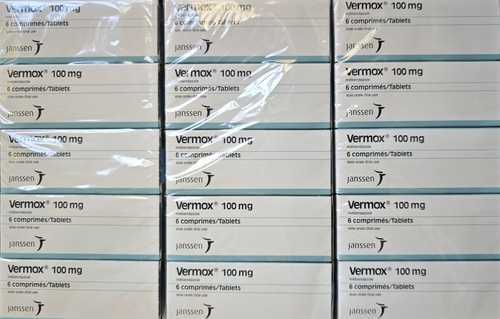
Why Ivermectin and Mebendazole Entered the Cancer Conversation
Two drugs that frequently appear in public discussions about repurposed cancer therapies are ivermectin and mebendazole.
Both were originally designed as antiparasitic medications.
Neither was created for cancer treatment.
Yet over time, researchers observed biological mechanisms that appeared potentially relevant to oncology research. Laboratory studies suggested these drugs might influence cellular pathways involved in inflammation, cell division, immune signaling, mitochondrial function, angiogenesis, or tumor metabolism.
Mebendazole, in particular, attracted interest because it appears capable of interfering with microtubules, structural components involved in cellular division. Some early laboratory and animal studies involving brain tumors, including glioblastoma models, generated enough scientific curiosity to justify further investigation.
Ivermectin also generated interest after researchers observed potential effects on multiple signaling pathways and cellular processes relevant to cancer biology in laboratory environments.
And this is precisely where calm thinking becomes essential.
Because laboratory findings are not the same thing as proven human outcomes.
Not even close.
One of the greatest misunderstandings in public health discussions is the inability to distinguish between different levels of evidence. A drug may demonstrate intriguing activity in a petri dish yet fail entirely in human beings.
Mouse models often produce excitement that later disappears in clinical trials. Dosage challenges, absorption problems, tumor heterogeneity, toxicity thresholds, and human biological complexity can radically change outcomes.
This is not cynicism, it is scientific maturity.
At the same time, it would be intellectually dishonest to pretend the enormous number of online testimonials surrounding drugs like ivermectin, mebendazole, and fenbendazole simply do not exist.
Tens of thousands of people across Facebook groups, cancer forums, podcasts, YouTube interviews, and private communities sincerely claim these drugs helped stabilize, shrink, or even eliminate their cancers. Some of these individuals appear thoughtful, emotionally grounded, and genuinely convinced they experienced meaningful improvement.
That does not automatically prove the drugs were responsible, because human biology is extraordinarily complicated and many patients are simultaneously using multiple therapies, supplements, dietary changes, conventional treatments, or lifestyle interventions.
But neither should intelligent people dismiss these stories casually simply because they do not fit neatly into existing medical certainty. The absence of definitive evidence is not always evidence of absence. But neither is it proof of effectiveness. Somewhere inside that uncomfortable tension is where mature scientific thinking must live.
The internet often encourages binary thinking. Either something is dismissed instantly as nonsense, or it is elevated into a miracle cure. Real science usually lives somewhere in the uncomfortable middle ground between those extremes.

Why Men With Prostate Cancer Should Still Understand This Field
Some men reading this article may now wonder an understandable question: If these drugs are not proven cures, why should I care about any of this?
Because understanding the world you are living inside changes how you think.
And in prostate cancer, thinking matters.
Many men enter the cancer system psychologically unprepared for complexity. They assume medicine operates with absolute certainty. They expect all important questions to already have clear answers. They imagine every treatment recommendation emerges from perfectly complete scientific knowledge.
Then reality arrives.
Suddenly they discover uncertainty, tradeoffs, evolving evidence, differing expert opinions, risk stratification, active surveillance debates, side-effect considerations, and emerging therapies all existing simultaneously.
For some men, this realization becomes emotionally destabilizing.
For others, it becomes psychologically liberating.
Because once a man understands that medicine is an evolving field rather than a finished map, he often becomes calmer, more thoughtful, and less emotionally reactive. He begins asking better questions. He becomes more capable of distinguishing possibility from proof, fear from evidence, and marketing from science.
Repurposed drugs are part of that broader educational journey.
Not because every claim surrounding them is true.
But because learning how to evaluate complex medical information intelligently may become one of the most important survival skills of all.
The Danger of Blind Belief in Either Direction
There is another layer to this conversation that deserves honesty.
Some people become so emotionally invested in alternative narratives that they lose the ability to think critically. Every anecdote becomes proof. Every skeptical scientist becomes corrupt. Every uncertainty becomes interpreted as suppression.
That mindset can become dangerous.
But there is danger on the opposite side too.
Some people become so psychologically attached to institutional certainty that they automatically dismiss every unconventional idea before examining the evidence at all. History shows that medicine occasionally changes dramatically over time. Ideas once ridiculed sometimes later become accepted. Other ideas collapse completely under rigorous testing.
Wisdom lies in remaining intellectually flexible without becoming gullible.
Skepticism should apply in all directions.
That requires emotional discipline.
Especially after a cancer diagnosis, when fear naturally creates a powerful desire for certainty, control, and reassurance.
Unfortunately, certainty is often the first casualty of serious illness.
And yet something surprising sometimes emerges in its place.
A deeper relationship with reality itself.

The Bigger Lesson Hidden Inside the Story
In many ways, the real lesson of repurposed drugs has very little to do with ivermectin, mebendazole, or even Viagra.
The deeper lesson is about humility.
Human biology remains vastly more complex than most people imagine. Medicine continues evolving. Scientific understanding changes. Some ideas fail. Some survive. Some discoveries emerge from places nobody expected.
The history of medicine is filled with treatments once considered revolutionary that later disappeared quietly. It is also filled with accidental observations that eventually transformed entire fields.
That uncertainty can feel frightening at first. But it can also produce something psychologically healthier than blind certainty ever could: perspective.
A thoughtful man living with prostate cancer does not need to become paranoid, ideological, or obsessed with miracle claims. But neither does he need to outsource all curiosity, judgment, and critical thinking to other people forever.
There is a calmer middle ground.
A place where a man can remain open-minded without becoming naïve. Curious without becoming reckless. Hopeful without becoming delusional.
That may ultimately be one of the most valuable skills any man develops during the prostate cancer journey.
Not merely learning how to survive medically, but learning how to think clearly while navigating uncertainty.
About the Author
Scott Oliver, 66, is living well with prostate cancer after dedicating more than 4,000 hours to researching the condition. His first goal is to help men reduce their risk of developing prostate cancer through proven lifestyle strategies.
When diagnosed, his mission is to help men avoid unnecessary prostate surgeries that can lead to devastating complications such as incontinence, bleeding, permanent impotence, and a loss of length.
Scott Oliver is not a doctor and does not offer medical advice; however, he is healthier and fitter than he has been in decades. Through his articles and videos, he shares hard-to-find, uncensored information on proven alternative therapies, effective fitness methods, and repurposed drugs, content that most doctors won’t mention and search engines suppress.
He is an accredited member of the National Writers Union (NWU) and the International Federation of Journalists (IFJ), the world’s largest organization of professional journalists. Scott is also the author of What If Cancer’s Best Defense Is Free? Sleep as a Defense Against Cancer: A Former Royal Marines Commando’s 4,000-Hour Research Roadmap, where he reveals how sleep repairs DNA, restores immunity, and strengthens the body’s natural defenses against cancer.
You can always contact Scott Oliver here with your questions and suggestions.
Expert Resources
- National Cancer Institute — Drug Repurposing in Cancer Research
Overview of how researchers explore existing drugs for potential new cancer applications, including scientific and regulatory challenges.
Read at the National Cancer Institute - Nature Reviews Drug Discovery — Drug Repurposing: Progress, Challenges and Recommendations
A detailed scientific overview explaining why drug repurposing has become an important area of modern biomedical research.
Read the Review - PubMed Central — Repurposing Drugs in Oncology
Peer-reviewed discussion of how existing medications are being evaluated for possible anti-cancer mechanisms and clinical applications.
Read the Full Paper - ClinicalTrials.gov — Mebendazole in Glioblastoma Research
Clinical trial database entry showing how mebendazole has been investigated in certain brain tumor studies.
View the Clinical Trial - Harvard Medical School — Understanding How Cancer Evolves
Accessible explanation of why cancer biology is extraordinarily complex and why treatment responses can vary so dramatically between patients.
Read at Harvard Medical School