What This Cancer Study Really Shows About Ivermectin and Mebendazole
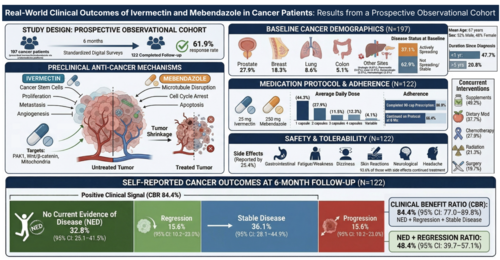
This study 'Real-World Clinical Outcomes of Ivermectin and Mebendazole in Cancer Patients: Results from a Prospective Observational Cohort' published on the 7th April 2026 followed 197 cancer patients who were prescribed a combination of ivermectin and mebendazole through a U.S.-based telemedicine platform.
It was not a randomized controlled trial. It was an observational study, meaning researchers tracked what patients reported over time without comparing them to a control group.
The most important results come from the 122 patients who completed the 6-month follow-up. That is just over 60% of the original group, so everything that follows is based on that subset.
Who These Patients Were
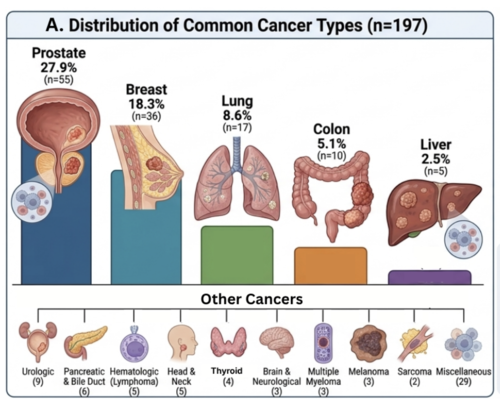
This was not a study of one specific cancer. It included a wide range of cancers, with prostate cancer being the most common, followed by breast, lung, and colon cancers. The average age was 67, and the group was evenly split between men and women.
At the start, just over one-third of patients said their cancer was actively progressing, while the rest reported stable or non-spreading disease. Many had already undergone standard treatments such as surgery, chemotherapy, radiation, immunotherapy, or hormone therapy.
What Treatment They Received
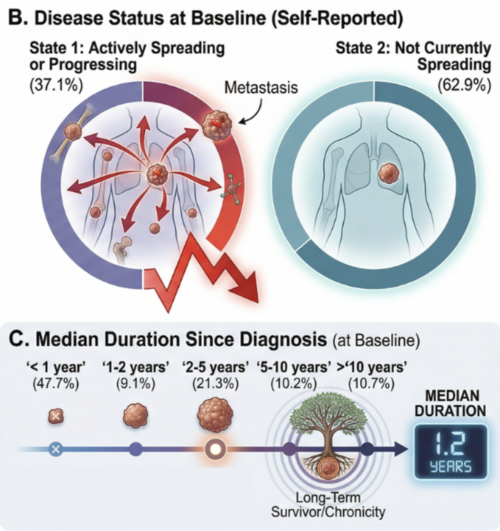
Patients were given compounded capsules containing ivermectin and mebendazole. Most took one or two capsules per day, although dosing varied. The initial prescription typically included 90 capsules.
Adherence was relatively high. Nearly 87% of those who responded said they completed the initial course, and about two-thirds were still taking the protocol at six months.
The Headline Results
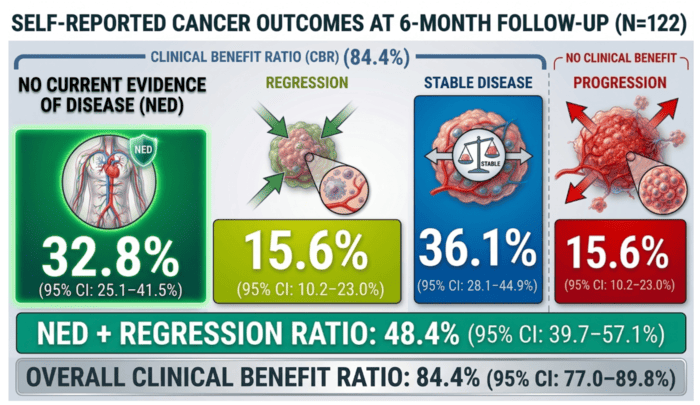
At the six-month follow-up, patients reported the following outcomes. About one-third said they had no current evidence of disease. Around 16% reported tumor regression. Just over one-third said their disease remained stable. Another 16% reported progression.
When combined, the study reported a “clinical benefit” rate of 84.4%. This includes patients whose cancer was gone, shrinking, or stable.
At first glance, those numbers appear striking.
The Critical Reality Check
These outcomes were self-reported by patients. They were not independently verified with scans or physician-confirmed measurements. This is one of the most important limitations of the study.
In simple terms, the study shows that many patients said they were doing well. It does not prove that the drugs caused those results.
This distinction is crucial.
Other Treatments Were Also Involved
Many patients were not relying on ivermectin and mebendazole alone. A significant number were also undergoing chemotherapy, radiation, or surgery. Others reported using supplements, dietary changes, fasting, ketogenic or low-sugar diets, and therapies such as hyperbaric oxygen and red-light treatment.
Because of this, it is impossible to isolate the effect of the drug combination from everything else patients were doing at the same time.
Safety And Side Effects
About one-quarter of patients reported side effects. These were mostly mild and included digestive issues, fatigue, dizziness, skin reactions, and headaches.
Most patients who experienced side effects continued treatment, often with small adjustments. Only a very small number stopped entirely.
This suggests the combination was generally tolerable in this group, at least over the short term.
Dose Findings
The study looked at whether higher doses produced better results. It did not find a clear relationship between dose and cancer outcomes. In other words, higher doses did not consistently lead to better reported results.
However, side effects did vary with dose, with some dosing groups reporting more issues than others.
What The Study Suggests
The authors argue that these findings are biologically plausible. Both drugs have shown anti-cancer effects in laboratory studies, acting on multiple pathways involved in tumor growth and survival.
They also highlight that these drugs are inexpensive compared to conventional cancer treatments, which can cost over $100,000 per year.
But laboratory promise and real-world proof are not the same thing.
The Biggest Limitations
This study has several major weaknesses that must be understood clearly.
There was no control group. Outcomes were self-reported. Many patients were using multiple therapies at the same time. Nearly 40% of participants did not complete follow-up. And results were not independently verified.
All of these factors mean the study cannot establish cause and effect.
Conflict Of Interest
All authors were affiliated with the organization that prescribed and dispensed the drug combination. This does not automatically invalidate the findings, but it does increase the need for independent verification.
The Bottom Line
This study presents an interesting signal, not a proven treatment.
It suggests that ivermectin and mebendazole may deserve further investigation in properly designed clinical trials. It does not prove that they treat cancer, shrink tumors, or improve survival.
The most accurate conclusion is simple. Promising, but preliminary. Worth studying, but far from proven.
About the Author
Scott Oliver, 66, is living well with prostate cancer after dedicating more than 4,000 hours to researching the condition. His first goal is to help men reduce their risk of developing prostate cancer through proven lifestyle strategies.
When diagnosed, his mission is to help men avoid unnecessary prostate surgeries that can lead to devastating complications such as incontinence, bleeding, permanent impotence, and a loss of length.
Scott Oliver is not a doctor and does not offer medical advice; however, he is healthier and fitter than he has been in decades. Through his articles and videos, he shares hard-to-find, uncensored information on proven alternative therapies, effective fitness methods, and repurposed drugs, content that most doctors won’t mention and search engines suppress.
He is an accredited member of the National Writers Union (NWU) and the International Federation of Journalists (IFJ), the world’s largest organization of professional journalists. Scott is also the author of What If Cancer’s Best Defense Is Free? Sleep as a Defense Against Cancer: A Former Royal Marines Commando’s 4,000-Hour Research Roadmap, where he reveals how sleep repairs DNA, restores immunity, and strengthens the body’s natural defenses against cancer.
You can always contact Scott Oliver here with your questions and suggestions.