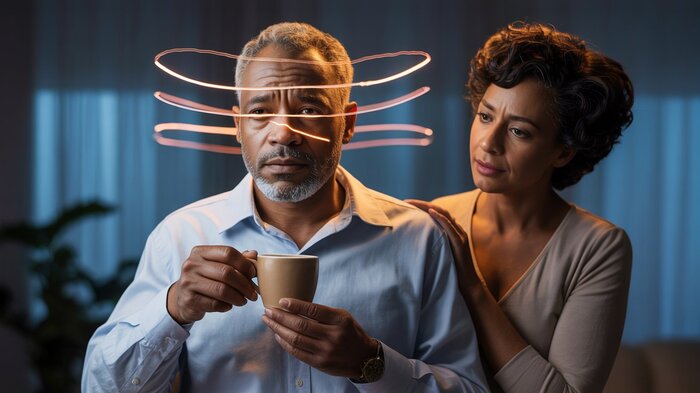
10 Questions To Ask Yourself If You Are Living With Cancer And Still Drinking Coffee
Coffee does not cause cancer. That is not the point of this article. The real question is much more personal, and much more important:
Is coffee helping your body recover, repair, sleep, and stay calm — or is it quietly working against you?
For many people, coffee feels harmless because it is normal. Millions drink it every morning. Some drink it several times a day. But normal does not always mean optimal, especially when your body is already dealing with cancer, treatment decisions, fear, fatigue, inflammation, poor sleep, or stress.
The FDA says up to 400 mg of caffeine per day is not generally linked with negative effects for most adults, but it also notes that people vary widely in how sensitive they are to caffeine and how quickly they eliminate it from the body. Read the FDA guidance.
That variation matters.
Sleep researchers report that caffeine can remain active in the body for many hours, with a half-life that may range from about 2 to 12 hours depending on the person. That means a cup of coffee taken in the morning may be mostly gone by bedtime for one person, but still biologically active much later for another. Read the Sleep Foundation overview.

This Is Not An Anti-Coffee Article
Research does not show that coffee is a major cause of cancer. In fact, cancer organizations have reported that moderate coffee intake is not generally linked with increased cancer risk, and may even be associated with lower risk for some cancers, including liver and endometrial cancer. Read the AICR summary.
But that does not mean coffee is right for every person living with cancer.
For someone trying to strengthen the body, improve sleep, lower stress, support immune function, reduce anxiety, protect digestion, and rebuild energy naturally, coffee deserves a much closer look.
The question is not: “Is coffee good or bad?”
The better question is: “What is coffee doing to me?”
Why Some People Handle Coffee Better Than Others
One major reason coffee affects people so differently is genetics. Caffeine is mainly broken down in the liver by an enzyme called CYP1A2.
Some people are fast caffeine metabolizers, meaning they clear caffeine from the body more quickly. Others are slower metabolizers, meaning caffeine can stay active much longer and may have stronger effects on sleep, anxiety, blood pressure, heart rhythm, and stress hormones.
Research suggests that genetic differences related to caffeine metabolism may divide people into faster and slower metabolizer groups, with some studies describing slow metabolizers as making up approximately half the population.
That does not automatically mean half of all people must avoid coffee completely. But it does mean that millions of people may be drinking coffee every day while biologically processing it poorly.
For someone living with cancer, this matters because the goal is not simply to feel stimulated for a few hours. The goal is to protect sleep, lower unnecessary stress, support recovery, maintain steady energy, and listen carefully to what the body is trying to say.

Question 1: Do You Need Coffee Before You Feel Human In The Morning?
If you cannot function until you have coffee, that may not be a sign that coffee is giving you health. It may be a sign that your body is dependent on stimulation to feel normal.
There is a difference between enjoying coffee and needing coffee. Enjoyment is optional. Need is a warning sign.
If you are living with cancer, your morning energy matters. Waking up exhausted every day is information. Coffee may hide that information instead of helping you correct it.
Question 2: Can You Stop Coffee For One Full Day Without Symptoms?
If skipping coffee gives you headaches, irritability, brain fog, low mood, or crushing fatigue, your body may be showing signs of caffeine dependence.
That does not make you weak. It means your nervous system has adapted to a daily stimulant.
For someone living with cancer, this matters because your goal is not just to “get through the day.” Your goal is to build a stronger internal foundation.
Question 3: Do You Crash A Few Hours After Drinking Coffee?
Many people mistake a caffeine spike for real energy.
Coffee can make you feel sharper for a short time, but some people pay for that lift with a later crash. They feel tired, flat, foggy, or hungry a few hours later, then reach for another coffee.
That cycle can become a daily roller coaster.
If you are dealing with cancer, your body already has enough to manage. Artificial highs and lows may not be helping.

Question 4: Is Your Sleep Truly Deep, Restorative, And Unbroken?
This may be the most important question in the entire article.
Sleep is not a luxury. Sleep is when the body repairs. It is when the nervous system resets. It is when hormones, immune signaling, and inflammation control are deeply influenced.
One controlled study found that caffeine taken even 6 hours before bedtime had significant disruptive effects on sleep. Read the study.
Another systematic review found that caffeine reduced total sleep time and sleep efficiency, increased time awake after falling asleep, and reduced deep sleep. Read the review.
The dangerous part is that you may still “fall asleep” and think coffee is not affecting you.
But falling asleep is not the same as getting deep, clean, restorative sleep.
Question 5: Do You Wake Up Refreshed Without Caffeine?
This question cuts through the illusion.
If you only feel good after coffee, you may not be measuring real energy. You may be measuring chemical stimulation.
A healthy body should not need a stimulant every morning just to reach baseline function.
For someone living with cancer, this is especially important because fatigue can have many causes: poor sleep, stress, treatment effects, nutritional problems, anemia, inflammation, low muscle mass, medication effects, or emotional overload.
Coffee can cover the smoke without putting out the fire.
Question 6: Does Coffee Make You Anxious, Wired, Irritable, Or Restless?
Cancer is not only a physical experience. It is also an emotional and nervous system experience.
A diagnosis can bring fear, uncertainty, anger, sleepless nights, financial pressure, relationship stress, and difficult treatment decisions.
Caffeine can push an already stressed nervous system harder.
If coffee makes you feel wired, tense, impatient, or emotionally reactive, that is not a small issue. Your body may be telling you that stimulation is not what it needs right now.
Question 7: Do You Drink Coffee Instead Of Resting?
This is one of the most common traps.
You are tired, but instead of resting, walking gently, breathing, eating better, or going to bed earlier, you drink coffee and keep pushing.
That may work for a while. But the bill eventually comes due.
When you are living with cancer, fatigue should be respected. It is not always an enemy. Sometimes it is the body asking for recovery.

Question 8: Do You Have Urinary Frequency, Urgency, Or Night-Time Waking?
This question is especially important for men living with prostate cancer or prostate problems.
Caffeine can irritate the bladder in some people and may worsen urgency, frequency, and night-time urination. A review of fluid and caffeine modification found that reducing or modifying caffeine intake was associated with improvements in lower urinary tract symptoms, urgency, and frequency in some studies. Read the review.
If you are waking up several times a night to urinate, coffee may be part of the problem.
And if coffee is worsening night-time waking, then it is not just a bladder issue. It becomes a sleep issue, a recovery issue, and a quality-of-life issue.
Question 9: Does Coffee Irritate Your Gut, Reflux, Or Digestion?
Many people tolerate coffee well. Others do not.
If coffee gives you acid reflux, stomach discomfort, loose bowels, urgency, nausea, or appetite disruption, your body is giving you useful feedback.
Digestion matters when you are living with cancer. You need nutrient absorption, stable blood sugar, healthy elimination, and enough appetite to support strength.
If coffee is disturbing your gut every day, it deserves to be questioned.
Question 10: Have You Ever Stopped Coffee For 10 Days And Honestly Measured The Difference?
This is the ultimate test.
Not a debate. Not an opinion. Not a social media argument.
A personal experiment.
Stop coffee for 10 days and track:
Sleep. Energy. Anxiety. Urination. Digestion. Mood. Blood pressure. Heart rate. Morning clarity. Afternoon crashes.
You may feel worse for the first few days if you are dependent on caffeine. That does not prove coffee is good for you. It may simply prove your body had adapted to it.
The real question is how you feel after the withdrawal period passes.

How To Score Yourself
- If you answered yes to 0 to 2 questions, coffee may not be a major issue for you.
- If you answered yes to 3 to 5 questions, coffee may be costing you more than you realize.
- If you answered yes to 6 or more questions, coffee may be working against your recovery, sleep, stress control, digestion, urinary health, or natural energy.
This does not mean you must panic. It means you should investigate.
Why This Matters More When You Are Living With Cancer
When you are healthy, you may get away with many things.
When you are living with cancer, the margin for error becomes smaller.
Your body needs better sleep. Better nutrition. Better stress control. Better immune resilience. Better hormonal balance. Better daily rhythms.
Coffee may not cause cancer, but for some people it can interfere with several of the systems the body depends on during a serious health challenge.
That is the real issue.
Not fear.
Not guilt.
Not anti-coffee propaganda.
Just honest self-observation.
The Warrior Question
Ask yourself this:
If I removed coffee for 10 days, would my body become calmer, cleaner, stronger, and more stable?
If the answer might be yes, then the experiment is worth doing.
You do not have to give up coffee forever.
But if you are living with cancer, you owe it to yourself to know whether coffee is helping you, or quietly holding you back.
Important Note
This article is for education only. It is not medical advice. If you are receiving cancer treatment, taking medication, dealing with severe fatigue, heart rhythm problems, anxiety, insomnia, urinary symptoms, digestive problems, or major dietary changes, speak with a qualified healthcare professional before making significant changes.
About the Author
Scott Oliver, 66, is living well with prostate cancer after dedicating more than 4,000 hours to researching the condition. His first goal is to help men reduce their risk of developing prostate cancer through proven lifestyle strategies.
When diagnosed, his mission is to help men avoid unnecessary prostate surgeries that can lead to devastating complications such as incontinence, bleeding, permanent impotence, and a loss of length.
Scott Oliver is not a doctor and does not offer medical advice; however, he is healthier and fitter than he has been in decades. Through his articles and videos, he shares hard-to-find, uncensored information on proven alternative therapies, effective fitness methods, and repurposed drugs, content that most doctors won’t mention and search engines suppress.
He is an accredited member of the National Writers Union (NWU) and the International Federation of Journalists (IFJ), the world’s largest organization of professional journalists. Scott is also the author of What If Cancer’s Best Defense Is Free? Sleep as a Defense Against Cancer: A Former Royal Marines Commando’s 4,000-Hour Research Roadmap, where he reveals how sleep repairs DNA, restores immunity, and strengthens the body’s natural defenses against cancer.
You can always contact Scott Oliver here with your questions and suggestions.
Expert Resources Used To Research and Write This Article.
- FDA: Spilling the Beans: How Much Caffeine Is Too Much?
A clear overview of caffeine intake, sensitivity, and the commonly cited 400 mg daily limit for most adults.
Read the FDA guidance - American Institute for Cancer Research: Coffee and Cancer Prevention
A balanced cancer-focused review explaining that coffee is not generally associated with increased cancer risk and may be linked with lower risk for some cancers.
Read the AICR summary - American Cancer Society: Coffee and Cancer: What the Research Really Shows
A useful explanation of why older coffee-cancer fears were often confused by smoking and other factors.
Read the American Cancer Society article - Sleep Foundation: Caffeine and Sleep Problems
Explains how caffeine affects sleep, why sensitivity varies, and why caffeine can remain active for many hours.
Read the Sleep Foundation overview - Journal of Clinical Sleep Medicine: Caffeine Effects On Sleep Taken 0, 3, Or 6 Hours Before Bed
A controlled study showing that caffeine can disrupt sleep even when taken 6 hours before bedtime.
Read the study - Sleep Medicine Reviews: The Effect Of Caffeine On Subsequent Sleep
A systematic review reporting that caffeine reduced total sleep time, sleep efficiency, and deep sleep measures.
Read the review - Fluid And Caffeine Modification For Lower Urinary Tract Symptoms
A review discussing how caffeine modification may help urinary urgency and frequency in some people.
Read the review