What Is Bioavailability? The Hidden Reason Many “Promising” Cancer Drugs Fail
A simple explanation for men trying to think clearly after a prostate cancer diagnosis.
A drug can look powerful in a laboratory.
It can hit cancer pathways. It can damage cancer cells in a dish. It can look exciting in early studies. It can even show signs of activity against treatment-resistant prostate cancer.
And still fail in real human beings.
Why?
One major reason is a word most men are never taught to understand: Bioavailability.
It Is Not What You Swallow. It Is What Your Body Can Use.
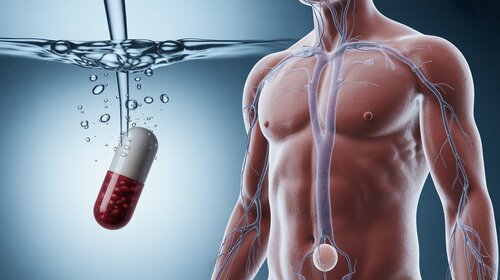
Bioavailability means how much of a substance actually gets into your bloodstream and becomes available for your body to use.
That sounds simple, but it is one of the most important ideas in medicine.
You can swallow a tablet. You can take a capsule. You can drink a supplement. But that does not automatically mean the active compound reaches your blood, your tissues, your organs, or your prostate in a meaningful amount.
Getting a substance into the bloodstream and into the right tissues at the right level is everything.
Without that, even a promising compound may remain more of a theory than a useful treatment.
The Niclosamide Example
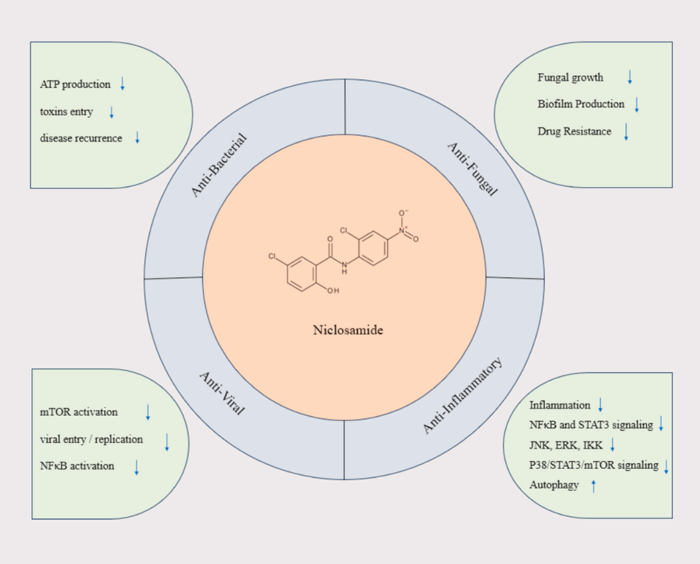
Niclosamide is an old anti-parasite drug. It was originally used to treat tapeworm infections. In recent years, researchers have become interested in it for another reason: it appears to affect several pathways involved in cancer.
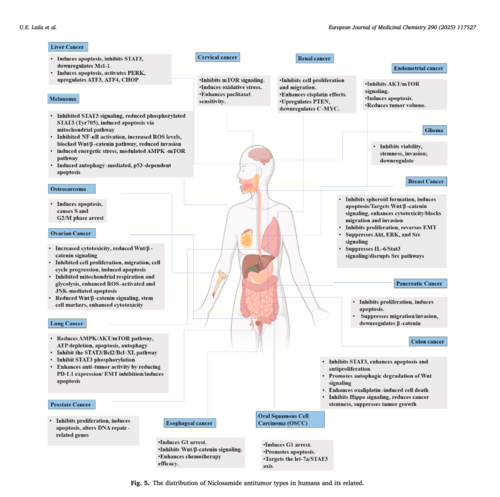
The study 'Pharmacological advances and therapeutic applications of niclosamide in cancer and other diseases' in the European Journal of Medicinal Chemistry is interesting to read.
In the laboratory studies, niclosamide has been reported to interfere with cancer-cell energy production and important growth pathways such as STAT3, Wnt/beta-catenin, mTOR, Notch, and NF-kB.
That makes it interesting.
For prostate cancer, it has also been studied in relation to treatment-resistant disease, including resistant forms connected to androgen receptor signaling.
So the obvious question is: If niclosamide looks so interesting, why is it not already being widely used as a prostate cancer treatment?
The answer brings us back to bioavailability.
The Body Is Not a Petri Dish
In a laboratory dish, researchers can expose cancer cells directly to a compound.
But the human body is different.
A substance must survive digestion. It must dissolve. It must be absorbed. It must pass through the liver. It must circulate in the blood. It must reach the relevant tissue. It must stay there long enough. And it must do all of this without causing unacceptable harm.
That is a much harder test.
Niclosamide has a major problem: it does not dissolve well in water and is poorly absorbed when taken orally. That means standard oral niclosamide may not produce blood levels high enough to match the effects seen in laboratory studies.
In plain English: The drug may be active, but the body may not absorb enough of it to make that activity matter.
More Is Not Always Better
Some people assume the answer is simple: just take more.
But that is where things become dangerous.
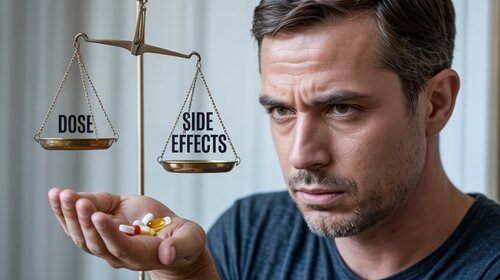
If a drug has poor bioavailability, increasing the dose does not always solve the problem. Sometimes the body still absorbs it poorly. Sometimes side effects appear before useful blood levels are reached.
That is one of the great frustrations with repurposed drugs.
The mechanism may be real. The lab results may be interesting. The theory may be logical. But the human body still asks the hardest question:
Can this compound reach the right place, at the right dose, for long enough, safely?
Why This Matters for Men Living With Prostate Cancer
After a prostate cancer diagnosis, many men start searching. That is understandable. They read studies. They watch videos. They hear about drugs, supplements, diets, protocols, and “breakthroughs.”
But without understanding bioavailability, it is easy to mistake possibility for proof.
A study showing that a compound affects prostate cancer cells does not automatically mean that swallowing that compound will help a man with prostate cancer.
There are levels of evidence:
- Lab studies show what may happen when cancer cells are directly exposed to a compound.
- Animal studies show what may happen in a living system, but not necessarily in humans.
- Human studies show whether the idea can survive contact with reality.
Bioavailability is often the bridge between theory and reality. Sometimes that bridge is strong. Sometimes it collapses.
Many men reach a point where the information about prostate cancer becomes seriously overwhelming. Different opinions. Different options. No clear path forward.
If you would like to step back and think clearly before making any decisions, you are welcome to contact me. I will read your situation personally and respond thoughtfully.
No pressure. No sales pitch. Just a calm, focused exchange to help you see things clearly.
The Bigger Lesson
Niclosamide should not be dismissed as nonsense. It is scientifically interesting. It affects pathways that matter. Researchers are still exploring better formulations, derivatives, salt forms, and nano-delivery systems to overcome its limitations.
But it also should not be promoted as a proven prostate cancer solution.
The honest lesson is more useful than hype: A compound can be promising and still not be practical in its current form.
That is why bioavailability matters so much.
It helps men ask better questions:
- Does this substance actually get absorbed?
- Does it reach meaningful blood levels?
- Does it reach the prostate or tumor tissue?
- What dose was used in the study?
- Was the study done in cells, animals, or humans?
- Were the blood levels achievable safely in real people?
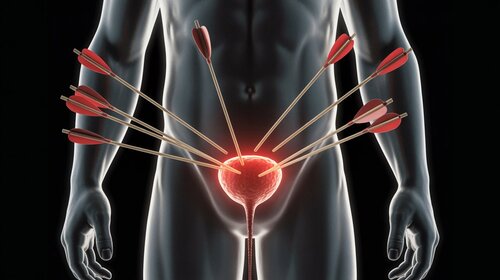
Clear Thinking Comes First
Men with prostate cancer do not need more panic. They do not need more miracle claims. They do not need to chase every compound that looks exciting in a laboratory.
They need clear thinking.
Bioavailability is one of the key ideas that separates serious investigation from wishful thinking.
It reminds us that the question is not simply: “Does this substance do something?”
The better question is: “Can this substance do something useful inside the human body, at a dose that is safe and realistic?”
That is the difference between a promising idea and a practical treatment.
Bottom Line
Bioavailability means how much of a substance your body can actually absorb and use.
Niclosamide is a powerful example because it appears interesting in cancer research, including prostate cancer research, but its poor absorption has limited its usefulness in ordinary oral form.
The lesson is simple: It is not enough for a compound to look powerful on paper. It must reach the right place, at the right level, in the real human body.
That is why understanding bioavailability can help men living with prostate cancer become calmer, sharper, and better prepared to evaluate what they read.
Clear thinking begins when you understand the difference between possibility and reality.
About the Author
Scott Oliver, 66, is living well with prostate cancer after dedicating more than 4,000 hours to researching the condition. His first goal is to help men reduce their risk of developing prostate cancer through proven lifestyle strategies.
When diagnosed, his mission is to help men avoid unnecessary prostate surgeries that can lead to devastating complications such as incontinence, bleeding, permanent impotence, and a loss of length.
Scott Oliver is not a doctor and does not offer medical advice; however, he is healthier and fitter than he has been in decades. Through his articles and videos, he shares hard-to-find, uncensored information on proven alternative therapies, effective fitness methods, and repurposed drugs, content that most doctors won’t mention and search engines suppress.
He is an accredited member of the National Writers Union (NWU) and the International Federation of Journalists (IFJ), the world’s largest organization of professional journalists. Scott is also the author of What If Cancer’s Best Defense Is Free? Sleep as a Defense Against Cancer: A Former Royal Marines Commando’s 4,000-Hour Research Roadmap, where he reveals how sleep repairs DNA, restores immunity, and strengthens the body’s natural defenses against cancer.
You can always contact Scott Oliver here with your questions and suggestions.