
Is Coffee Quietly Causing Your Neck, Shoulder, and Upper Back Tension? The hidden connection between caffeine, stress hormones, muscle stiffness, and the modern nervous system
Most people think of coffee as an energy drink.
A mental boost. A productivity tool. A harmless morning ritual.
Very few people think of coffee as something that could affect the muscles in their neck, shoulders, jaw, or upper back.
But many people who live with chronic tension, stiffness, tightness, headaches, or a constant feeling of muscular strain may be overlooking one important factor.
Caffeine does not only affect the brain.
It affects the nervous system.
And the nervous system directly affects the muscles.
That matters because millions of people now live in a state of low level chronic stimulation. Poor sleep. Constant notifications. Financial pressure. Artificial light. Endless screen time. Chronic stress. Information overload.
Then caffeine is layered on top.
For some people, the result is not simply “more energy.”
It is muscular tension.
Sometimes all day long.

Your Muscles Listen to Your Nervous System
Most people think muscle tightness is purely physical.
Bad posture. Too much sitting. Aging. A poor mattress.
Those things matter.
But the nervous system plays a massive role in muscle tone and muscular guarding.
When the brain perceives stress, whether physical or psychological, the body activates the sympathetic nervous system, often called the “fight or flight” system.
Adrenaline increases. Cortisol rises. Heart rate changes. Breathing becomes shallower. Muscles prepare for action.
This is an ancient survival mechanism.
The problem is that modern humans often activate this system all day long while sitting motionless at a desk.
And caffeine can amplify it.

Caffeine Increases Nervous System Stimulation
Caffeine blocks adenosine, a neurotransmitter involved in relaxation and sleepiness.
This temporarily reduces the sensation of fatigue.
But caffeine also stimulates adrenaline and increases overall nervous system arousal.
In some people, especially those already stressed or sleep deprived, this creates a state many describe as:
“Wired but tired.”
The body feels stimulated, but not truly rested.
Mentally, a person may not even feel anxious.
Physically, however, the body may tell a different story.
Tight jaw. Raised shoulders. Neck stiffness. Upper back pain. Shallow breathing. Muscle tension headaches.
Many people experience these symptoms without ever connecting them to caffeine and nervous system activation.
If you are a wife, partner, or family member trying to help a man make the right decision, your role matters more than most people realise.
You are welcome to contact me too. Sometimes a calm outside perspective can help both of you think more clearly.
The Neck and Shoulders Are Common Stress Zones
The human body tends to “store” tension in predictable areas.
The trapezius muscles, neck muscles, jaw, and upper back are particularly sensitive to stress related muscular guarding.
Why?
Because these muscles are heavily involved in protective posture.
When the nervous system perceives pressure or threat, many people unconsciously:
Raise their shoulders. Tighten their neck. Clench their jaw. Lean forward. Contract the upper back muscles.
Do this for long enough and stiffness becomes chronic.
Add caffeine on top of an already overloaded nervous system and the tension may intensify further.

You May Not Feel “Anxious” at All
This is one of the most misunderstood parts of the story.
Many people assume anxiety is always emotional.
But the body can experience stress physically even when the conscious mind feels calm.
Some people drink coffee and feel mentally focused while their body quietly shifts into a chemically stimulated state.
The result can include:
Muscle tightness. Jaw clenching. Twitching. Restlessness. Shoulder stiffness. Neck pain. Tension headaches.
For sensitive individuals, caffeine may amplify underlying nervous system tension that was already present.
Sleep Is Often the Missing Piece
This may be the most important factor of all.
Caffeine can remain active in the body for many hours. In some people, afternoon caffeine may still affect the nervous system late into the night.
Even when someone falls asleep normally, caffeine can reduce deep restorative sleep quality.
That matters enormously for muscular recovery.
Muscles do not fully recover during the workout, massage, or stretching session itself.
Much of the body's repair and nervous system recalibration occurs during deep sleep.
When sleep quality declines, people often become:
More physically tense. More pain sensitive. More inflamed. Less resilient to stress.
Morning neck stiffness and upper back tightness are common consequences of poor nervous system recovery.
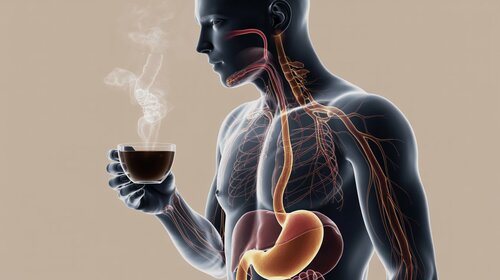
Posture and Caffeine Often Work Together
Coffee itself may not be the entire problem.
But coffee often amplifies existing modern lifestyle patterns.
Think about the typical scenario.
A person drinks coffee while sitting at a computer for hours, leaning forward, concentrating intensely, barely moving, breathing shallowly, and remaining under constant mental stimulation.
Caffeine may increase focus and alertness, but it may also increase muscular rigidity during those long periods of static posture.
The neck and upper back eventually absorb the load.
Hydration and Minerals Matter Too
In some people, excessive caffeine intake combined with inadequate hydration may worsen muscular tightness and cramping.
Electrolytes such as magnesium, potassium, and sodium play important roles in muscular relaxation and nervous system regulation.
Poor diet, stress, sweating, inadequate hydration, and heavy caffeine intake may contribute to imbalance in susceptible individuals.
This does not mean caffeine “causes” mineral deficiency directly in every person.
But it may become one piece of a larger physiological puzzle.
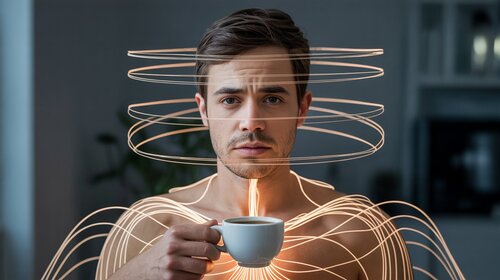
Not Everybody Responds the Same Way
Some people tolerate coffee extremely well.
Others are highly sensitive.
Genetics strongly influence how quickly caffeine is metabolized by the liver. Some individuals experience minimal side effects while others may react strongly to relatively small amounts.
Factors that may increase sensitivity include:
Poor sleep. Chronic stress. Anxiety tendencies. Overtraining. High workload. Nervous system exhaustion. Multiple caffeinated drinks daily.
For some people, reducing caffeine dramatically improves:
Sleep quality. Muscle tension. Jaw clenching. Headaches. Neck stiffness. Anxiety. Energy stability.
Others may notice little difference.

The Bottom Line
Coffee is not automatically harmful.
But caffeine is a powerful nervous system stimulant, and many people underestimate how strongly the nervous system influences muscular tension and physical stress patterns.
If you live with chronic neck tightness, upper back stiffness, jaw clenching, shoulder tension, poor sleep, nervous energy, or a constant “wired” feeling, caffeine may be quietly amplifying the problem.
The issue may not be coffee alone.
It may be the combination of:
Stress. Sleep deprivation. Screen overload. Chronic stimulation. Poor recovery. Muscle guarding. Shallow breathing. And caffeine layered on top of an already overloaded nervous system.
Your muscles are constantly listening to your nervous system.
And sometimes the neck, shoulders, and upper back become the place where modern stress chemistry finally shows itself physically.
About the Author
Scott Oliver, 66, is living well with prostate cancer after dedicating more than 4,000 hours to researching the condition. His first goal is to help men reduce their risk of developing prostate cancer through proven lifestyle strategies.
When diagnosed, his mission is to help men avoid unnecessary prostate surgeries that can lead to devastating complications such as incontinence, bleeding, permanent impotence, and a loss of length.
Scott Oliver is not a doctor and does not offer medical advice; however, he is healthier and fitter than he has been in decades. Through his articles and videos, he shares hard-to-find, uncensored information on proven alternative therapies, effective fitness methods, and repurposed drugs, content that most doctors won’t mention and search engines suppress.
He is an accredited member of the National Writers Union (NWU) and the International Federation of Journalists (IFJ), the world’s largest organization of professional journalists. Scott is also the author of What If Cancer’s Best Defense Is Free? Sleep as a Defense Against Cancer: A Former Royal Marines Commando’s 4,000-Hour Research Roadmap, where he reveals how sleep repairs DNA, restores immunity, and strengthens the body’s natural defenses against cancer.
You can always contact Scott Oliver here with your questions and suggestions.
Trusted Expert Resources
- Johns Hopkins Medicine, The Effects of Stress on Your Body
Explains how chronic stress activates the nervous system and contributes to muscular tension, neck pain, and physical stress symptoms. Read at Johns Hopkins Medicine - Sleep Foundation, Why Sleep Is Important for Muscle Recovery
Explains how sleep quality affects muscular recovery, inflammation, nervous system repair, and physical tension. Read at Sleep Foundation - National Institutes of Health, Caffeine, Stress, and the Nervous System
Peer reviewed scientific overview of caffeine's effects on sympathetic nervous system activation, stress hormones, and neurological stimulation. Read the study - Cleveland Clinic, Tension Headaches and Muscle Tightness
Medical explanation of how muscular tension in the neck, shoulders, jaw, and upper back contributes to chronic discomfort and headaches. Read at Cleveland Clinic - Mayo Clinic, Stress Symptoms: Effects on Your Body and Behavior
Trusted medical resource explaining how chronic stress affects muscles, breathing patterns, posture, sleep, and nervous system regulation. Read at Mayo Clinic