What Every Healthcare Worker Should Know About the Emerging “Spike Detox” Discussion
Millions of healthcare workers made difficult decisions during the COVID pandemic under extraordinary pressure.
Nurses, physicians, respiratory therapists, paramedics, and hospital staff often found themselves working long hours inside an atmosphere of uncertainty, fear, emotional exhaustion, and institutional urgency unlike anything most had experienced in their professional lives.
Many accepted repeated COVID vaccinations not because they spent months independently researching vaccine immunology, lipid nanoparticles, spike proteins, myocarditis data, or inflammatory pathways, but because they trusted public health authorities, trusted hospital systems, wanted to protect vulnerable patients, or simply wanted to keep their jobs.
That reality deserves respect, not ridicule.

It is also important to remember that medicine evolves. Scientific understanding changes over time. New information emerges. Risks that once seemed theoretical sometimes become more widely acknowledged years later. That is not a sign that science has failed. It is often how science works.
Today, several issues that were once dismissed by many people are now openly acknowledged within mainstream medicine. One of those issues is myocarditis following mRNA vaccination.
Health authorities including the Centers for Disease Control and Prevention and the European Medicines Agency recognize that vaccine-associated myocarditis and pericarditis can occur, particularly in adolescents and young adults after mRNA COVID vaccination.
Most reported cases have been described as clinically mild, and many patients recovered well. However, some cardiologists and researchers have argued that the phrase “mild myocarditis” can sound psychologically misleading to ordinary people because inflammation of the heart muscle is still something worthy of serious respect and careful medical follow-up.
If you are being asked to make a decision about surgery, radiation, medication, or another major treatment, it can help to step back before you move forward.
I can help you think through the questions you may want to ask, the risks you may want to understand, and the next step that feels right for you.
The Bigger Question
This evolving discussion has led some physicians to begin asking a broader question.
If the spike protein itself may contribute to inflammation in some individuals, could there also be ways to help the body reduce inflammatory burden or support recovery pathways after repeated exposure?
That question sits at the center of what has become known as the “spike detoxification” debate.
Importantly, this is not a universally accepted area of medicine. There is currently no large randomized clinical trial proving that so-called spike detoxification protocols remove spike protein from the body or prevent long-term complications. Many mainstream physicians remain skeptical of the concept entirely.
But there are also highly credentialed doctors who believe the subject deserves careful scientific investigation rather than reflexive dismissal.

Who Is Dr. Peter McCullough?
One of the most widely discussed figures in this area is Dr. Peter McCullough, a highly published cardiologist and former academic physician who became internationally known during the COVID era for questioning aspects of vaccine safety and advocating early treatment approaches.
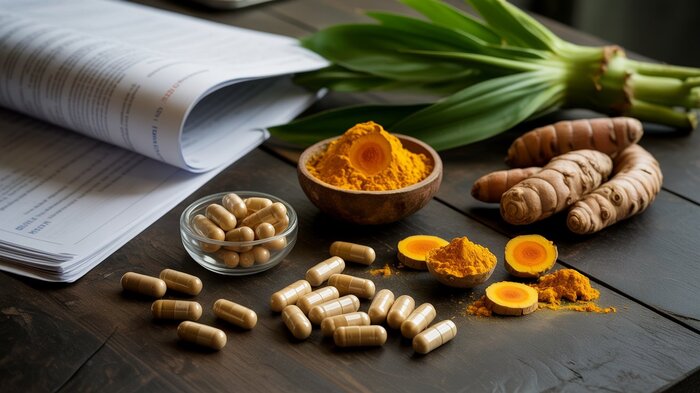
Together with colleagues, McCullough has discussed what he calls a “Base Spike Detoxification” protocol involving three primary compounds: nattokinase, bromelain, and curcumin.
The theory behind the protocol is relatively straightforward.
- Nattokinase is a naturally derived enzyme obtained from fermented soybeans that has been studied for its fibrinolytic properties, meaning its ability to interact with fibrin and clotting pathways. Some laboratory studies have suggested nattokinase may also degrade SARS-CoV-2 spike protein under experimental conditions. Take 2,000 FU twice daily
- Bromelain, an enzyme derived from pineapple stems, has long been studied for anti-inflammatory and proteolytic effects. Take 500 mg once daily
- Curcumin, the active compound in turmeric, has been extensively researched for its anti-inflammatory and antioxidant properties. Take 500 mg once daily.
The paper describing the protocol suggests continuing for: 3–12 months or longer, depending on symptoms and clinical judgment.
Together, proponents believe these compounds may help support the body's natural inflammatory regulation and fibrinolytic systems.
Critics argue that the evidence remains preliminary, mechanistic, and far from proven in large human clinical trials.
Both statements can simultaneously be true.
Where the Debate Really Stands
This is where the modern discussion becomes more thoughtful than political.
The central issue is no longer whether vaccine-associated myocarditis exists. It does.
The deeper question now being explored by some physicians is whether repeated exposure to spike protein, whether through infection, vaccination, or both, may contribute to inflammatory or vascular stress in susceptible individuals, and whether supportive interventions deserve further investigation.
For healthcare workers who received multiple injections under institutional pressure, this discussion can feel emotionally complicated.
Some feel angry. Others feel defensive. Many simply feel tired of the entire subject.
But thoughtful curiosity is not irrational.
Nor is calm investigation.
Science advances not only through certainty, but also through the willingness to ask difficult questions carefully, honestly, and without fear.
And perhaps that is the healthiest place to begin.

Important Safety Note
This article is for educational purposes only and is not medical advice. Anyone considering nattokinase, bromelain, curcumin, or any other supplement protocol should first speak with a qualified medical professional, especially if they take blood thinners, aspirin, anti-platelet medication, heart medication, or have a history of bleeding, stroke, ulcers, surgery, or cardiovascular disease.
About the Author
Scott Oliver, 66, is living well with prostate cancer after dedicating more than 4,000 hours to researching the condition. His first goal is to help men reduce their risk of developing prostate cancer through proven lifestyle strategies.
When diagnosed, his mission is to help men avoid unnecessary prostate surgeries that can lead to devastating complications such as incontinence, bleeding, permanent impotence, and a loss of length.
Scott Oliver is not a doctor and does not offer medical advice; however, he is healthier and fitter than he has been in decades. Through his articles and videos, he shares hard-to-find, uncensored information on proven alternative therapies, effective fitness methods, and repurposed drugs, content that most doctors won’t mention and search engines suppress.
He is an accredited member of the National Writers Union (NWU) and the International Federation of Journalists (IFJ), the world’s largest organization of professional journalists. Scott is also the author of What If Cancer’s Best Defense Is Free? Sleep as a Defense Against Cancer: A Former Royal Marines Commando’s 4,000-Hour Research Roadmap, where he reveals how sleep repairs DNA, restores immunity, and strengthens the body’s natural defenses against cancer.
You can always contact Scott Oliver here with your questions and suggestions.
Expert Resources
- CDC: Myocarditis and Pericarditis After COVID-19 Vaccination
A mainstream clinical reference acknowledging myocarditis and pericarditis after COVID vaccination and advising clinicians to consider it in patients with chest pain, shortness of breath, or palpitations.
Read at the CDC - European Medicines Agency: mRNA COVID Vaccines and Myocarditis/Pericarditis
EMA communication stating that myocarditis and pericarditis have been reported in association with mRNA COVID vaccines and that a causal association is at least a reasonable possibility.
Read the EMA communication - Clinical Approach to Post-Acute Sequelae After COVID-19 Infection and Vaccination
The Cureus paper by Hulscher, Procter, and McCullough proposing a base spike detoxification protocol using nattokinase, bromelain, and curcumin.
Read on PubMed - Degradative Effect of Nattokinase on Spike Protein of SARS-CoV-2
A laboratory study suggesting nattokinase may degrade SARS-CoV-2 spike protein under experimental conditions. This is mechanistic evidence, not proof of clinical effectiveness in humans.
Read the study - Myocarditis Foundation: Myocarditis and Pericarditis Following mRNA COVID-19 Vaccination
A patient-friendly educational overview discussing myocarditis and pericarditis reports after mRNA COVID vaccination, especially in adolescents and young adults.
Read at the Myocarditis Foundation