The U.S. Drug War Lie: A Cover to Steal Venezuela’s Oil
When Washington talks about a flood of drugs pouring into the U.S., it's selling a lie. The so-called drug war isn't really about protecting Americans — it's a cover story for something far more valuable: Venezuela's oil.
On paper, it sounds urgent. But scratch the surface, and the story looks far less about protecting people from cocaine or fentanyl and far more about oil, geopolitics, and power.
The Illogical Logic of Washington
If you were truly serious about stopping narcotics, where would you focus? U.S. intelligence, DEA reports, and UN maps are clear:
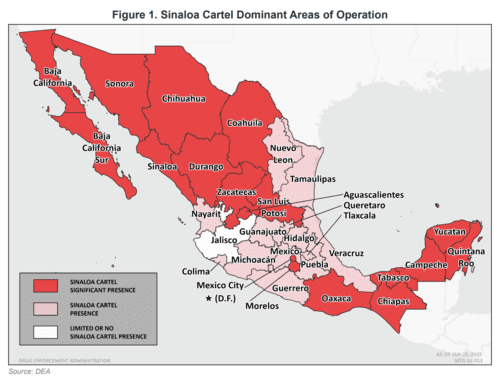
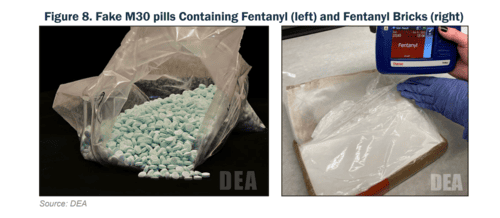
- Mexico is the main entry point for fentanyl, heroin, and meth.
- Colombia, Peru, and Bolivia remain the world's primary cocaine producers.
- Guatemala, Honduras, and Panama are essential transit hubs moving drugs northward.
These are the top five countries in terms of origin and transport. Venezuela? It doesn't even crack the top five. Its role is real but secondary—mainly as a launchpad for cocaine flights and maritime shipments.
So why the obsession with Venezuela when the real drug pipelines run through Mexico and Central America?
The Oil Beneath the Lie
Here's the part U.S. officials rarely say out loud: Venezuela sits on the largest proven oil reserves in the world, bigger than Saudi Arabia, and more than all the other nine major drug-linked countries combined.
- Oil means leverage.
- Oil means cash flow to a government Washington wants weakened.
- Oil means long-term geopolitical influence.
Framing Venezuela as a “narco-terrorist state” gives the U.S. legal and political cover to sanction, pressure, and even carry out military strikes. It transforms a fight over resources into a righteous war against crime.
The Pattern Is Familiar
Look at the timeline and a pattern emerges:
- 2008 onward: Venezuelan officials sanctioned for alleged cartel ties.
- 2020: U.S. Justice Department indicts President Maduro and others for “narco-terrorism.”
- 2024–2025: Washington labels the “Cartel de los Soles,” linking Venezuela's military to cocaine shipments.
- 2025: U.S. warships patrol near Venezuelan waters; strikes destroy alleged “drug boats,” killing crews.
Each moment of escalation coincides with a broader push to squeeze Venezuela's economy or delegitimize its government.
Enter China, Stage Left
The latest twist came when China Concord Resources Corp (CCRC) installed a US$1 billion floating oil platform in Lake Maracaibo. It's designed to lift production from 12,000 to 60,000 barrels per day under a 20-year deal with Venezuela's state oil firm.
To Washington, this isn't just an oil rig—it's a red flag.
- China gains a foothold in Venezuela's oil sector, in defiance of U.S. sanctions.
- Venezuela gains revenue, giving Maduro more breathing room.
- U.S. influence weakens in a region it has long considered its backyard.
And right on cue, the “drug threat” narrative grows louder.
The Smokescreen Effect
None of this means Venezuela is innocent. Corruption, trafficking, and criminal networks are woven into its political fabric. But the scale is exaggerated when compared to Mexico's cartel dominance or Colombia's cocaine exports. The drug narrative serves another purpose:
- To rally domestic support around a tough-on-crime message.
- To justify sanctions and military actions under international law.
- To mask resource competition as moral responsibility.
The Real Story
So when you hear a White House official declare that the U.S. will “use every element of American power to stop drugs from flooding our country,” remember this: if the mission were truly about drugs, the spotlight would shine on Mexico, Guatemala, Honduras, Colombia, and Panama.
Instead, it lingers on Venezuela. Why? Because Venezuela's oil reserves, now being tapped by China, represent a threat to U.S. strategic dominance that narcotics alone could never explain.
The drug war is the lie. The real fight is over barrels of oil, not bricks of cocaine.

About the Author
Scott Oliver, 66, is living well with prostate cancer after dedicating more than 4,000 hours to researching the condition. His first goal is to help men reduce their risk of developing prostate cancer through proven lifestyle strategies.
When diagnosed, his mission is to help men avoid unnecessary prostate surgeries that can lead to devastating complications such as incontinence, bleeding, permanent impotence, and a loss of length.
Scott Oliver is not a doctor and does not offer medical advice; however, he is healthier and fitter than he has been in decades. Through his articles and videos, he shares hard-to-find, uncensored information on proven alternative therapies, effective fitness methods, and repurposed drugs, content that most doctors won’t mention and search engines suppress.
He is an accredited member of the National Writers Union (NWU) and the International Federation of Journalists (IFJ), the world’s largest organization of professional journalists. Scott is also the author of What If Cancer’s Best Defense Is Free? Sleep as a Defense Against Cancer: A Former Royal Marines Commando’s 4,000-Hour Research Roadmap, where he reveals how sleep repairs DNA, restores immunity, and strengthens the body’s natural defenses against cancer.
You can always contact Scott Oliver here with your questions and suggestions.
Expert Resources Used By Scott Oliver To Research and Write This Article:
- DEA National Drug Threat Assessment 2024
Comprehensive U.S. assessment detailing how fentanyl, meth, heroin, and cocaine reach the U.S., emphasizing Mexico-based production and smuggling corridors.
Read the NDTA 2024 - DEA National Drug Threat Assessment 2025 (PDF)
Latest year's analysis with updates on cartel dynamics, precursor sourcing from Asia, and shifting smuggling tactics at U.S. ports of entry.
Download the NDTA 2025 - UNODC World Drug Report 2024 – Key Findings
Global route maps and trend data showing Andean cocaine flows through the Pacific/Central America and the Caribbean toward North America.
View UNODC key findings (PDF) - UNODC World Drug Report 2024 – Portal
Interactive module with regional trends, graphics, and maps on production, trafficking, and consumption patterns.
Explore the WDR 2024 - CBP – Frontline Against Fentanyl
U.S. Customs and Border Protection's overview of how most fentanyl is intercepted at land ports of entry from Mexico and the strategy to counter it.
Read CBP's fentanyl brief - CBP – Drug Seizure Statistics Dashboard
Official seizure data across drug types, useful for verifying where and how narcotics are interdicted over time.
Open the CBP dashboard - American Immigration Council – Facts About Fentanyl Smuggling
Data synthesis showing the overwhelming share of fentanyl seizures occur at ports of entry, contextualizing enforcement narratives.
See the fact sheet - U.S. DOJ – March 26, 2020 Indictment of Nicolás Maduro
Justice Department press release charging Venezuela's leadership with narco-terrorism and trafficking, a key precedent for later rhetoric and actions.
Read the DOJ release - CRS Insight – U.S. Indictment of Top Venezuelan Officials (2020)
Congressional Research Service explainer on the “Cartel of the Suns” allegations and policy implications.
Download the CRS brief (PDF) - U.S. Treasury – “Cartel de los Soles”/Tren de Aragua Sanctions (July 25, 2025)
Treasury press release linking Venezuelan actors to narcotics and terrorism designations, central to the U.S. narrative.
Read the Treasury release - U.S. State Dept. – Major Drug Transit/Producing Countries (FY 2026)
The official annual list naming countries Washington identifies as major producers or transit hubs (includes Venezuela among many others).
See the FY2026 determination - Federal Register – Major Drug Transit/Producing Countries (FY 2025)
Prior year's formal determination listing the countries flagged under U.S. law for drug production/transit and precursor sourcing.
Read the FY2025 notice - Reuters – China's $1B Lake Maracaibo Oil Project (CCRC)
Report on the floating production facility “Alula” and 20-year deal with PDVSA, a concrete example of deepening China–Venezuela energy ties.
Read the Reuters report