
The Dirty Secret of Modern Politics: Keep You Confused, Stay in Control
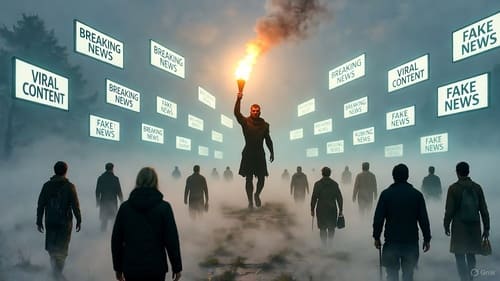
Imagine you're in a crowded room. Everyone's talking at once, each voice louder and more urgent than the last. Some are whispering warnings, others are shouting reassurances. Before long, you don't know who to trust, so you stop trying.
That moment of exhaustion is exactly where politicians and powerful institutions want you. Confusion is not a side-effect of modern politics, it is often the plan.

Confusion as a Political Weapon. Why confusion works so well
Politicians know most people don't have the time or patience to fact-check every claim. If the message changes, or if it's packaged in a catchy slogan that later proves incomplete, the public eventually throws up its hands.
That's when people either disengage completely or cling tightly to whichever story fits their tribe. Both outcomes protect those in power.
Confusion thrives because:
- People prefer simple stories. When the facts are messy, slogans win.
- Contradictions create fatigue. After a while, “they're all liars” feels easier than sorting truth from spin.
- Gaslighting works. If you're told often enough that what you saw or heard isn't real, doubt replaces clarity.
Three examples in plain sight

1. Masks during COVID
At the start of the pandemic, public health officials said masks weren't necessary. Some even suggested they could be harmful. A few weeks later, the guidance flipped to: everyone must wear masks. The change had a real reason — protecting hospital supplies and adjusting to new data — but that nuance was never explained clearly. The result? Many people decided the authorities had lied. From that moment on, the mask debate wasn't about science, it was about trust.
Impact: Public confidence collapsed, and society split into camps. The confusion itself became the weapon.
2. The “Safe and Effective” vaccine slogan
When vaccines rolled out, the message was simple: they are “safe and effective.” It was a neat phrase for press conferences, but reality was more complicated. Trials had shown short-term safety and effectiveness against symptomatic COVID. Long-term effects were still unknown. Transmission rates, new variants, and rare side-effects weren't yet understood.
Officials didn't spell out these limits. So when reality shifted, many people felt misled. For some, that loss of trust was more damaging than any side-effect itself.
Impact: A slogan meant to reassure ended up backfiring, fueling suspicion and division.
3. FBI presence on January 6th
When asked about FBI involvement in the Capitol riot, early statements downplayed or flatly denied any presence. Later, reports revealed dozens — some say more than 200 informants or undercover assets were in the crowd.
Officials had hidden behind narrow wording, claiming no FBI agents “instigated” events. That was technically true, but it sounded like deception once the fuller picture emerged.
Impact: The gap between the first story and the later revelations made people feel manipulated. Even those who once trusted the FBI became skeptical.
The pattern is always the same
Look closely and you'll see the same three-step formula:
- Oversimplify early. A catchy slogan or denial replaces nuance.
- Shift later. When new facts or admissions emerge, the story changes.
- Exploit the fallout. People are left angry, divided, or too cynical to demand accountability.
This is not always a grand conspiracy. Sometimes it's panic-driven PR. Sometimes it's bureaucratic self-protection. But the effect is the same: the public is left in the dark, and power remains unchallenged.

How to defend yourself
You can't stop politicians from using confusion, but you can stop falling for it. A few simple habits help:
- Ask what isn't being said. What limits, caveats, or context are missing?
- Look for primary sources. Don't settle for sound bites when the data or transcripts are available.
- Watch for sudden shifts. If the official line flips overnight, note it — and ask why.
- Slow down before sharing. Outrage spreads fast, but accuracy takes time.
The Prostate Cancer Warrior's Conclusion:
Confusion is a weapon because it dulls the public's ability to act. When people argue about the facts, or give up on finding truth altogether, those in power keep their grip. Whether the subject is masks, vaccines, or undercover agents, the tactic is the same.
The question isn't only “what's true?” but also “who benefits when everything feels confusing?” Once you start asking that, the fog begins to clear.
About the Author
Scott Oliver is a British writer and former Royal Marines Commando who has lived abroad since 1985. Over the last 66 years, he’s called twelve countries home, including twenty-five years in Spanish-speaking nations such as Spain, Costa Rica, and Guatemala. He has also lived in Sierra Leone, Ghana, Nigeria, Liberia, Cyprus, the USA, Grand Cayman and now lives in Mauritius.
A warrior by nature, Scott is living with prostate cancer and writing from the front lines. He speaks directly to men about health, masculinity, freedom, and strength, physically, mentally, emotionally, and sexually. His views are proudly independent: he questions conventional medicine, challenges destructive treatments, and tells the truth most men never hear.
Scott Oliver is an officially accredited member of the National Writers Union (NWU) and the International Federation of Journalists (IFJ), the world’s largest organization of professional journalists. He spent ten years on Wall Street and another decade as an offshore wealth manager, specializing in globally diversified, multi-currency hedge fund portfolios. He is the author of What If Cancer’s Best Defense Is Free? — Sleep as a Defense Against Cancer: A Former Royal Marines Commando’s 4,000-Hour Research Roadmap, where he reveals how sleep repairs DNA, restores immunity, and strengthens your fight against cancer. He’s also the author of books on offshore investing and Costa Rica real estate and has written thousands of articles in English and Spanish on living abroad with courage, clarity, and conviction.
You can always contact Scott Oliver here with your questions and suggestions.
Expert Resources Used By Scott Oliver To Research and Write This Article:
- The Fog of Information Warfare — Explains how deliberate flooding of contradictory claims is used to overwhelm citizens and weaken trust in institutions. https://www.rand.org/pubs/research_reports/RR1005.html
- How Politicians Weaponize Uncertainty — A BBC analysis showing how shifting stories and ambiguity can be a deliberate tactic in public messaging. https://www.bbc.com/news/world-53256541
- COVID-19 Mask Guidance Changes — A CDC retrospective explaining why official advice on masks shifted and how poor communication fueled confusion. https://www.cdc.gov/mmwr/volumes/70/wr/mm7010e3.htm
- Pfizer/BioNTech Vaccine Clinical Trial Results — The original peer-reviewed trial data that governments relied on when calling vaccines “safe and effective.” https://www.nejm.org/doi/full/10.1056/NEJMoa2034577
- January 6th FBI Informant Disclosures — Reporting on later revelations about FBI informants and assets present during the Capitol riot. https://www.nytimes.com/2021/09/25/us/jan-6-fbi-informants.html
- The Psychology of Misinformation — Research showing why contradictory or shifting narratives create public confusion and disengagement. https://www.pnas.org/doi/10.1073/pnas.1805868115