Before the Gates Shut: From Confederados to Digital Nomads
When Americans leave their country, it is never just about money. Dollars matter, but the deeper motives are always more human: the search for identity, freedom, and survival.
That truth connected two very different groups, separated by 160 years, the defeated Southerners who sailed for Brazil after the Civil War, and the digital nomads, retirees, and restless professionals who now stream into Mexico, Costa Rica, Portugal, and Argentina.

The Confederados: Leaving Because They Had No Choice
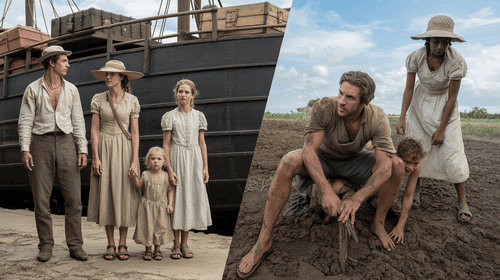
In 1865, the South lay in ruins. Confederate currency was worthless. Plantations had collapsed. Men and women who once thought of themselves as part of a proud and independent culture suddenly found themselves broke, defeated, and under military occupation.
Brazil offered an escape. Its emperor, Dom Pedro II, welcomed Southerners with promises of cheap farmland and a chance to start again. Between 8,000 and 20,000 boarded ships and left. It was not easy. They didn't speak Portuguese. They had little money. The voyage took weeks, and letters back home took months to arrive. For many, there would be no return.
And yet, they went. Not simply to farm cotton in a new land, but to salvage their identity and preserve what they believed freedom meant. For some it worked, their descendants still live in towns like Americana and Santa Bárbara d'Oeste. For many, it didn't, and they returned to the United States.
Today's Expat: Leaving Because They Can
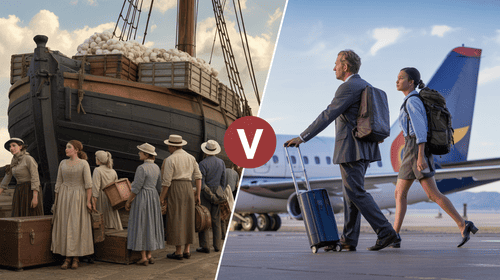
The new generation of Americans leaving home could not be more different. Instead of wooden ships and ox carts, they leave on budget airlines and work remotely with laptops. They don't flee defeat in war; they flee a culture that feels broken, costs that feel unbearable, and a system that feels rigged against them.
- A flight to Mexico City takes three hours.
- A WhatsApp call to family is free.
- Income can be earned in U.S. dollars while expenses are paid in pesos or colones.
In short: it has never been easier in human history to pick up, move abroad, and continue life almost seamlessly. That ease creates an illusion that the door will always be open.
Why the Freedom to Move May Not Last
Here is the uncomfortable reality: the very freedom modern expats enjoy may not exist for much longer.
Governments around the world are moving quickly toward systems of digital control:
- Digital Passports & Vaccine Requirements: International health passports and vaccination records could soon decide where you are allowed to travel. No compliance, no movement.
- Carbon Credits: Under climate regimes, personal travel could be rationed. Too many flights, and your “carbon allowance” is maxed out.
- Central Bank Digital Currencies (CBDCs): With programmable money, governments could block transactions they don't approve of, including spending abroad.
- Surveillance States: Biometric borders, AI-driven monitoring, and stricter visa systems are already being built. The same tools that track migration can be used to lock citizens in.
The same technology that makes it easy to book a flight, pay for an Airbnb, and open a digital bank account can just as easily be flipped to restrict, monitor, and deny.
Identity, Freedom, and Survival
The Confederados left because their world collapsed. Modern expats leave because they sense the world collapsing around them in politics, in culture, in economics. But there is one critical difference: the Confederados knew their decision was final. Today's expats treat it as reversible.
What if it isn't? What if the ability to move, to earn dollars in Mexico or Portugal, to live outside the American system, is taken away? What if the doors close?
Final Thought
In 1865, Southerners risked everything to leave a country they no longer recognized. In 2025, Americans can leave with nothing more than a flight ticket, a laptop, and Wi-Fi. But that freedom is fragile. The world is already shifting toward digital borders, passports tied to health, to carbon, to money itself.
The question is not just whether you can leave. The question is whether you will act before the gates shut tight.
A Warrior's Challenge
When the choice is still yours, will you seize your freedom now or, will you wait until the system decides where you can live, what you can spend, and even how far you can travel?
PS. My thanks to BowTiedPassport on X for the inspiration behind this article.
About the Author
Scott Oliver is a British writer and former Royal Marines Commando who has lived abroad since 1985. Over the last 66 years, he’s called twelve countries home, including twenty-five years in Spanish-speaking nations such as Spain, Costa Rica, and Guatemala. He has also lived in Sierra Leone, Ghana, Nigeria, Liberia, Cyprus, the USA, Grand Cayman and now lives in Mauritius.
A warrior by nature, Scott is living with prostate cancer and writing from the front lines. He speaks directly to men about health, masculinity, freedom, and strength, physically, mentally, emotionally, and sexually. His views are proudly independent: he questions conventional medicine, challenges destructive treatments, and tells the truth most men never hear.
Scott Oliver is an officially accredited member of the National Writers Union (NWU) and the International Federation of Journalists (IFJ), the world’s largest organization of professional journalists. He spent ten years on Wall Street and another decade as an offshore wealth manager, specializing in globally diversified, multi-currency hedge fund portfolios. He is the author of What If Cancer’s Best Defense Is Free? — Sleep as a Defense Against Cancer: A Former Royal Marines Commando’s 4,000-Hour Research Roadmap, where he reveals how sleep repairs DNA, restores immunity, and strengthens your fight against cancer. He’s also the author of books on offshore investing and Costa Rica real estate and has written thousands of articles in English and Spanish on living abroad with courage, clarity, and conviction.
You can always contact Scott Oliver here with your questions and suggestions.