
How to Safely Work Up to the Norwegian 4×4 Program (Prostate-Friendly Edition)
Important Notice: Before starting this or any other exercise or fitness program, please review the Extremely Important Safety Note at the end of this article to ensure it's right for your current health and fitness level.
The Norwegian 4×4 program is one of the most effective exercise methods for improving heart and lung function. Research suggests it can even reverse some age-related changes in the heart.
But for men concerned about prostate health, this type of training can do more than strengthen the heart. When combined with specific movements that improve circulation to the pelvic area and help maintain healthy hormone levels, it can support better prostate function too.
If you have lived a mostly sedentary life, don't rush. This plan guides you step by step toward the 4×4 program while adding short, prostate-friendly exercises that you can easily include during your walks.
Phase 1 – Foundation (Weeks 1 to 4)
Goal: Wake up your heart, lungs, and pelvic circulation.
What to do:
- Walk briskly 4 to 5 days a week for 30 to 45 minutes.
- Keep your effort at a moderate level. You should be breathing faster but still able to talk.
- During your walk, every 5 to 10 minutes, stop for one minute of “movement snacks” that help your pelvic area:
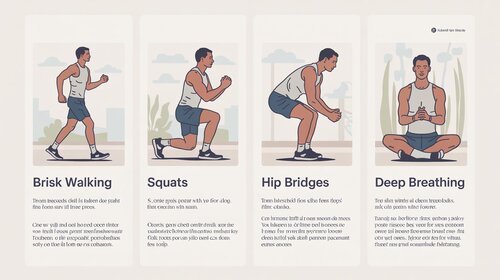
- Body-weight squats (10 to 15 reps) – Increase blood flow to the prostate and lower body.
- Standing hip circles (10 each direction) – Loosen tight hip muscles that can restrict pelvic circulation.
- Pelvic tilts or gentle Kegel contractions (10 reps) – Strengthen pelvic floor muscles that support bladder and sexual function.
- Focus on regularity. A consistent walking routine is the most powerful first step toward recovery and prevention.
Why this matters:
Improved blood flow and oxygen delivery help the prostate, the heart, and the entire body work better. Even moderate walking can lower inflammation and support hormone balance.
Phase 2 – Controlled Intervals (Weeks 5 to 8)
Goal: Teach your heart and prostate area to handle short bursts of effort safely.
What to do:
- Continue your moderate walking or cycling 3 days a week.
- Add 1 or 2 interval days each week.
- Alternate 1 minute of brisk walking (or light jogging) with 2 minutes of slower recovery.
- Include one or two sets of body-weight exercises midway through your walk:
- Squats or lunges (8 to 10 reps)
- Plank hold (20 to 30 seconds) for core strength and improved posture.
- Deep breathing: inhale through the nose, exhale slowly through the mouth for 1 minute to help calm stress hormones.
Why this matters:
These brief challenges build heart strength and also enhance blood circulation through the pelvis. Reducing stress hormones such as cortisol helps keep testosterone in balance, which benefits prostate health.

Phase 3 – The Real 4×4 (Weeks 9 to 12)
Goal: Reach the full Norwegian 4×4 format safely and maintain pelvic strength and circulation.
What to do:
- Limit to two 4×4 sessions each week.
- Warm up for 10 to 15 minutes with walking, joint rotations, and light squats.
- Do 4 intervals of 4 minutes each at a high but controlled intensity (around 85 to 90 percent of your maximum heart rate).
- Recover for 3 minutes between each interval with slow walking.
- After finishing, cool down with gentle stretching, focusing on hips, groin, and lower back.
Add a short prostate-friendly finisher:
- 15 body-weight squats
- 10 hip bridges (lying on your back, lifting hips)
- 30 seconds of slow, deep breathing
These few minutes of extra movement help reduce pelvic stiffness and improve local blood flow, which may support better prostate oxygenation and healing.
Phase 4 – Maintenance and Recovery (Beyond Week 12)
Goal: Maintain strength, balance, and prostate health for life.
What to do:
- Continue your two 4×4 sessions weekly.
- Add 2 or 3 recovery sessions that include yoga, stretching, or long walks.
- Once or twice a week, include your pelvic circulation exercises as a short 5-minute routine at home:
- 10 squats
- 10 bridges
- 10 hip circles
- 10 pelvic tilts or gentle Kegels
- Keep your body flexible, and remember that deep breathing and relaxation are as important as the exercise itself.

Why This Plan Helps the Prostate
- Improves blood flow: Exercise and squats increase oxygen and nutrient delivery to the prostate.
- Balances hormones: Regular movement can help maintain healthy testosterone and lower excess estrogen or insulin, which play a role in prostate inflammation.
- Lowers inflammation: Moderate aerobic activity reduces systemic inflammation and helps the immune system clear damaged cells.
- Relieves pelvic congestion: Gentle hip and pelvic floor exercises reduce stagnation and pressure that can irritate the prostate.
- Supports sexual function: Strong circulation and a relaxed nervous system improve both erectile and urinary health.
Extremely Important Safety Note
If you have been sedentary for many years, are overweight, smoke, or have a history of heart or prostate problems, you should get a medical check-up before beginning this or any intense exercise program. A doctor can assess your cardiovascular health and guide you on how to start safely.
This plan is for educational purposes only. It is not a medical prescription, and anyone with existing health issues should seek professional advice before increasing their activity level.

Prostate Cancer Warrior's Conclusion
The Norwegian 4×4 program is a powerful way to strengthen your heart and restore vitality, but it can also be adapted to support prostate health. By combining regular walking with short bursts of intensity and adding a few pelvic-friendly exercises, you train not just your muscles but your entire circulatory system.
Take it slowly, respect your body, and build consistency. Over time you will likely notice better energy, better mood, and better control of your body, signs that your heart and prostate are both working the way nature intended.
About the Author
Scott Oliver, 66, is living well with prostate cancer after dedicating more than 4,000 hours to researching the condition. His first goal is to help men reduce their risk of developing prostate cancer through proven lifestyle strategies.
When diagnosed, his mission is to help men avoid unnecessary prostate surgeries that can lead to devastating complications such as incontinence, bleeding, permanent impotence, and a loss of length.
Scott Oliver is not a doctor and does not offer medical advice; however, he is healthier and fitter than he has been in decades. Through his articles and videos, he shares hard-to-find, uncensored information on proven alternative therapies, effective fitness methods, and repurposed drugs, content that most doctors won’t mention and search engines suppress.
He is an accredited member of the National Writers Union (NWU) and the International Federation of Journalists (IFJ), the world’s largest organization of professional journalists. Scott is also the author of What If Cancer’s Best Defense Is Free? Sleep as a Defense Against Cancer: A Former Royal Marines Commando’s 4,000-Hour Research Roadmap, where he reveals how sleep repairs DNA, restores immunity, and strengthens the body’s natural defenses against cancer.
You can always contact Scott Oliver here with your questions and suggestions.
Expert Resources Used By Scott Oliver To Research and Write This Article:
- Reversing the Cardiac Effects of Sedentary Aging in Middle Age – A two-year randomized study showing that consistent aerobic training, including interval-style sessions, can restore cardiac elasticity and reduce left ventricular stiffness in sedentary adults aged 45–64. Read at Circulation (AHA Journal)
- One-Year Committed Exercise Training Reverses the LV Stiffening Associated with Healthy but Sedentary Aging – Demonstrates that regular, progressive aerobic exercise can reverse age-related changes in the heart's structure and function, emphasizing long-term commitment rather than intensity alone. Read at Circulation (AHA Journal)
- High-Intensity Interval Training in Patients With Lifestyle-Induced Cardiometabolic Disease – A systematic review confirming that HIIT, including Norwegian 4×4 protocols, significantly improves VO₂max and cardiovascular function without increasing risk when properly supervised. Read the study
- Exercise Training in Heart Failure: A Meta-Analysis of Randomized Controlled Trials – Finds that long-term aerobic and interval training can promote reverse remodeling of the left ventricle and improve ejection fraction in heart failure patients. Read the study
- High-Intensity Interval Training and Cardiac Remodeling: Clinical Evidence and Mechanisms – Reviews the molecular and physiological pathways through which HIIT promotes beneficial cardiac adaptations and mitigates maladaptive hypertrophy. Read the study
- Exercise and Cardiovascular Adaptations: What the Norwegian 4×4 Can Teach Us – A summary of Norwegian research from NTNU exploring how structured 4×4 training influences VO₂max, vascular elasticity, and cardiac efficiency. Read at Norwegian SciTech News
- Interval Training, Hormonal Health, and Inflammation Reduction in Men – Explores how moderate-intensity aerobic and resistance exercise help regulate testosterone, cortisol, and systemic inflammation, supporting prostate and cardiovascular health. Read at Harvard Medical School
- Exercise and the Prostate: Circulatory and Hormonal Benefits – Summarizes evidence that physical activity improves blood flow to the pelvic region, reduces inflammation, and lowers prostate cancer risk. Read at American Cancer Society