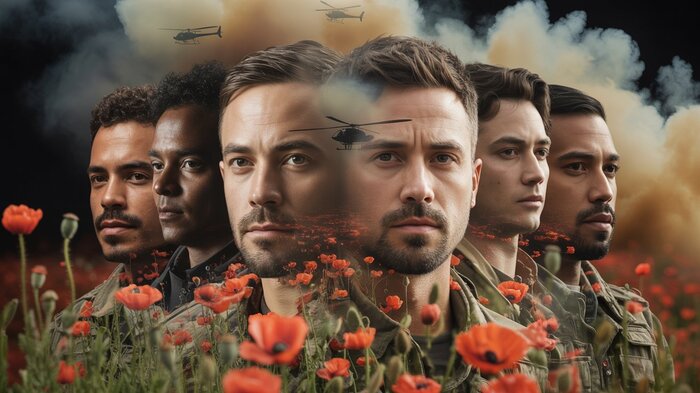
The Heroin Empire That America Built
How the War on Terror Turned Afghanistan into the World's Largest Drug Factory — and Fueled a Global Addiction Crisis
They said the war was about freedom. But in the shadows of Afghanistan's battlefields, another empire was rising, one built not on democracy or reconstruction, but on poppies. As U.S. troops and contractors poured into the country, opium fields spread like wildfire, protected by warlords on Washington's payroll.
The result was a river of heroin that flooded continents, reshaped crime networks, and sparked an overdose epidemic from Moscow to Miami. Two decades later, the world is still paying the price for a war that claimed to end terror — and instead perfected the business of addiction.
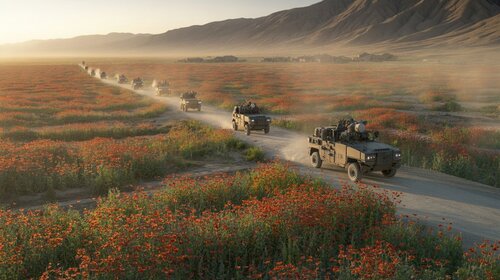
The Forgotten Connection
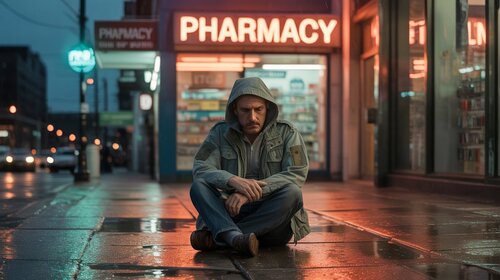
By the mid-2000s, heroin was everywhere. Overdose deaths skyrocketed. Prescription opioid users — once hooked by loose painkiller prescriptions — turned to the cheaper, purer Afghan supply. What few Americans knew was that this sudden flood wasn't an accident of geography. It was a direct consequence of the war.
Under U.S. occupation, Afghanistan's opium trade didn't shrink; it exploded. Warlords, many of them partners of the CIA and special forces, were protected and paid as “allies.” The new Afghan government, led by Washington's chosen leaders, became — in effect — the biggest drug cartel in modern history. The Karzai family and other top officials were repeatedly linked to the trade, but their connections were quietly ignored.
A War Economy Built on Poppies
The truth was simple and explosive: American tax dollars were propping up the world's heroin network. Planes that carried soldiers and weapons in one direction too often returned home through the same air corridors that traffickers used. What began as a military campaign ended up feeding a global addiction crisis — one that later morphed into today's fentanyl nightmare.
And while most Americans were left to bury loved ones lost to overdoses, almost no one was told where the heroin came from or who profited.
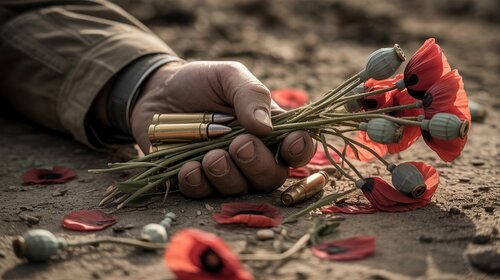
When Soldiers Came Home — and Brought the Trade With Them
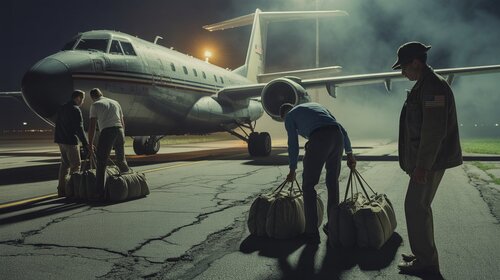
Some of the men trained to fight shadow wars abroad brought their skills back home in dangerous ways. Around Fort Bragg, North Carolina — the headquarters of U.S. Army Special Operations — investigators later uncovered a web of drug smuggling linked to current and former special-forces soldiers.
A small, privately run airfield beside the base, long used for Delta Force parachute training, quietly became a trafficking hub. Court documents and convictions reveal that since the 1980s, drugs had been flown into the U.S. through this site — hidden in aircraft that slipped into Fort Bragg's own airspace. The airfield manager, son of a decorated Green Beret, was eventually convicted as the largest methamphetamine trafficker in North Carolina's history.
From Combat to Cartel
For some veterans, the motive wasn't just profit — it was the rush. Years of covert operations had wired them for risk, secrecy, and the art of disappearing. That mindset, honed in battlefields, translated seamlessly into the drug trade.
One former Delta Force operative described how major traffickers sought him out precisely because of his background. He knew how to bypass police surveillance, how to plan air drops, and how to move cargo without detection. Soon he was teaching cartels how to parachute narcotics from planes flying low over the forests of the southern United States — a technique perfected decades earlier and still in use.
The Story Buried in Plain Sight
Each time these operations surfaced, the cases faded just as quickly — lost in red tape or buried under military silence. The pattern has repeated for decades.
The heroin crisis wasn't only a story of addiction. It was the hidden cost of empire — a war that, in the name of fighting terror, ended up financing one of the deadliest industries on Earth.
The Cost That Never Made the Headlines
Each time fragments of this story surfaced — a soldier caught smuggling, a corrupt official exposed, a plane intercepted — the truth was quickly buried again. The heroin economy was too intertwined with the machinery of war to be disentangled without unraveling the entire narrative of “nation building.”
Reporters who tried to follow the trail often hit walls of silence. Officials blamed “rogue actors.” Generals spoke of progress. Meanwhile, overdose funerals at home multiplied faster than battlefield casualties abroad. The war was sold as a mission to end terror, but what it exported most efficiently was addiction.
Two decades later, the wreckage is global — a generation lost to opioids, another scarred by endless war, and a world still numbed by the drugs born in the poppy fields of Afghanistan.
And somewhere beneath the slogans and ceremonies, the truth remains simple:
The heroin empire that America built is still standing — long after the war that made it.
About the Author
Scott Oliver is a British writer and former Royal Marines Commando who has lived abroad since 1985. Over the last 66 years, he’s called twelve countries home, including twenty-five years in Spanish-speaking nations such as Spain, Costa Rica, and Guatemala. He has also lived in Sierra Leone, Ghana, Nigeria, Liberia, Cyprus, the USA, Grand Cayman and now lives in Mauritius.
A warrior by nature, Scott is living with prostate cancer and writing from the front lines. He speaks directly to men about health, masculinity, freedom, and strength, physically, mentally, emotionally, and sexually. His views are proudly independent: he questions conventional medicine, challenges destructive treatments, and tells the truth most men never hear.
Scott Oliver is an officially accredited member of the National Writers Union (NWU) and the International Federation of Journalists (IFJ), the world’s largest organization of professional journalists. He spent ten years on Wall Street and another decade as an offshore wealth manager, specializing in globally diversified, multi-currency hedge fund portfolios. He is the author of What If Cancer’s Best Defense Is Free? — Sleep as a Defense Against Cancer: A Former Royal Marines Commando’s 4,000-Hour Research Roadmap, where he reveals how sleep repairs DNA, restores immunity, and strengthens your fight against cancer. He’s also the author of books on offshore investing and Costa Rica real estate and has written thousands of articles in English and Spanish on living abroad with courage, clarity, and conviction.
You can always contact Scott Oliver here with your questions and suggestions.
Expert Resources Used By Scott Oliver To Research and Write This Article: