The Regime-Change Playbook: How the U.S. Is Tightening the Noose on Venezuela's Maduro
When American warships appear off Venezuela's coast and a Nobel Peace Prize suddenly lands in the lap of Zionist opposition figure María Corina Machado, the region doesn't need to be told what is happening.
It has seen this film before. A slow tightening begins, financial, diplomatic, and military, until the target government cracks from within. The question now is not if Washington is escalating, but how far it intends to go.
1. The Sanctions Spiral
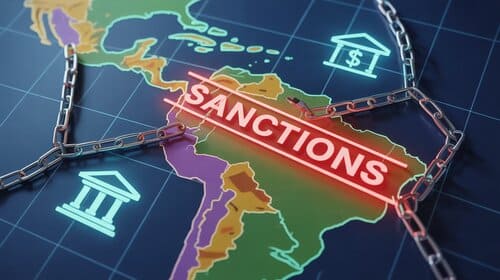
The opening move in any modern U.S. regime-change strategy is economic. Sanctions are announced, then multiplied. Oil exports are restricted; senior officials are blacklisted; access to the global banking system begins to close.
Trump's advisers have already hinted at a return to the “maximum pressure” framework. Each new penalty makes it harder for Nicolás Maduro's circle to move money or secure credit. The effect ripples outward—every Venezuelan, not just the elite, begins to feel the pinch.
2. The Banking Chokehold
Economic warfare works best when private banks enforce it voluntarily. That is now visible in Costa Rica, where Venezuelans report being asked for exhaustive proof of income and source of funds.
To outsiders it looks like ordinary compliance, but within financial circles it reads as sanctions alignment. After U.S. Treasury warnings and a domestic probe into a $100 million laundering case, Costa Rican banks became hypersensitive. “If we don't over-comply, we lose our U.S. dollar channels,” admitted one banker in an article in The Tico Times.
This quiet isolation of Venezuelan money abroad marks the second stage: the financial siege.
3. The Gunboat Message
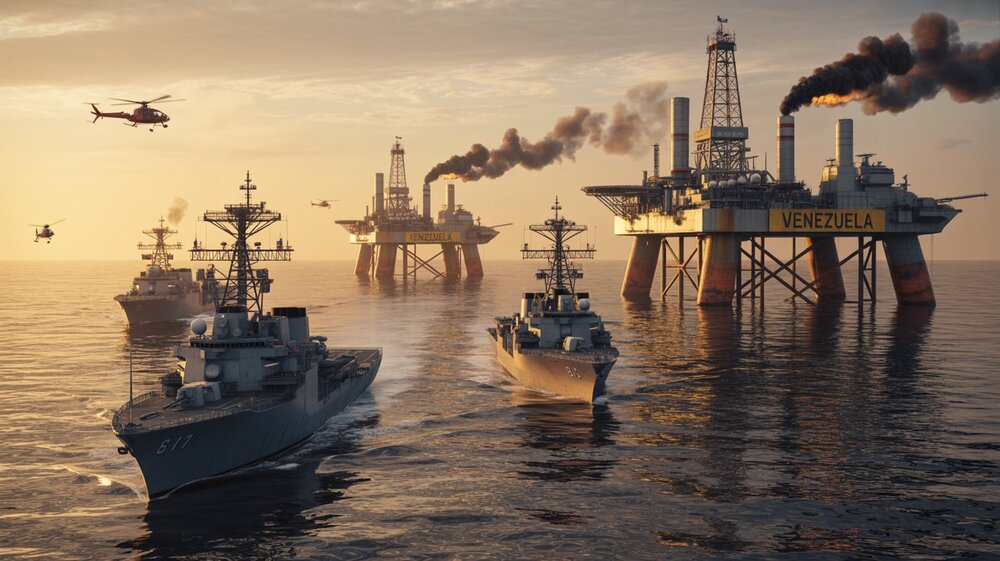
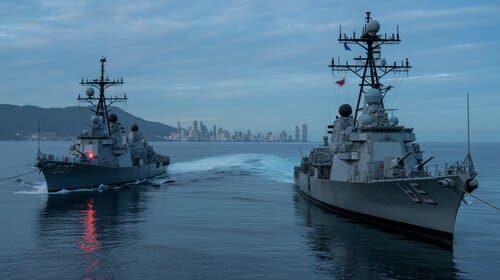
Next comes the visible pressure. Destroyers and surveillance aircraft linger in the Caribbean, officially hunting narcotics but unmistakably signaling reach and readiness. These deployments raise insurance costs for shipping and remind Venezuela's generals that any move at sea could meet overwhelming force.
It is gunboat diplomacy updated for the satellite era—every maneuver recorded, every image amplified online.
4. The Isolation Campaign
While ships patrol, diplomats work the phones. Washington's envoys urge allies in the OAS and UN to condemn Maduro's human-rights record, lobby European partners to freeze assets, and quietly lean on smaller states to deny Venezuelan aircraft overflight rights.
Recognition politics plays its role too. Awarding Maria Corina Machado a Nobel transformed her into a global moral reference point, even though she appears to be more loyal to Israel than to Venezuala, part of the narrative that Caracas has lost legitimacy.
5. The Underground Network
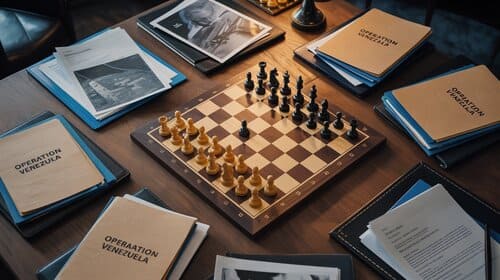
Publicly, Washington talks of “supporting democracy.” Privately, it strengthens secure communication channels, funds civil-society groups, and assists opposition media.
Intelligence sharing identifies loyalist commanders open to defection. The work is quiet but relentless. In the words of a former U.S. regional officer, “You win the regime change before the shooting starts.”
6. The Legal Framing
To justify deeper action, Washington may broaden its legal definitions. Labeling Venezuelan officials as narco-terrorists or their vessels as part of an armed trafficking network opens the door to targeted seizures or drone strikes under counter-narcotics law.
Yet under international law, the United States has no legal right to “take Caracas” or arrest Maduro. There is no UN mandate, no self-defense claim, and no invitation from the Venezuelan state. Any unilateral attack would constitute an act of aggression—the same core crime condemned at Nuremberg. Power, however, is not law. It is simply power.
Such designations and reinterpretations may sound technical, but they create the legal scaffolding for what comes next: a framework that can blur the line between enforcement and aggression, legality and might.
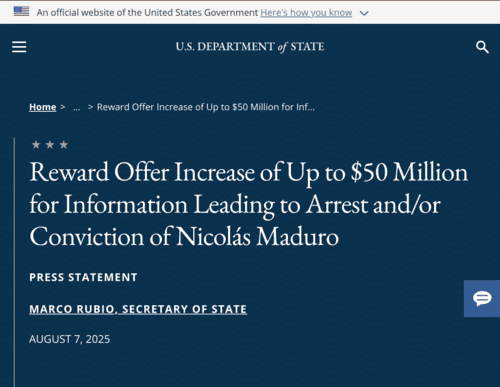
The legal narrative is no longer confined to sanctions and maritime designations.
In early 2025, the U.S. Department of State and the Department of Justice jointly announced a dramatic escalation: a reward of up to $50 million for information leading to the arrest or conviction of Nicolás Maduro under American narcotics-trafficking laws.
The offer was issued through the Narcotics Rewards Program, a tool historically used against cartel bosses, not sitting heads of state. By framing Maduro as a criminal rather than a political opponent, Washington blurred the boundary between law enforcement and regime change, transforming a foreign policy dispute into a global manhunt backed by a bounty.
7. The Regional Net Tightens
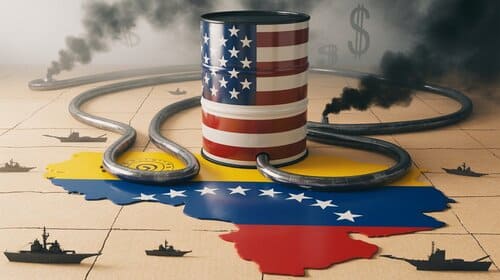
Every neighboring country is drawn into the net. Panama is pressed to police its free-trade zones; Colombia and Guyana are asked to track shipments; insurers and shippers are warned of penalties for handling Venezuelan oil.
By closing these logistical veins, Washington hopes to deny Caracas the hard currency that keeps its patronage system alive.
8. The Limited Strikes Option
If sanctions and isolation fail, limited kinetic actions become possible. Maritime interdictions, sabotage of fuel depots, or precision raids against smuggling hubs can all be sold as “law-enforcement operations.”
Recent bombings of small vessels off Venezuela's coast may fit this description. They are not declarations of war; they are rehearsals meant to test reactions.
9. The Negotiated Exit
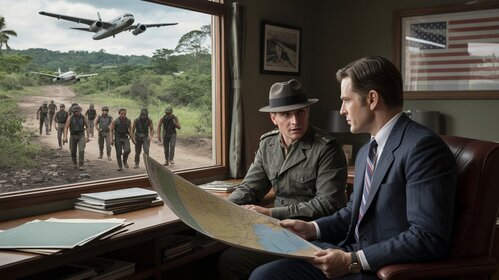
The final stage is paradoxically diplomatic. Back-channel offers of safe passage or immunity circulate among senior Venezuelan officers. The goal is to fracture loyalty before the system collapses.
Historically, Washington prefers a negotiated removal to an occupation. If the right general flips, the game ends quietly. If not, the squeeze continues.
Collateral Reality
These strategies rarely distinguish between the guilty and the innocent. Venezuelans abroad now find themselves trapped between suspicion and survival. Venezuelan entrepreneurs in San José, Costa Rica cannot access their savings; remittances stall; the cost of compliance falls on the very people who fled corruption.
Costa Rican regulators insist the rules are neutral, but context matters. The entire region feels the chill when U.S. pressure radiates through the banking system.
This mix of financial squeeze, diplomatic isolation, covert help to opponents, and visible military signaling has been used many times. Below are the clearest, well-documented examples, which includes my adopted home of Guatemala, with a brief note on how the playbook showed up in each case.
A Strategy Rehearsed Many Times Before
- Iran, 1953 — covert coup and economic pressure: The CIA helped plot and execute the overthrow of Prime Minister Mohammad Mossadegh after he nationalized oil, using covert funding, propaganda, and political destabilization to push the Shah back into power. This is the classic early Cold War example of mixing covert action and political isolation to remove a leader.
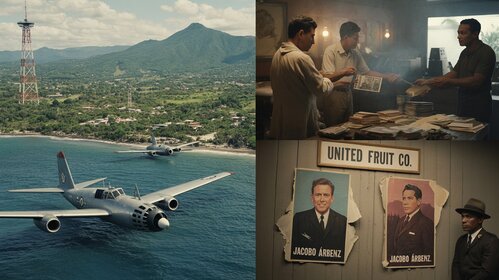
- Guatemala, 1954 — psychological warfare and a blockade: U.S. agencies supported Operation PBSuccess against Jacobo Árbenz with a campaign of propaganda, a naval and air blockade, covert funding of insurgents, and diplomatic isolation, helping to create the conditions for his ouster. Corporate interests and Cold War fears shaped the plan.
- Chile, 1970–73 — economic pressure and covert disruption: After Salvador Allende's election, the U.S. ran programs to destabilize Chile economically and politically, backed covert funding for opposition groups, and helped foster a climate that preceded the 1973 military coup. Declassified documents show a deliberate effort to “make the economy scream” as part of the pressure strategy.
- Nicaragua, 1980s — sanctions, covert insurgency, and legal maneuvers: The Reagan administration combined economic sanctions and diplomatic isolation with CIA support for the Contras, who waged an armed campaign against the Sandinista government. U.S. policy also involved international lobbying and legal tools to restrict Managua's ties.

- Cuba, 1960s onward — embargo, covert action, and limited kinetic moves: Washington imposed a long economic embargo, financed and trained exile groups, and authorized covert operations including the Bay of Pigs invasion. The approach blended economic strangulation, political isolation, and clandestine attempts to weaken Castro's rule.
- Panama, 1987–89 — sanctions then invasion: The U.S. used financial pressure, indictments, asset freezes, and diplomatic isolation against Manuel Noriega, while building a case that culminated in a direct military invasion in December 1989 to remove him. That sequence shows how financial and legal pressure can be paired with a kinetic option if policymakers choose.
- Libya, 2011 — sanctions, diplomatic isolation, and NATO strikes: International sanctions and an asset freeze were followed by a UN mandate and a NATO-led air campaign that helped remove Muammar Gaddafi. The Libya case shows how sanctions, a moral narrative, and limited military action can combine under a multilateral umbrella.
- Iraq, 1990s–2003 — long sanctions regime and then invasion: Iraq endured prolonged UN and U.S. sanctions in the 1990s intended to weaken Saddam Hussein; later, in 2003, the U.S. moved from economic and legal pressure to a full invasion. This example demonstrates how a sanctions-first approach can precede a major kinetic escalation when political will changes. (widely documented historical record)
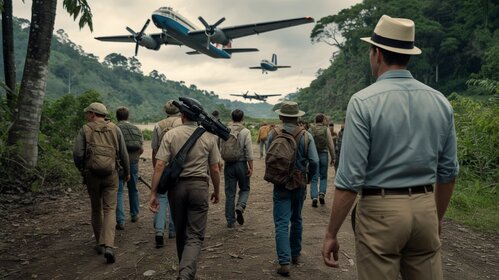
How these map to the Venezuela playbook
Across these cases the same tools appear again and again: legal and financial instruments to isolate elites and cut off revenue; bank and correspondent pressure to make foreign havens risky; covert support to opposition groups and media; diplomatic moves to delegitimize the target; and visible military posturing to ratchet pressure.
In some cases the sequence stopped at isolation and negotiated change, in others it escalated into direct military action.
The Road Ahead
All signs point toward escalation without invasion: more sanctions, more naval posturing, more diplomatic theater. Each step is designed to erode confidence within Venezuela's ruling elite while avoiding the spectacle of American boots on the ground.
Whether this plan succeeds depends on a single variable—how long the suffering population can endure before internal fracture becomes inevitable.
For now, the machinery hums on. The ships linger offshore. The sanctions lists grow longer. And somewhere in Washington, planners mark their progress on a chart that ends not with bombs, but with signatures on a surrender document.
That, at least, is the quiet ambition behind the latest chapter of the Venezuelan Regime Change Playbook.
About the Author
Scott Oliver is a British writer and former Royal Marines Commando who has lived abroad since 1985. Over the last 66 years, he’s called twelve countries home, including twenty-five years in Spanish-speaking nations such as Spain, Costa Rica, and Guatemala. He has also lived in Sierra Leone, Ghana, Nigeria, Liberia, Cyprus, the USA, Grand Cayman and now lives in Mauritius.
A warrior by nature, Scott is living with prostate cancer and writing from the front lines. He speaks directly to men about health, masculinity, freedom, and strength, physically, mentally, emotionally, and sexually. His views are proudly independent: he questions conventional medicine, challenges destructive treatments, and tells the truth most men never hear.
Scott Oliver is an officially accredited member of the National Writers Union (NWU) and the International Federation of Journalists (IFJ), the world’s largest organization of professional journalists. He spent ten years on Wall Street and another decade as an offshore wealth manager, specializing in globally diversified, multi-currency hedge fund portfolios. He is the author of What If Cancer’s Best Defense Is Free? — Sleep as a Defense Against Cancer: A Former Royal Marines Commando’s 4,000-Hour Research Roadmap, where he reveals how sleep repairs DNA, restores immunity, and strengthens your fight against cancer. He’s also the author of books on offshore investing and Costa Rica real estate and has written thousands of articles in English and Spanish on living abroad with courage, clarity, and conviction.
You can always contact Scott Oliver here with your questions and suggestions.
Expert Resources Used By Scott Oliver To Research and Write This Article:
- U.S. Treasury OFAC: Venezuela-Related Sanctions
Official overview of current U.S. sanctions authorities, licenses, and guidance that structure the financial pressure campaign against Venezuela.
ofac.treasury.gov - U.S. State Department: Venezuela-Related Sanctions
State Department summary of policy objectives, recent licensing actions, and how sanctions align with broader U.S. strategy.
state.gov - CRS In Focus: Venezuela's Petroleum Sector and U.S. Sanctions (IF10857)
Nonpartisan analysis of how oil-focused measures are used to constrain the Maduro government's revenue and leverage.
crsreports.congress.gov - Reuters: U.S. Replaces License, Re-tightens Venezuela Oil Sanctions
News report on the April 2024 shift that reimposed tighter restrictions after unmet electoral commitments by Caracas.
reuters.com - The Tico Times: Costa Rican Bank Faces $100M Money Laundering Probe
Coverage of a cross-border investigation that heightened AML sensitivity in Costa Rica's banking sector, reinforcing tighter scrutiny of foreign funds.
ticotimes.net - The Tico Times: Money Laundering in Costa Rica—Key Methods and Challenges
Summary of AML risks and trends, including references to U.S. INCSR findings that drive stricter bank compliance in the region.
ticotimes.net - FRUS (U.S. State Dept.): “Make the Economy Scream” Notes on Chile, 1970
Declassified record showing presidential-level direction for economic pressure in Chile, a historical template for sanctions-led coercion.
history.state.gov - National Security Archive: The Chile Coup Declassified
Curated primary documents on U.S. involvement in Chile, including covert action and financial isolation tactics.
nsarchive.gwu.edu - CIA Reading Room: “The Battle for Iran” (1953)
Declassified CIA history of the 1953 coup against Mossadegh, detailing propaganda, political pressure, and covert operations.
cia.gov - NATO: Operation Unified Protector—Final Mission Stats (Libya, 2011)
Official facts and timeline of the embargo, no-fly zone, and air campaign, illustrating sanctions plus limited kinetic action under a multilateral mandate.
nato.int - Reward Offer Increase of Up to $50 Million for Information Leading to Arrest and/or Conviction of Nicolás Maduro
state.gov