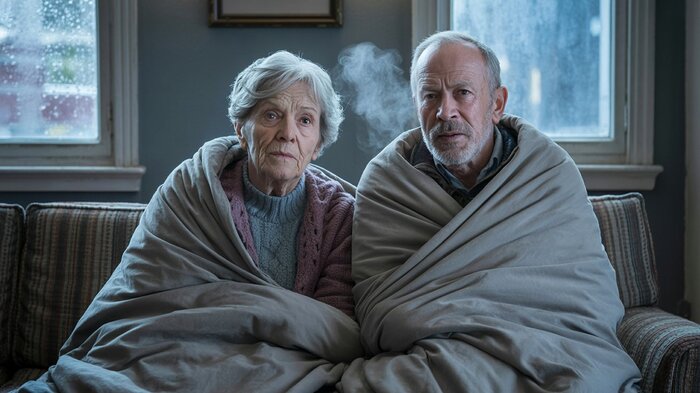
The Silent Killer: How Mild Cold Claims More Lives Than Heat
Most people believe that heatwaves are the biggest weather threat to human life. Television headlines show people collapsing in record-breaking heat, while government alerts warn us to stay inside and drink water.
Yet research from Stanford University and the National Bureau of Economic Research reveals a far quieter killer. It isn't heat. It's the cold, especially moderate cold that most of us underestimate.
Across the United States and Europe, scientists estimate that between 5 and 12 percent of all deaths each year are caused by exposure to temperatures outside the body's comfort zone. That's hundreds of thousands of people.
Even more surprising, the majority of these deaths happen not during freezing blizzards or heatwaves, but on those many days that are simply chilly.
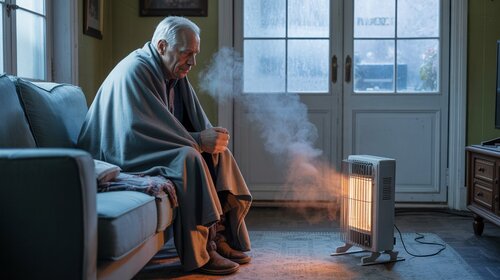
How moderate cold does its damage
Cold affects the body differently from heat. Heat can strike fast. Cold takes its time, chipping away at our health quietly over days or even weeks. When we're exposed to cooler air, our blood vessels narrow to keep the body warm. The heart works harder, blood pressure rises, and our immune defenses weaken.
That extra strain can trigger heart attacks, strokes, and respiratory infections, especially in older people or anyone already unwell.
Doctors rarely record “cold exposure” as a cause of death. The death certificate might say heart failure, pneumonia, or stroke, but the chill that triggered it goes unmentioned.
That's why official figures dramatically understate how many people die from cold.
In the United States, for example, only about 0.06 percent of all deaths are labeled as “cold-related,” even though winter death rates are 8 to 12 percent higher than in other seasons.
The United Kingdom's hidden winter toll
In the UK, the Office for National Statistics counts something called “excess winter deaths.” In a typical year, there are tens of thousands more deaths in winter than in summer.
In 2017–18, England and Wales recorded 17,400 extra deaths from respiratory diseases alone, many due to cold homes and damp conditions. Health experts estimate that nearly 5,000 people died in the winter of 2022–23 simply because their homes were too cold. Most were elderly.
Almost all of these deaths were logged under diseases such as heart attack, stroke, or pneumonia, not as cold exposure. Yet researchers agree that the underlying driver was the low temperature itself. Cold air thickens the blood, increases clotting, and constricts the arteries. For older adults already struggling with fragile health, it can be the final straw.
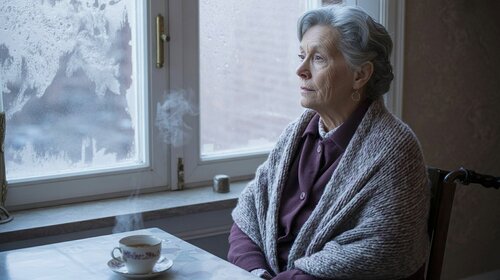
Why we underestimate the risk
Cold kills quietly. It doesn't make headlines or send people rushing to emergency rooms all at once. It creeps in through small gaps in windows and underheated rooms, through lonely apartments and long winter nights.
Because there's no drama, people often fail to recognize the risk. Many older adults turn down the heat to save on bills, wear light clothing indoors, or spend long hours in chilly spaces.
Policymakers also tend to focus on the wrong target. Cities issue heat alerts when the thermometer climbs, but rarely when it dips to five or ten degrees Celsius. Yet those “moderate cold” days, not the freezing ones, are responsible for the majority of deaths.
Scientists estimate that in temperate countries, cold-related deaths outnumber heat deaths by at least five to one.

The biology of vulnerability
Age plays a major role. As we grow older, our bodies lose muscle mass and the ability to regulate temperature. Medications for blood pressure or heart disease can make things worse by slowing circulation.
Seniors also tend to spend more time indoors, where heating may be inconsistent or too expensive. When exposed to cool air, even briefly, their bodies can't respond as quickly as younger ones.
The danger doesn't come only from outdoor exposure. Many elderly deaths linked to cold happen inside homes that are not adequately heated. A slightly cool living room can push a frail body into fatal imbalance. Add isolation and poor nutrition, and the odds worsen.

What the research shows
The NBER study analyzed decades of temperature and death records from thirty countries. The results are sobering:
- Around 500,000 people die every year in the European Union from non-optimal temperatures, mostly cold.
- In the United States, that figure is about 120,000 per year.
- The greatest number of deaths occur on days between 5°C and 10°C, days most people would call “mild.”
- Cold-related deaths often appear as cardiovascular or respiratory illnesses rather than as exposure cases.
- Wealth alone doesn't guarantee protection. Even affluent regions with good healthcare can experience high temperature-related death rates if homes aren't built for the climate.
Researchers found that Europe remains far more sensitive to both cold and heat than the United States. High energy costs, old housing, and slower adoption of air conditioning and insulation are part of the reason.
In both places, the elderly are most at risk, and the burden of cold-related mortality hasn't fallen much in recent decades.
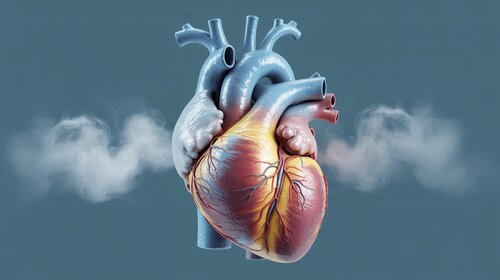
A note for those worried about global warming
Many people understandably worry about rising temperatures and the health dangers of extreme heat. But the evidence shows that cold still kills far more people than heat.
For the next several decades, scientists expect that moderate cold, not extreme heat, will continue to cause the greater share of temperature-related deaths.
Protecting against the cold should therefore remain a public-health priority, even for those most concerned about climate change.
What really helps
Interestingly, the most effective ways to prevent these deaths are not always “climate” policies. They are simple measures that improve everyday health and comfort:
- Affordable heating and reliable energy supplies.
- Well-insulated homes and weatherization programs
- Access to quality healthcare and community health workers
- Social safety nets such as winter fuel support
- Education for doctors and caregivers to recognize cold-related stress early
In the UK, researchers found that better insulation programs raised indoor temperatures and reduced hospitalizations for respiratory and heart conditions.
In the United States, studies showed that a doubling of home heating prices increased all-cause mortality by four percent in winter months, proving how deadly energy poverty can be.
These aren't abstract statistics. They are lives, mostly older people living alone, lost because staying warm has become a financial struggle or a low priority in public health planning.

A quiet lesson
Heatwaves may dominate the news, but moderate cold remains a bigger killer. It's not the dramatic events that take the most lives, it's the everyday discomforts we learn to ignore. Cold doesn't shout; it whispers. And it whispers most dangerously to the elderly, the poor, and the isolated.
If we're serious about protecting our aging populations, we need to look beyond the thermometer peaks. The real threat often comes from those grey, forgettable days when the sky hangs low and the temperature dips just enough to chill the bones.
The bottom line
Cold kills quietly and slowly. It seeps through underheated homes, hidden behind statistics of heart failure, stroke, and pneumonia. Recognizing that “mild cold” can be fatal is the first step toward preventing needless deaths.
Protecting our elderly means ensuring that warmth, care, and connection are never out of reach.
About the Author
Scott Oliver, 66, is living well with prostate cancer after dedicating more than 4,000 hours to researching the condition. His first goal is to help men reduce their risk of developing prostate cancer through proven lifestyle strategies.
When diagnosed, his mission is to help men avoid unnecessary prostate surgeries that can lead to devastating complications such as incontinence, bleeding, permanent impotence, and a loss of length.
Scott Oliver is not a doctor and does not offer medical advice; however, he is healthier and fitter than he has been in decades. Through his articles and videos, he shares hard-to-find, uncensored information on proven alternative therapies, effective fitness methods, and repurposed drugs, content that most doctors won’t mention and search engines suppress.
He is an accredited member of the National Writers Union (NWU) and the International Federation of Journalists (IFJ), the world’s largest organization of professional journalists. Scott is also the author of What If Cancer’s Best Defense Is Free? Sleep as a Defense Against Cancer: A Former Royal Marines Commando’s 4,000-Hour Research Roadmap, where he reveals how sleep repairs DNA, restores immunity, and strengthens the body’s natural defenses against cancer.
You can always contact Scott Oliver here with your questions and suggestions.
Scientific and Medical References Personally Reviewed by Scott Oliver.
- Understanding and Addressing Temperature Impacts on Mortality (NBER, 2025)
A large multi-country study led by Stanford University researchers showing that 5–12% of all deaths are linked to non-optimal temperatures, with moderate cold responsible for most fatalities.
Read the study - Excess Winter Mortality in England and Wales (Office for National Statistics, 2022)
Annual government report quantifying excess winter deaths, highlighting that most are due to cardiovascular and respiratory diseases exacerbated by cold indoor conditions.
Read the report - Weather-Related Deaths in the United States, 2006–2010 (CDC)
Centers for Disease Control and Prevention analysis showing that natural cold exposure accounts for the majority of weather-related deaths in the U.S., often underreported in official statistics.
Read the summary - Mortality Risk Attributable to High and Low Ambient Temperature (The Lancet, 2015)
A major global study analyzing over 74 million deaths across 13 countries, finding that cold weather causes about 20 times more deaths than heat worldwide.
Read the study - Climate Change Indicators: Cold-Related Deaths in the United States (EPA)
U.S. Environmental Protection Agency's long-term analysis showing that winter mortality remains consistently higher than non-winter mortality despite gradual warming trends.
Read at EPA