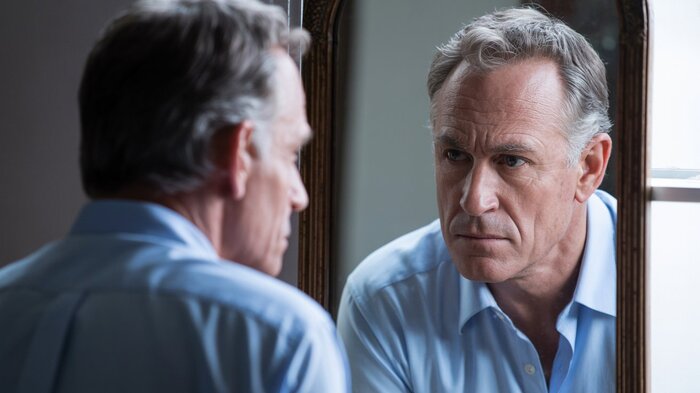
Your Mindset Does Not Cure Cancer. But Losing Hope Can Hurt You. The hidden biology of stress, fear, and resilience during cancer
Cancer forces you into a world of decisions, data, and deadlines.
You are given reports, percentages, and plans.
What you are rarely given is a clear explanation of how your mental state fits into all of this.
Not as a cure. Not as a replacement for treatment.
But as part of the environment your body depends on to function.
This connection between mind, nervous system, and immune response is the focus of a field called psychoneuroimmunology.
What is psychoneuroimmunology?
Psychoneuroimmunology is the study of how the mind, the nervous system, and the immune system interact.
It looks at a simple but powerful idea: your thoughts and emotional state can influence biological processes inside your body.
Not in a mystical way. In a measurable, physiological way.
When you experience chronic stress, your brain signals your body to release hormones such as cortisol. Over time, elevated cortisol can affect how your immune system behaves.
Research has shown that prolonged stress may reduce the activity of certain immune cells, including natural killer cells and T-cells, which play a role in identifying and responding to abnormal cells.
This does not mean your immune system “switches off.” But it does mean that your internal environment can shift in ways that are less supportive of resilience.

Why this matters for men living with cancer
When you are dealing with something as serious as cancer, your body is already under pressure.
Your sleep may be disrupted. Your energy may fluctuate. Your routines may change. Your mind may start running scenarios that are difficult to control.
All of this feeds into your internal state.
And your internal state matters.
Not because mindset cures cancer. It does not.
But because the conditions inside your body—hormonal balance, inflammation, immune signaling, energy levels—are influenced by how you live, how you think, and how you respond to stress.

Let's be clear: mindset is not a treatment
This needs to be stated plainly.
Your thoughts do not shrink tumors.
Hope is not chemotherapy. It is not surgery. It is not a targeted drug.
And suggesting otherwise places an unfair burden on people who are already carrying enough.
If someone's condition worsens, it is not because they “did not think positively enough.”
That idea is not only incorrect—it can be deeply damaging.
But dismissing mindset entirely is also a mistake.
Many men reach a point where the information about prostate cancer becomes seriously overwhelming. Different opinions. Different options. No clear path forward.
If you would like to step back and think clearly before making any decisions, you are welcome to contact me. I will read your situation personally and respond thoughtfully.
No pressure. No sales pitch. Just a calm, focused exchange to help you see things clearly.
The more accurate truth
Your mindset does not cure cancer.
But it absolutely influences the internal environment in which your body operates.
And that environment matters.
Chronic fear, ongoing anxiety, and a sense of hopelessness can lead to:
- Persistently elevated stress hormones
- Poor sleep quality
- Reduced motivation to move or engage with life
- Lower adherence to healthy habits and treatment plans
On the other hand, a more stable and grounded mental state can support:
- Better sleep
- More consistent daily movement
- Stronger social connection
- Clearer decision-making
These are not small things. They are part of the foundation your body relies on every single day.

How hope actually works
Hope is often misunderstood.
It is not blind optimism. It is not pretending everything will be fine.
Real hope is quieter than that.
It is the decision to keep going. To stay engaged. To continue taking care of yourself even when the outcome is uncertain.
From a biological perspective, hope helps maintain engagement with life.
And engagement drives behavior.
You sleep better. You move more. You eat more consciously. You stay connected. You ask better questions. You think more clearly.
All of this feeds back into your internal environment.
The danger of losing it
When hope disappears, something subtle but important begins to change.
People withdraw. They stop paying attention. They lose interest in the small actions that quietly support their health.
This is not weakness. It is a natural human response to overwhelm.
But over time, it can quietly undermine everything else you are trying to do.
Not because hope is a treatment.
But because losing it changes how you live.
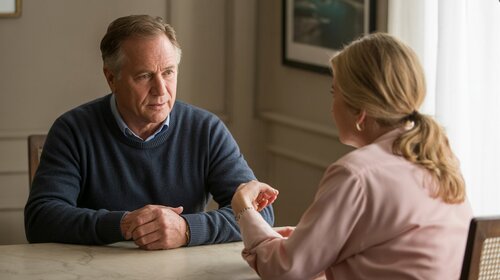
A more grounded way to think about it
You do not need to become a different person.
You do not need to force positivity.
You do not need to pretend you are not afraid.
But you do need to protect your mental state with the same level of awareness that you apply to everything else.
That might mean:
- Reducing unnecessary sources of stress
- Spending time with people who bring calm, not fear
- Getting outside and exposing yourself to natural light
- Moving your body, even in simple ways
- Limiting information that creates confusion or panic
These are not dramatic interventions. But they are powerful when done consistently.
The bottom line
Psychoneuroimmunology does not tell us that the mind cures disease.
What it tells us is more practical—and more useful.
Your mind, your nervous system, and your immune system are connected.
How you think and how you feel can influence how your body functions.
Not perfectly. Not completely. But meaningfully.
Hope is not a treatment.
But losing it can quietly undermine everything else you are trying to do.
So protect it.
Not as a belief system. Not as a slogan.
But as part of the internal environment your body depends on every day.
About the Author
Scott Oliver, 66, is living well with prostate cancer after dedicating more than 4,000 hours to researching the condition. His first goal is to help men reduce their risk of developing prostate cancer through proven lifestyle strategies.
When diagnosed, his mission is to help men avoid unnecessary prostate surgeries that can lead to devastating complications such as incontinence, bleeding, permanent impotence, and a loss of length.
Scott Oliver is not a doctor and does not offer medical advice; however, he is healthier and fitter than he has been in decades. Through his articles and videos, he shares hard-to-find, uncensored information on proven alternative therapies, effective fitness methods, and repurposed drugs, content that most doctors won’t mention and search engines suppress.
He is an accredited member of the National Writers Union (NWU) and the International Federation of Journalists (IFJ), the world’s largest organization of professional journalists. Scott is also the author of What If Cancer’s Best Defense Is Free? Sleep as a Defense Against Cancer: A Former Royal Marines Commando’s 4,000-Hour Research Roadmap, where he reveals how sleep repairs DNA, restores immunity, and strengthens the body’s natural defenses against cancer.
You can always contact Scott Oliver here with your questions and suggestions.