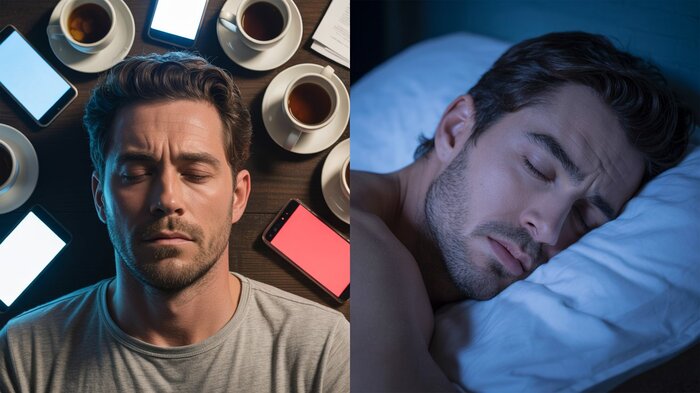
If You Have Prostate Cancer, Quality Sleep May Be One of the Most Important Things You Can Do for Your Body. Why deep restorative sleep deserves far more attention in the prostate cancer conversation.
When a man is diagnosed with prostate cancer, the conversation usually moves very quickly toward:
PSA scores. Gleason grades. Scans. Biopsies. Surgery. Radiation. Hormone therapy.
Those discussions are obviously important.
But in the middle of all the fear, pressure, confusion, and medical decision making, one of the most biologically important foundations of health is often pushed into the background.
Sleep.
Not sleeping pills.
Not simply lying in bed exhausted.
Real, deep, restorative sleep.
The kind of sleep where the nervous system calms down, stress chemistry decreases, hormones rebalance, and the body finally enters a true state of repair and recovery.
If you are living with prostate cancer, improving the quality of your sleep may be one of the most important foundational things you can do for your body, your mind, and your long term resilience.
The Body Performs Enormous Repair Work During Sleep
Most people think of sleep as passive inactivity.
It is not.
During deep sleep, the body performs critical work involving:
Immune regulation. Hormonal balance. Tissue repair. Nervous system recovery. Memory processing. Inflammation control. Metabolic regulation.
The brain itself even activates specialized waste clearance systems during sleep.
Sleep is not “wasted time.”
It is one of the most biologically active recovery states in the human body.
Chronic Stress and Prostate Cancer Often Arrive Together
A prostate cancer diagnosis can trigger enormous psychological stress.
Fear. Uncertainty. Sleepless nights. Endless internet searches. Worry about mortality. Worry about treatment. Worry about sexual function. Worry about family.
Many men quietly carry this burden internally.
The nervous system often remains in a state of chronic vigilance.
That matters because chronic stress physiology affects:
Sleep quality. Cortisol regulation. Inflammation. Immune function. Emotional resilience.
Many men living with prostate cancer describe feeling:
Exhausted but unable to relax.
Tired but unable to sleep deeply.
Physically drained but mentally overstimulated.
This “wired but tired” state may quietly undermine recovery and quality of life.
Researchers Are Increasingly Interested in Sleep and Cancer
Scientists are still debating exactly how strongly chronic sleep disruption influences cancer risk and progression.
The relationship is complex.
But researchers increasingly believe poor sleep may affect important biological systems involving:
Immunity. Inflammation. Hormones. Circadian rhythms. Metabolism. Cellular repair.
This is one reason sleep and circadian disruption have become major areas of scientific interest in cancer research.
Importantly, this does not mean: “Sleep cures cancer.”
That would go beyond the evidence.
But it is entirely reasonable to say that consistently poor sleep is unlikely to help a body already dealing with a major health challenge.
After a diagnosis, many men feel flooded with information, opinions, studies, warnings, and pressure from every direction.
If you want to slow things down and get your thinking back on track, you are welcome to send me a private message.
Many Men with Prostate Cancer Quietly Damage Their Sleep Further
This is one of the least discussed parts of the story.
After diagnosis, many men unintentionally make sleep worse through:
Late night internet research. Excess caffeine. Alcohol. Stress. Fear. Endless scrolling. Overthinking. Lack of physical activity. Irregular schedules.
Some men begin relying heavily on:
Coffee during the day, then alcohol or sleeping pills at night.
The nervous system becomes trapped in a cycle of stimulation and sedation rather than true recovery.
Over time, sleep quality may deteriorate further.
Sleep Affects More Than Energy Levels
Poor sleep does not simply cause fatigue.
It may also affect:
Blood sugar regulation. Appetite. Mood. Pain sensitivity. Stress tolerance. Testosterone levels. Motivation. Cognitive clarity. Decision making.
For men facing difficult prostate cancer decisions, clear thinking matters enormously.
A chronically exhausted brain rarely makes calm, thoughtful decisions.
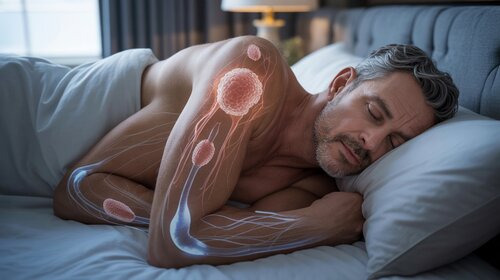
What Many Men Notice When Sleep Improves
Men who improve their sleep often report:
Better emotional stability. More energy. Reduced anxiety. Clearer thinking. Less muscular tension. Better recovery. Improved mood. Better ability to cope.
None of this means sleep is a miracle cure.
But it does suggest the body functions far better when deep restorative sleep becomes a priority instead of an afterthought.
This May Be One of the Most Neglected Areas of Modern Health
Modern society often treats sleep as optional.
People brag about functioning on five hours.
Exhaustion has become normalized.
Then stimulants are layered on top.
Coffee to wake up. Screens late into the night. Artificial light. Constant stimulation. Endless stress.
Many people now live in a state of chronic partial sleep deprivation without even realizing it.
That may be especially important for men trying to support their body during prostate cancer.

The Bottom Line
If you are living with prostate cancer, there may be few things more foundational than giving your body the deepest, highest quality sleep possible on a consistent basis.
Sleep affects: Recovery. Immunity. Stress regulation. Hormones. Inflammation. Emotional resilience. Cognitive clarity. Nervous system repair.
Scientists are still studying exactly how sleep interacts with cancer biology.
But one thing is already very clear.
The human body performs enormous repair and regulatory work during deep restorative sleep.
And a chronically exhausted, overstimulated nervous system is unlikely to place the body in its strongest possible position.
For many men with prostate cancer, improving sleep may not be the entire answer.
But it may be one of the most important places to begin.
About the Author
Scott Oliver, 66, is living well with prostate cancer after dedicating more than 4,000 hours to researching the condition. His first goal is to help men reduce their risk of developing prostate cancer through proven lifestyle strategies.
When diagnosed, his mission is to help men avoid unnecessary prostate surgeries that can lead to devastating complications such as incontinence, bleeding, permanent impotence, and a loss of length.
Scott Oliver is not a doctor and does not offer medical advice; however, he is healthier and fitter than he has been in decades. Through his articles and videos, he shares hard-to-find, uncensored information on proven alternative therapies, effective fitness methods, and repurposed drugs, content that most doctors won’t mention and search engines suppress.
He is an accredited member of the National Writers Union (NWU) and the International Federation of Journalists (IFJ), the world’s largest organization of professional journalists. Scott is also the author of What If Cancer’s Best Defense Is Free? Sleep as a Defense Against Cancer: A Former Royal Marines Commando’s 4,000-Hour Research Roadmap, where he reveals how sleep repairs DNA, restores immunity, and strengthens the body’s natural defenses against cancer.
You can always contact Scott Oliver here with your questions and suggestions.
Trusted Expert Resources
- American Cancer Society, Sleep and Cancer
Overview of how sleep, circadian rhythms, and overall health may interact with cancer risk and recovery.
Read at American Cancer Society - Sleep Foundation, Why Sleep Is Important
Comprehensive review of sleep's role in immune function, recovery, metabolism, and nervous system regulation.
Read at Sleep Foundation - National Institutes of Health, Sleep and the Immune System
Peer reviewed scientific overview examining the relationship between sleep and immune regulation.
Read the study - Harvard Medical School, Sleep and Health
Trusted medical explanation of how sleep affects hormones, metabolism, inflammation, cognition, and long term health.
Read at Harvard Medical School - National Cancer Institute, Sleep Disorders and Cancer
Scientific discussion of sleep disruption, circadian rhythms, and ongoing cancer related sleep research.
Read at National Cancer Institute