How Parasites Have Been Proven to Cause Some Cancers… And Why the Research Continues
For decades, the idea that parasites could play a role in cancer sounded like speculation. Today, that is no longer the case. Scientists have already proven that certain parasites can lead to specific types of cancer in humans. The evidence is strong, consistent, and accepted by global health authorities.
But the story does not end there. The deeper researchers look, the more they realize that parasites do not “cause cancer” in a simple, direct way. Instead, they create the conditions that allow cancer to develop slowly over time.
This distinction matters. It changes how we think about risk, prevention, and even long-term health strategies.
Where The Proof Comes From
The strongest evidence comes from long-term human observation. In certain parts of the world, specific cancers appear far more often in populations exposed to particular parasites. This pattern is not random. It is consistent, repeatable, and supported by decades of data.
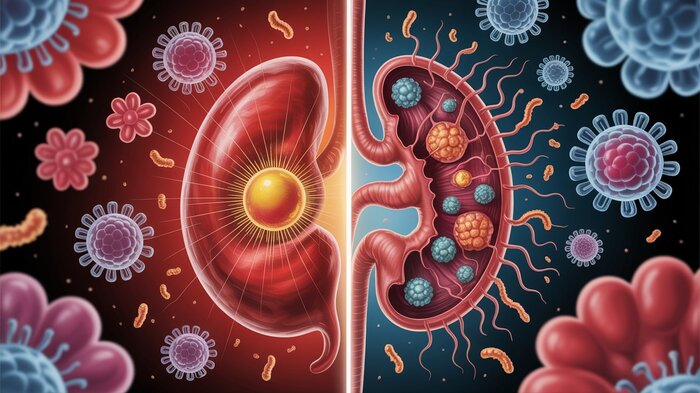
For example, in regions of Africa and the Middle East, a parasite known as Schistosoma haematobium infects the urinary system. Over many years, its eggs become trapped in the bladder wall, causing constant irritation. In these same regions, doctors observed unusually high rates of a specific type of bladder cancer.
The connection became impossible to ignore.
A similar pattern appears in parts of Southeast Asia. People who consume raw or undercooked fish may become infected with liver flukes such as Opisthorchis viverrini or Clonorchis sinensis. These parasites live inside the bile ducts for years. In those same populations, there is a striking increase in bile duct cancer.
Again, the pattern repeats.
What Scientists Found Inside The Body
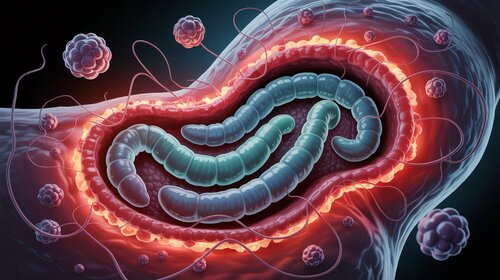
The breakthrough came when researchers looked directly at human tissue. They found the parasites, or their eggs, embedded in the exact organs where the cancers developed.
In the bladder, parasite eggs were surrounded by inflamed, damaged tissue. In the bile ducts, the worms themselves were present, causing continuous injury to the lining of the ducts.
This was not a distant association. It was a direct physical presence at the site of disease.
Over time, that constant irritation forces the body into a cycle of damage and repair. Cells are destroyed, then replaced. Destroyed again, then replaced again.
Each cycle increases the chance that something goes wrong.
The Real Mechanism: Chronic Inflammation
The parasites are not acting like a poison or a single trigger. The real driver is chronic inflammation.
When the immune system is activated for years, it releases chemicals designed to fight infection. These same chemicals can damage healthy cells. At the same time, the body tries to repair the injured tissue, forcing cells to divide more rapidly than normal.
This combination, ongoing damage and accelerated repair, creates the perfect environment for mutations to accumulate.
Over many years, those mutations can turn into cancer.
Why Not Everyone Gets Cancer
This is where the nuance becomes important.
Not everyone infected with these parasites develops cancer. In fact, most people do not.
The risk depends on how long the infection lasts, how intense it is, and how the individual body responds. Years of repeated infection and reinfection increase the danger. A short-term exposure may not.
This explains why these cancers are concentrated in specific regions and populations rather than appearing everywhere.
From Observation To Scientific Consensus
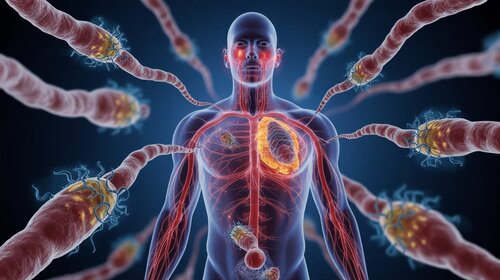
Over time, multiple lines of evidence came together. Epidemiology showed clear patterns. Pathology confirmed damage in the affected organs. Biological studies explained how inflammation could drive cancer development.
Eventually, global health organizations formally reviewed the evidence.
The conclusion was clear. Certain parasites are classified as carcinogenic to humans. This is no longer debated science. It is established fact.
Why The Research Continues
Even with these proven links, scientists are still asking deeper questions.
Could parasites influence other types of cancer through immune system changes?
Do they alter the body's internal environment in ways that make tumors more likely to grow?
Could understanding these mechanisms lead to new strategies for prevention or treatment?
These questions are still being explored.
What researchers do agree on is this. Cancer rarely has a single cause. It is usually the result of multiple pressures acting on the body over time.
Parasites, in certain cases, are one of those pressures.
The Bottom Line
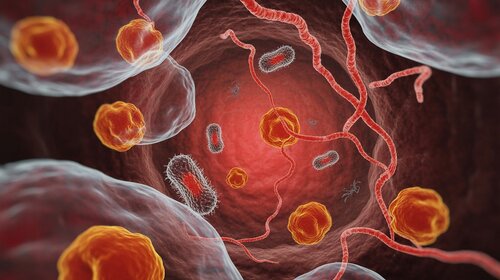
Parasites do not “switch on” cancer in a single moment. They create long-term stress inside the body. They damage tissue, trigger chronic inflammation, and interfere with normal biological balance.
In specific infections, over many years, that environment can lead to cancer.
This is what has been proven.
And as research continues, it is becoming increasingly clear that understanding the environment inside the body may be just as important as understanding the disease itself.
About the Author
Scott Oliver, 66, is living well with prostate cancer after dedicating more than 4,000 hours to researching the condition. His first goal is to help men reduce their risk of developing prostate cancer through proven lifestyle strategies.
When diagnosed, his mission is to help men avoid unnecessary prostate surgeries that can lead to devastating complications such as incontinence, bleeding, permanent impotence, and a loss of length.
Scott Oliver is not a doctor and does not offer medical advice; however, he is healthier and fitter than he has been in decades. Through his articles and videos, he shares hard-to-find, uncensored information on proven alternative therapies, effective fitness methods, and repurposed drugs, content that most doctors won’t mention and search engines suppress.
He is an accredited member of the National Writers Union (NWU) and the International Federation of Journalists (IFJ), the world’s largest organization of professional journalists. Scott is also the author of What If Cancer’s Best Defense Is Free? Sleep as a Defense Against Cancer: A Former Royal Marines Commando’s 4,000-Hour Research Roadmap, where he reveals how sleep repairs DNA, restores immunity, and strengthens the body’s natural defenses against cancer.
You can always contact Scott Oliver here with your questions and suggestions.
Relevant Expert Resources To Support The Article
- IARC Monographs on Biological Agents – Comprehensive review of infectious agents classified as carcinogenic to humans Read the report
- WHO – Opisthorchiasis and Cholangiocarcinoma – Explains how liver fluke infections lead to bile duct cancer through chronic inflammation Read at WHO
- National Cancer Institute – Infectious Agents and Cancer – Overview of how infections, including parasites, increase cancer risk Read at NCI
- National Cancer Institute – Bladder Cancer Overview – Notes the link between chronic schistosomiasis and bladder cancer Read the overview