
Why Removing The Prostate Does Not Always End The Cancer Story
Many men believe prostate surgery means the cancer is gone forever. The biological and psychological reality is often far more complicated.
For many men diagnosed with prostate cancer, surgery feels like the decisive moment. The cancer has been found, the prostate has been removed, and the dangerous thing inside the body has supposedly been cut out for good.
Families breathe again. Friends say, “Thank God they caught it early.” Wives begin hoping life can finally return to normal.
And sometimes, thankfully, that is exactly what happens.
Many men undergo radical prostatectomy, recover well, see their PSA fall to undetectable levels, and never experience another major problem from prostate cancer again. Surgery can absolutely save lives. In some cases, it may genuinely cure the disease.
But there is another reality that many men discover only later, often quietly and sometimes with enormous psychological force. Removing the prostate does not always guarantee that every prostate cancer cell has been removed from the body.
For some men, the surgery turns out not to be the end of the cancer story, but the beginning of a different relationship with uncertainty.
That uncertainty can be surprisingly difficult to live with because most men walk into surgery believing they are buying certainty. They believe they are making the definitive decision. The bold decision. The “let's get this thing out of me” decision. What many are less prepared for is the realization that even after the prostate is gone, the question can still remain:
“What if the cancer comes back?”

Why the assumption feels completely logical
The misunderstanding is understandable because men are repeatedly told that PSA comes from the prostate. PSA, or prostate-specific antigen, is produced primarily by prostate tissue, so it seems perfectly logical to assume that once the prostate has been removed, PSA should disappear permanently. And if PSA disappears, then surely the cancer must be gone too.
The problem is that prostate cancer cells themselves can also produce PSA.
This is the detail many men do not fully appreciate before surgery. If microscopic prostate cancer cells had already escaped beyond the prostate before the operation took place, those cells may still remain somewhere inside the body even after the prostate itself has been removed. They may be too small to see on scans. Too small to cause symptoms. Too small to be detected during surgery. But still alive.
That is why doctors continue monitoring PSA after radical prostatectomy. In fact, PSA monitoring becomes one of the most important long-term tools for understanding whether prostate cancer activity may still exist somewhere inside the body.
For many men, this realization changes the emotional meaning of surgery completely. The operation no longer feels like a clean finish line. Instead, it begins to feel more like a major checkpoint in a longer and less predictable journey.

How PSA can rise even after the prostate is removed
This is one of the questions that shocks many men after surgery.
If the prostate is gone, how can PSA rise?
The answer is biologically simple, but psychologically sobering. The prostate may have been the main “factory” producing PSA, but if tiny clusters of prostate cancer cells had already spread beyond the gland before surgery, those cells may continue producing PSA themselves.
A useful way to think about it is this: the main factory may have been removed, but small satellite factories may already have left the building.
Sometimes those remaining cells stay dormant for years. Sometimes they never become clinically significant. Sometimes they grow so slowly that a man dies from something completely unrelated decades later. But in other cases, those cells eventually begin multiplying again, causing PSA levels to slowly rise over time.
This is what doctors refer to as biochemical recurrence. After prostatectomy, PSA is expected to become extremely low or undetectable. When it later begins rising again, particularly above commonly used thresholds, doctors start asking whether prostate cancer cells may still be present somewhere inside the body.
Importantly, biochemical recurrence does not automatically mean a man has widespread metastatic cancer. It does not automatically mean immediate danger. Many men live for years, and sometimes decades, after PSA recurrence. Some never develop visible metastases at all. But the rising PSA acts as a biological signal that the story may not be completely over.

The statistics many men never hear clearly
One of the reasons this subject creates so much emotional confusion is because many men are never given a balanced explanation of recurrence risk before treatment. They are understandably focused on the surgery itself, the fear of cancer, the urgency of decision-making, and the immediate desire to survive.
But long-term studies show that recurrence after prostatectomy is not rare, especially in higher-risk disease. Depending on the original pathology, published studies suggest that a meaningful percentage of men experience biochemical recurrence within 10 years after supposedly curative treatment.
Risk varies enormously based on the biology of the original cancer. Men with low-risk, organ-confined disease and favorable pathology may do extremely well long term. Men with more aggressive disease, higher Gleason scores, positive surgical margins, seminal vesicle involvement, or lymph node spread face significantly higher recurrence risks.
This is why prostate cancer cannot be discussed honestly as if it were one uniform disease. Some prostate cancers are slow-growing and relatively indolent. Others are biologically aggressive from the beginning. Some respond beautifully to treatment for many years before reappearing unexpectedly. And some never return at all.
The problem is not that men are being lied to. The problem is that many men emotionally hear the word “surgery” as “certainty,” even when the biology itself may still contain uncertainty.
The psychological burden that often begins after surgery
This may be one of the least discussed aspects of prostate cancer.
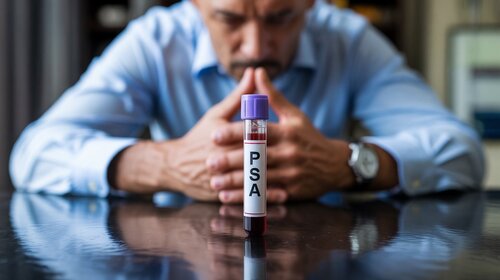
Many men assume the hardest part will be the diagnosis, the surgery, or the recovery. But for some men, the most psychologically difficult period begins afterward, when life is supposed to have returned to normal yet the possibility of recurrence quietly lingers in the background.
The surgery may be over, the scars mostly healed, and the catheter long gone, but uncertainty has a way of following men home. It appears before PSA blood tests. It shows up during sleepless nights. It emerges in small moments when a man wonders whether the disease has truly been defeated or merely pushed temporarily out of sight.
Many men never speak openly about this. Outwardly, they appear relieved and grateful. Internally, however, they may still be carrying a quiet psychological weight that never fully disappears.
What if the next PSA rises?
What if microscopic cells were already there?
What if this comes back in five years?
Or ten?
For some men, these thoughts become an occasional passing concern. For others, they become a chronic background anxiety that shapes the way they think about aging, health, and the future itself.
This is why PSA testing after prostatectomy can become emotionally loaded in ways many people outside prostate cancer do not fully understand. To the outside world, it is simply another blood test. To the man living through it, it can feel like an emotional referendum on his future.
A stable PSA may bring relief. An undetectable PSA may briefly restore peace. But even waiting for the results can trigger stress, irritability, poor sleep, hypervigilance, or quiet fear.
And this psychological experience is not weakness. It is human.
After a diagnosis, many men feel flooded with information, opinions, studies, warnings, and pressure from every direction.
If you want to slow things down and get your thinking back on track, you are welcome to send me a private message.
The two dangerous extremes men often fall into
After surgery, many men drift toward one of two unhealthy extremes.
The first is false certainty. This is the man who mentally closes the entire chapter the moment the prostate is removed. He assumes the problem has been permanently solved and no longer pays meaningful attention to his long-term health. He abandons lifestyle changes, stops exercising, gains weight, sleeps poorly, and emotionally disengages from the reality that recurrence may still be biologically possible.
The second extreme is chronic fear. This man becomes psychologically trapped by recurrence anxiety. Every ache feels ominous. Every PSA test feels terrifying. Every medical appointment feels emotionally exhausting. He may spend years unable to relax fully, psychologically reliving the diagnosis over and over again.
Neither extreme is healthy.
The goal is not denial. But neither is it obsession.
The healthier path is something far more balanced and psychologically mature: vigilance without obsession.

What intelligent vigilance actually looks like
Intelligent vigilance means understanding the reality clearly without surrendering your entire life to fear. It means staying engaged with your health while refusing to become psychologically consumed by uncertainty.
That includes regular PSA monitoring, understanding your pathology report, knowing whether your disease was considered low-risk or high-risk, and discussing recurrence risk honestly with qualified professionals. But it also includes something equally important that medicine sometimes struggles to measure properly: maintaining emotional resilience and quality of life.
A man who has undergone prostatectomy still needs sleep. He still needs metabolic health. He still needs exercise, emotional stability, social connection, purpose, movement, sunlight, meaningful relationships, and some degree of peace of mind. Surgery does not eliminate the importance of the terrain in which the body continues living.
No responsible person should claim that lifestyle alone can guarantee prostate cancer will never return. That would be simplistic and misleading. But it is equally simplistic to assume that once the prostate has been removed, the rest of a man's health no longer matters.
Many men ultimately discover that prostate cancer forces them into a deeper relationship with mortality, uncertainty, and personal responsibility. Some emerge from that experience psychologically stronger, more disciplined, more grateful, and more engaged in life than before.
Others remain psychologically stuck in the fear of recurrence for years.
The difference often comes down to whether a man learns how to live intelligently alongside uncertainty instead of either denying it or surrendering to it.

The emotional reality for wives and partners
There is another dimension to this experience that deserves far more attention.
The wife or partner often carries the uncertainty too.
She may appear calm. She may try to remain optimistic. She may encourage her husband not to worry. But she also remembers the diagnosis. She remembers the fear in the hospital. She remembers the surgery and recovery. She may silently carry the same question he does:
“What if it comes back?”
This is why prostate cancer is never merely a medical issue affecting one organ inside one man. It affects relationships, intimacy, emotional security, and the psychological atmosphere of an entire household.
Some couples grow closer through this experience because they learn to discuss uncertainty honestly instead of pretending it does not exist. Others become emotionally isolated because both people try to protect each other through silence.
Often, one of the strongest things a man can say is simply:
“Yes, I think about it sometimes too.”
That kind of honesty can reduce loneliness far more effectively than forced optimism ever could.

The real lesson most men eventually learn
For some men, prostatectomy truly is the end of the cancer story. For others, it becomes one chapter in a much longer experience of monitoring, adaptation, uncertainty, and resilience.
The important thing is not to live in fear. But it is equally important not to confuse surgery with absolute certainty.
The more honest and psychologically mature approach is to understand that prostate cancer is both a biological and emotional experience. The body may heal faster than the mind. The surgery may end in a few hours, while the psychological relationship with uncertainty may continue for years.
And yet, many men eventually discover something unexpected. They discover they are capable of living fully even without perfect certainty. They discover they can follow PSA carefully without allowing a number to control their entire existence. They discover they can become more disciplined about their health without becoming consumed by fear.
That is probably the real long-term challenge after prostatectomy.
Not pretending uncertainty does not exist.
And not allowing uncertainty to steal the rest of your life.
The goal is vigilance without obsession, awareness without panic, and the wisdom to continue living fully even while accepting that no human being is ever promised absolute certainty about the future.
About the Author
Scott Oliver, 66, is living well with prostate cancer after dedicating more than 4,000 hours to researching the condition. His first goal is to help men reduce their risk of developing prostate cancer through proven lifestyle strategies.
When diagnosed, his mission is to help men avoid unnecessary prostate surgeries that can lead to devastating complications such as incontinence, bleeding, permanent impotence, and a loss of length.
Scott Oliver is not a doctor and does not offer medical advice; however, he is healthier and fitter than he has been in decades. Through his articles and videos, he shares hard-to-find, uncensored information on proven alternative therapies, effective fitness methods, and repurposed drugs, content that most doctors won’t mention and search engines suppress.
He is an accredited member of the National Writers Union (NWU) and the International Federation of Journalists (IFJ), the world’s largest organization of professional journalists. Scott is also the author of What If Cancer’s Best Defense Is Free? Sleep as a Defense Against Cancer: A Former Royal Marines Commando’s 4,000-Hour Research Roadmap, where he reveals how sleep repairs DNA, restores immunity, and strengthens the body’s natural defenses against cancer.
You can always contact Scott Oliver here with your questions and suggestions.
Expert Resources
- American Urological Association – Salvage Therapy for Prostate Cancer Guideline
Comprehensive professional guidance on biochemical recurrence after prostatectomy and treatment considerations.
Read the AUA Guideline - European Association of Urology – Prostate Cancer Follow-Up
Detailed explanation of PSA monitoring and recurrence assessment after radical prostatectomy.
Read the EAU Follow-Up Guidance - Biochemical Recurrence in Patients with Prostate Cancer After Primary Definitive Therapy
Peer-reviewed review discussing recurrence patterns and the clinical meaning of rising PSA after treatment.
Read the Review at PubMed Central - Fear of Cancer Recurrence and PSA Anxiety in Men with Prostate Cancer
Research exploring the psychological burden of PSA monitoring and recurrence anxiety after treatment.
Read the Systematic Review - Mayo Clinic – What To Do If Your Prostate Cancer Returns
Clear patient-friendly explanation of PSA recurrence and potential next steps after prostate cancer treatment.
Read at Mayo Clinic