
The Good News About Prostate Cancer: What Every Man, and the Women Who Love Them Should Know.
The moment a man hears the words “You have prostate cancer,” something changes instantly inside the human nervous system. Thoughts accelerate. Sleep becomes difficult.
The future suddenly feels uncertain in a way it may never have before. Even intelligent, emotionally stable men often find themselves overwhelmed by fear, urgency, and confusion within minutes of the diagnosis.
That reaction is deeply human, but it also creates a serious problem. Men who believe they are facing an immediate life-or-death emergency often make very different decisions than men who understand the full landscape of modern prostate cancer.
Fear narrows thinking. It increases emotional pressure. It creates urgency before understanding. And in prostate cancer, where many treatment decisions can permanently affect urinary function, sexual function, relationships, and quality of life, emotional steadiness matters enormously.
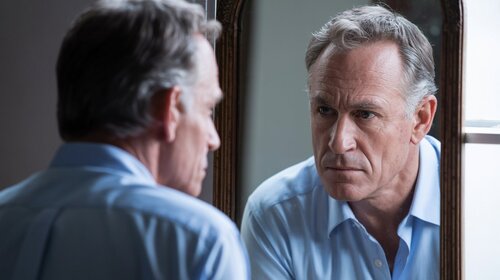
This report exists to help restore that steadiness. Not through false reassurance, not through denial, and certainly not through the dangerous fantasy that all prostate cancers are harmless. Some prostate cancers are aggressive and require decisive treatment. Some spread rapidly and can absolutely become life-threatening. Men deserve honesty about that reality.
But men also deserve to hear something else early in the process, because it may be one of the most psychologically important facts in all of prostate cancer medicine: many men diagnosed with prostate cancer are not facing an immediate medical emergency.
That distinction changes everything. When a man understands that he may have time to think, investigate, seek second opinions, improve his health, and carefully weigh long-term tradeoffs, the emotional atmosphere surrounding the diagnosis often changes dramatically. Panic begins to fall. Questions become more intelligent. Conversations become calmer. Decision-making improves.
And ironically, that calmer state frequently leads to wiser medical choices.
This report is for men. It is also for wives, partners, sons, daughters, and families trying to support someone they love through one of the most psychologically destabilizing experiences of adult life. The goal is not merely to provide information. The goal is to help people think clearly while navigating one of the most emotionally charged crossroads they may ever face.
The First Thing Most Men Never Hear
When many people hear the word “cancer,” the brain immediately jumps toward catastrophe. For understandable reasons, the word itself carries enormous emotional weight. But prostate cancer behaves very differently from many other cancers, and understanding that reality can profoundly change the emotional and strategic landscape facing a newly diagnosed man.
Some prostate cancers grow aggressively and require prompt intervention, but many grow slowly. Sometimes very slowly.
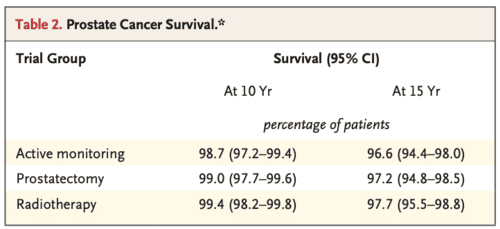
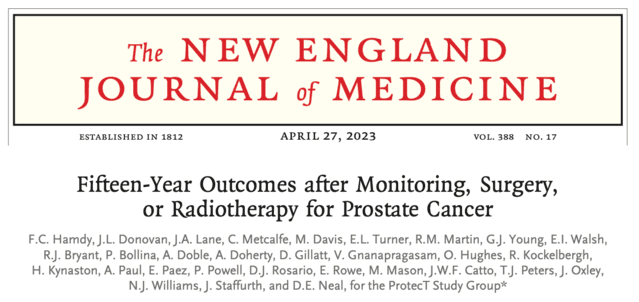
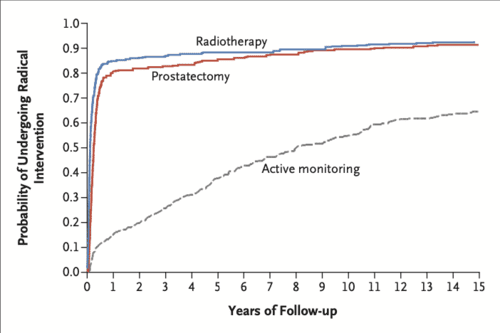
In one of the largest and most important prostate cancer studies ever conducted (New England Journal of Medicine link below), researchers followed men with localized prostate cancer for fifteen years after diagnosis. The men were divided into three groups: active monitoring, surgery, and radiotherapy. What surprised many observers was not simply that survival rates were high, but that prostate cancer-specific death rates remained remarkably low across all three approaches.
More than 97 percent of the men in the trial did not die from prostate cancer during those fifteen years.
That does not mean prostate cancer should be ignored. Nor does it mean all men should avoid treatment. What it means is far more important psychologically: for many men, prostate cancer is not the immediate death sentence they initially imagine when they first hear the diagnosis.
That emotional clarification matters enormously. Frightened men often feel pressured to make rapid irreversible decisions before fully understanding the biology of their cancer, the possible side effects of treatment, or the fact that modern prostate cancer management increasingly emphasizes personalization rather than panic.
Many men simply do not realize how much prostate cancer medicine has evolved.
Many men reach a point where the information about prostate cancer becomes seriously overwhelming. Different opinions. Different options. No clear path forward.
If you would like to step back and think clearly before making any decisions, you are welcome to contact me. I will read your situation personally and respond thoughtfully.
No pressure. No sales pitch. Just a calm, focused exchange to help you see things clearly.
Meet Mark
At fifty-two, Mark considered himself reasonably healthy, although “busy” was probably the more accurate word. Like many men in midlife, he spent most of his energy focused outward: work responsibilities, financial pressure, family obligations, endless emails, and constant low-grade stress. He slept poorly, exercised inconsistently, carried extra weight around his waist, and quietly assumed he would eventually “get serious” about his health someday.
Then a friend encouraged him to include a PSA test during routine bloodwork.
The result came back elevated. That led to an MRI, followed by a targeted biopsy, and eventually the sentence that changes millions of men psychologically every year: “You have prostate cancer.”
Mark barely heard anything after the word “cancer.” His mind immediately raced toward surgery, death, impotence, incontinence, disability, and fear. His wife was frightened too. Both of them instinctively assumed immediate action would be necessary.
But then something important happened.
Instead of rushing blindly forward, Mark slowed down long enough to learn more about the actual biology of his disease. His cancer appeared localized. The Gleason score suggested lower-risk disease. Additional imaging showed no obvious spread. His doctors explained that active surveillance might be a completely reasonable option.
That conversation changed the emotional atmosphere entirely. For the first time since the diagnosis, Mark realized he might actually have time to think.
And psychologically, that realization was transformative.
Once fear stopped dominating every thought, he began asking better questions. Instead of desperately trying to “remove the cancer immediately,” he began trying to understand the full strategic picture: What type of cancer did he actually have? What were the realistic risks? What were the possible long-term consequences of different treatments? What kind of life did he want ten years from now?
The diagnosis had not changed, but his state of mind had.
And that changed everything.
Active Surveillance Is Not “Doing Nothing”
This may be one of the most misunderstood concepts in all of prostate cancer medicine.
Many men hear the phrase “active surveillance” and instinctively interpret it as neglect, avoidance, or denial. In reality, properly structured active surveillance is often a disciplined and medically sophisticated strategy designed specifically for men with low-risk or favorable intermediate-risk disease.
The word “active” matters.
Men on surveillance are not ignored. They are monitored carefully through PSA testing, MRI imaging, clinical evaluation, and, when appropriate, periodic confirmatory biopsies (although many doctors do not like biopsies) or additional testing designed to detect meaningful progression before the disease becomes dangerous.
The goal is not to “hope for the best.” The goal is to avoid unnecessary treatment while maintaining the ability to intervene decisively if the biological behavior of the cancer changes.
That distinction is critically important.
For many properly selected men, active surveillance allows years of preserved urinary control, sexual function, bowel function, and overall quality of life without compromising long-term survival outcomes. It also creates something psychologically powerful that is rarely discussed openly enough: space.
Space to think. Space to improve health. Space to reduce fear-driven decision-making. Space to strengthen the body and calm the nervous system before making potentially irreversible choices.
For Mark, active surveillance became something unexpected. It became a turning point.
He and his wife began walking in the evenings instead of collapsing separately into screens and exhaustion. He improved his sleep. He reduced alcohol. He started resistance training several times each week. He lost weight. He became more intentional about stress, food, and relationships. And for the first time in years, he felt psychologically engaged in his own future rather than simply reacting to life mechanically.
The cancer had frightened him, but it had also awakened him.
The Real Tradeoffs Men Deserve To Understand
Modern prostate cancer treatment can absolutely save lives, and many men benefit enormously from surgery, radiotherapy, hormone therapy, or combinations of these approaches. But informed consent requires something more than technical explanations and optimistic statistics. Men deserve calm, compassionate honesty about the possible tradeoffs involved in major treatment decisions.
Some side effects can be temporary. Others can last for years. And some can become permanent.
- Surgery, particularly modern robotic-assisted prostatectomy, has improved dramatically over the last two decades. Experienced surgeons using 'nerve-sparing' techniques can often preserve important structures involved in urinary control and erectile function. Many men recover well and are grateful they pursued treatment.
But surgery can also lead to urinary leakage, erectile dysfunction, changes in orgasm, penile shortening, psychological distress, relationship strain, and long recovery periods. Some men regain excellent function. Others struggle much longer than they expected. - Radiotherapy has also evolved substantially. Modern image-guided radiation techniques are far more precise than older approaches, and many men achieve excellent cancer control with acceptable side effect profiles. Yet bowel irritation, rectal bleeding, urinary symptoms, fatigue, and gradual erectile decline remain important considerations that men deserve to understand honestly before treatment begins.
- Hormone therapy can be life-extending and medically necessary in certain scenarios, especially for more advanced or aggressive disease. But testosterone suppression affects far more than cancer cells alone. Men may experience fatigue, muscle loss, weight gain, emotional flattening, reduced libido, metabolic changes, and profound shifts in energy and identity.
This is one reason lifestyle factors matter so much. Strength training matters. Movement matters. Sleep matters. Psychological support matters. Not because these things magically “cure” cancer, but because they help protect the human being living through the experience.
That distinction matters profoundly.
The Psychology Of Knowledge
One of the strangest realities in medicine is that accurate information can sometimes calm the body almost as powerfully as medication.
When people move from confusion toward understanding, the nervous system often changes. Sleep improves. Catastrophic thinking decreases. Relationships stabilize. Decision-making becomes more rational and less emotionally reactive.
This does not mean information removes danger. It means clarity reduces unnecessary suffering.
Men who understand the true nature of their disease often begin to experience something psychologically valuable: agency.
They no longer feel entirely helpless. They begin participating in their own future again.
That shift matters biologically as well as emotionally. Men who regain emotional steadiness are often more likely to improve sleep, exercise consistently, strengthen social relationships, eat more intentionally, reduce destructive habits, and engage more actively with their medical care.
Biology and psychology are not separate worlds. They constantly influence one another.
The Warrior Mindset
The word “Warrior” does not mean denial, aggression, or reckless optimism.
It means emotional steadiness under pressure.
Prostate cancer forces many men into deep confrontation with issues they may have spent decades avoiding: mortality, aging, masculinity, sexuality, purpose, relationships, and fear itself.
Some men psychologically collapse after diagnosis. Others become calmer, wiser, healthier, and more intentional than they have been in years.
Often the difference lies in mindset.
A disciplined man does not pretend fear does not exist. He simply refuses to let fear make every decision for him. He slows down. He gathers information carefully. He seeks second opinions. He strengthens his body where possible. He steadies his mind. And he tries to make decisions aligned with long-term values rather than short-term panic.
That may be one of the most important strategic advantages any man can develop during the prostate cancer journey.

Most Men Die WITH Prostate Cancer, Not FROM It
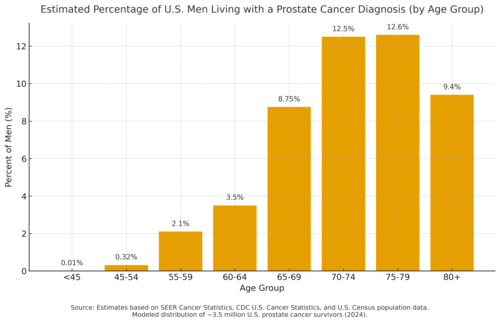
Autopsy studies have repeatedly shown that microscopic prostate cancer is remarkably common in older men who die from completely unrelated causes. By advanced age, many men harbor small areas of prostate cancer that never became clinically significant during their lifetime.
This does not mean prostate cancer is harmless. It means prostate cancer exists on a very wide biological spectrum.
Some forms remain indolent for years. Others behave aggressively. Modern prostate cancer management increasingly revolves around distinguishing between those realities intelligently rather than treating every diagnosis identically.
That is one reason thoughtful personalization has become so important. It is also why many men benefit enormously from slowing down emotionally long enough to fully understand what type of disease they actually have before making irreversible decisions.
Final Thoughts
If you or someone you love has recently been diagnosed with prostate cancer, perhaps the most important thing to understand is this: you may have more time than you think, you likely have more options than you realize, and your emotional state during this process matters far more than most people understand.
The goal is not merely to survive. The goal is to think clearly, live intentionally, preserve quality of life wherever possible, and make decisions aligned with your deepest long-term values rather than temporary fear.
Modern prostate cancer care is no longer simply about removing disease at all costs. Increasingly, it is about balancing longevity, biology, function, psychology, relationships, and life itself.
That requires wisdom as much as medicine.
And wisdom almost always begins by slowing down long enough to see clearly.
After a diagnosis, many men feel flooded with information, opinions, studies, warnings, and pressure from every direction.
If you want to slow things down and get your thinking back on track, you are welcome to send me a private message.
About the Author
Scott Oliver, 66, is living well with prostate cancer after dedicating more than 4,000 hours to researching the condition. His first goal is to help men reduce their risk of developing prostate cancer through proven lifestyle strategies.
When diagnosed, his mission is to help men avoid unnecessary prostate surgeries that can lead to devastating complications such as incontinence, bleeding, permanent impotence, and a loss of length.
Scott Oliver is not a doctor and does not offer medical advice; however, he is healthier and fitter than he has been in decades. Through his articles and videos, he shares hard-to-find, uncensored information on proven alternative therapies, effective fitness methods, and repurposed drugs, content that most doctors won’t mention and search engines suppress.
He is an accredited member of the National Writers Union (NWU) and the International Federation of Journalists (IFJ), the world’s largest organization of professional journalists. Scott is also the author of What If Cancer’s Best Defense Is Free? Sleep as a Defense Against Cancer: A Former Royal Marines Commando’s 4,000-Hour Research Roadmap, where he reveals how sleep repairs DNA, restores immunity, and strengthens the body’s natural defenses against cancer.
You can always contact Scott Oliver here with your questions and suggestions.

This is for informational purposes only and does not provide medical advice. It summarizes publicly available research and observations related to prostate health and aging. If you have health questions or concerns, consider speaking with a qualified healthcare professional.
Scientific References and Expert Resources
-
Fifteen-Year Outcomes After Monitoring, Surgery, or Radiotherapy for Prostate Cancer
One of the most important long-term prostate cancer studies ever conducted. Researchers followed men with localized prostate cancer for fifteen years and found that prostate cancer-specific mortality remained very low across active monitoring, surgery, and radiotherapy groups. The study helped change how many doctors and patients think about time, treatment urgency, and active surveillance. -
Patient-Reported Outcomes After Monitoring, Surgery, or Radiotherapy for Localized Prostate Cancer
A landmark quality-of-life study examining how different treatment approaches affected urinary, sexual, and bowel function over time. Particularly valuable for men trying to understand the real-world tradeoffs between surveillance, surgery, and radiation. -
Active Surveillance for Prostate Cancer — Johns Hopkins Medicine
A clear and highly respected patient-focused explanation of active surveillance, including who may qualify, how monitoring works, and when treatment may become necessary. -
Early Detection of Prostate Cancer — American Urological Association Guidelines
Professional guidance on PSA testing, MRI imaging, targeted biopsy strategies, and modern approaches to prostate cancer detection and risk assessment. -
PSMA PET-CT Improves Accuracy In Prostate Cancer Staging
An important modern imaging study showing how PSMA PET scanning can improve the detection of prostate cancer spread compared with conventional imaging approaches. -
Physical Activity and Survival After Prostate Cancer
Research showing that regular physical activity, including brisk walking and exercise, was associated with improved prostate cancer outcomes and lower overall mortality. -
Dietary Patterns and Prostate Cancer Progression
Research examining how healthier plant-forward dietary patterns may influence prostate cancer progression and long-term health outcomes. -
Study Shows Delaying Treatment For Localised Prostate Cancer Does Not Increase Mortality Risk
A plain-English summary from the University of Oxford discussing the implications of the landmark fifteen-year prostate cancer treatment outcomes study.